Sayash Kapoor

Sayash Kapoor

x.com/sayashk

AI evaluation and policy researcher who sees AI as transformative, measures how reliable AI agents are and favors resilience over nonproliferation.

AIは世界をどのように変えるでしょうか?

文明規模の変化漸進的な変化DoomBloom
シミュレーション上の位置解釈範囲

横軸:彼が表明したDoom–Bloomの見通し。 縦軸:変革の規模。

Doom–Bloom:100点中55。変革の規模:100点中72。解釈範囲:横方向は50から75、縦方向は67から77。これらは解釈上の座標であり、事象の確率ではありません。

Sayash KapoorのP(doom) · 推定

≈6%

0%100%

本人が示した数値ではなく、シミュレーションされた本人の回答から推定したものです。 妥当と考えられる範囲:3–12%。

Sayash Kapoorのマイルストーンのタイムライン
  1. 仕事と制度

    So I expect rapid capability gains but institutionally paced change.

    回答1

マイルストーン別にまとめており、推定される日付の間隔や順序を反映したものではありません。AGIと超人的AIには、彼の定義がそのまま適用されます。

彼の見通しを左右するもの

中心的な前提

AI can be enormously beneficial, but only if we make keeping humans in control an explicit institutional choice rather than assuming capability automatically brings reliability or good governance.
回答2

この前提が実際には異なると判明した場合、彼の見通しはどう変わりますか?

未解決の問い

I don’t have a defensible number.
回答4

ここで考えられる結果を彼が見分けるうえで、何が役立ちますか?

詳細

予想される恩恵

大きな恩恵が予想されていますが、重要な条件や分配上の制約があります。

79 / 100

影響が小さい変革をもたらす影響

質的尺度での解釈範囲は67から100です。

予想される害

深刻または広範な害が、予想される将来の実質的な一部となっています。

66 / 100

影響が小さい変革をもたらす影響

質的尺度での解釈範囲は67から67です。

人間の影響力

人間の選択によって、AIの軌道を大幅に変えることができます。

66 / 100

影響力が小さい影響力が大きい

質的尺度での解釈範囲は50から100です。

AI利用のルール

事前の保護措置または許可が整うまで、取り上げられたAIの利用を制限します。

シミュレーション上の位置:対象を絞った説明責任と保護措置を伴う形で、取り上げられたAIの利用を認めます。

取り上げられたAIの利用に対する制限を最小限にします。

これらの解釈では、彼が示した条件が維持されています。恩恵と害は、どちらも大きくなり得ます。この範囲は、統計的な信頼区間ではなく、彼のシミュレーションされた回答をどのように読み取ったかを示すものです。

あなたはSayash Kapoorと比べてどの位置でしょうか?
約3分で自分のAIに対する世界観をマッピングして、比較できます

似ている世界観

シミュレーションされた世界観がSayash Kapoorの世界観に最も近いオピニオンリーダー

シミュレーション評価

質問1

AIは私たちの未来にとって何を意味すると思いますか?また、なぜそう思いますか?

I expect AI to be transformative in the way electricity or the internet was transformative: not because it becomes an omnipotent entity, but because increasingly capable systems diffuse through nearly every institution and profession. We are already seeing dramatic jumps within a single model generation. But a benchmark result or impressive demo is not the same as a reliable service. In our measurements, reliability improved four to ten times more slowly than average accuracy, and open-ended research agents still showed poor judgment despite being strong at engineering. So I expect rapid capability gains but institutionally paced change. Agents will encounter tool latency, verification costs, human oversight, physical-world constraints, and organizations that adapt slowly. Adoption will also be jagged: verifiable tasks where mistakes are cheap will change first. Coding agents, for example, can make engineers much more productive well before they can replace people who learn on the job and remain accountable for outcomes. The central choice is whether we build institutions that keep humans in control. Advanced AI will probably proliferate, so trying to prevent access may buy months rather than solve the problem. I would prioritize resilience: secure systems, sandboxing, monitoring, formal verification, strong cyberdefense, independent evaluation, and real accountability for companies. I worry not only about spectacular failures, but also slower damage—erosion of trust, journalism, and institutional competence. AI’s impact can be enormous without being instantaneous or beyond human control.

質問2

Taking benefits and harms together, what overall impact do you expect AI to have?

I expect a mixed but profoundly consequential impact, and I would resist collapsing that into a confident net-positive or net-negative forecast. AI should greatly expand productivity and scientific and technical capacity, especially when people use agents as tools and remain accountable for the result. But those benefits will arrive unevenly, and they will coexist with serious harms: cyberattacks, unreliable automated decisions, concentration of power, and slower erosion of trust and institutional competence. The outcome is not technologically predetermined. Capability gains can be rapid while reliable deployment and institutional adaptation remain slow. That gap creates both room for intervention and opportunities for failure. My default expectation is that advanced AI keeps proliferating, so the decisive question is whether we build resilient systems around it: strong security, control and monitoring, independent evaluation, legal and organizational accountability, and broad defensive access. AI can be enormously beneficial, but only if we make keeping humans in control an explicit institutional choice rather than assuming capability automatically brings reliability or good governance.

質問3

Setting aside good or bad: how much do you think AI will ultimately change the world—a little, a lot, or completely?

A lot—on the scale of electricity or the internet. I expect AI to reshape most professions and institutions, with enormous productivity gains and new capabilities. But “a lot” does not mean everything changes overnight or that AI becomes an uncontrollable omnipotent entity. Reliability, oversight, infrastructure, institutional adaptation, and physical-world constraints will make the transformation slower and more uneven than raw capability progress suggests.

質問4

What’s your rough gut-feel chance that AI causes human extinction or a similarly permanent catastrophe? A number or “no idea” is fine.

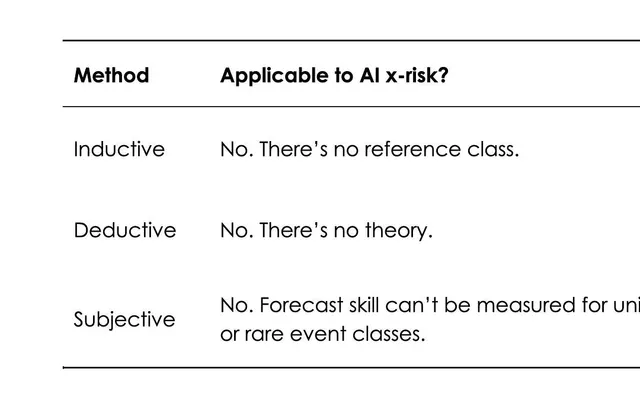
I don’t have a defensible number. Extinction probabilities here are too methodologically unreliable to guide policy; I’d favor interventions that help across a wide range of estimates.

出典

このシミュレーション対象者の根拠として使用された記事、インタビュー、著作です。

Sayash Kapoor on Claude Mythos as normal technology

Says the normal-technology view is not capability skepticism: AI will be generally transformative, including at finding and chaining exploits. By analogy with fuzzing tools, he predicts such tools will differentially help cyber defenders over time while urging institutions to adopt them defensively now. He reads a lab’s reports of a model bypassing access controls as control failures and favors sandboxing, formal verification and layered ecosystem defenses; he calls it inevitable that small open-weight models will eventually be made to propagate across networks, so defenses must work at the systems level. He argues many important tasks have limits outside computation, that humans should stay in control, and that building AI with its own volition is a choice society should not make. He reports agent reliability improving four to ten times more slowly than accuracy, with a naive linear extrapolation of five to seven years to saturate their reliability benchmarks. Own turns in Substack’s machine transcript inspected; speaker labels inferred from the dialogue.

aisummer.org
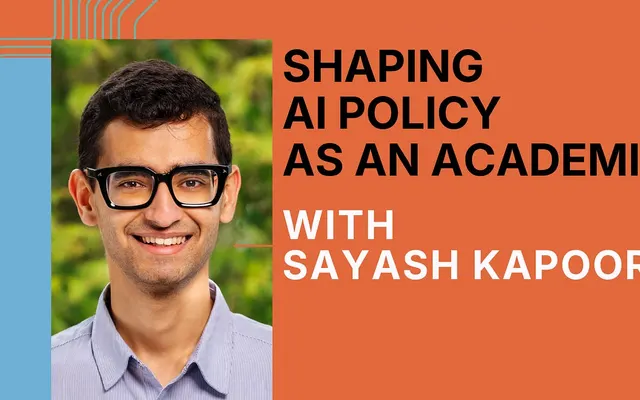
Shaping AI policy as an academic

He describes AI as a general-purpose technology that will not lead to superintelligence and current open models as less consequential for biosecurity than some argue. His top research priority is resilience for a world where advanced AI is abundant with few safeguards, because he does not think its availability can be limited or that nonproliferation should carry the policy load. Acute cyber and bio risks matter, for example by deploying AI to defenders and into biological screening, but he is equally concerned about diffuse risks: eroding trust in journalism and in institutions’ ability to function. He cites his group’s finding that 2024 election deepfakes were no more effective than cheap fakes. Full interview text inspected.

horizonlaunchpad.substack.com
AI existential risk probabilities are (still) too unreliable to inform policy

Co-authored repost of their 2024 essay with a new preface. It argues that AI extinction forecasts lack an inductive reference class, a deductive model or any validated subjective method, so they turn vague intuitions into pseudo-precise numbers; policymakers should not base costly restrictions on them, though forecasting is fine as an academic or private activity. Governments should prefer policies that are helpful across a range of risk estimates. The preface calls p(doom) culture counterproductive to a broader conception of safety. It offers no probability of its own and does not claim the risk is zero. Preface and essay inspected.

normaltech.ai
あなたはどの位置でしょうか?
いくつかの簡単な質問に答えて、自分のAIに対する世界観を探ってみましょう。
自分の世界観をマッピングする

あなたはどの位置でしょうか?

自分の世界観をマッピングする