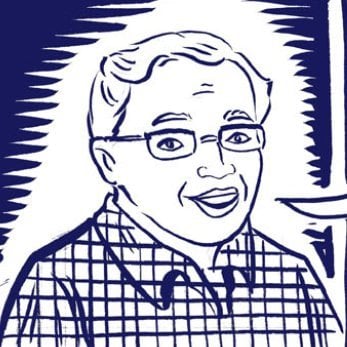
Geoffrey Huntley

Geoffrey Huntley

x.com/geoffreyhuntley

Software engineer who created the Ralph loop technique for coding agents and argues that verifying real production behavior remains unsolved.

AIは世界をどのように変えるでしょうか?

文明規模の変化漸進的な変化DoomBloom
シミュレーション上の位置解釈範囲

横軸:その人が表明したDoom–Bloomの見通し。 縦軸:変革の規模。

Doom–Bloom:100点中71。変革の規模:100点中64。解釈範囲:横方向は66から76、縦方向は50から75。これらは解釈上の座標であり、事象の確率ではありません。

Geoffrey HuntleyのP(doom) · 推定

≈3%

0%100%

本人が示した数値ではなく、シミュレーションされた本人の回答から推定したものです。 妥当と考えられる範囲:1–10%。

その人の見通しを左右するもの

中心的な前提

The hard problem has moved to verification—proving that software behaves correctly under actual production conditions, not merely that it passes a convenient test suite.
回答1

この前提が実際には異なると判明した場合、その人の見通しはどう変わりますか?

考えを変え得るもの

The biggest change would be a convincing solution to production verification: not merely generating tests or passing benchmarks, but reliably establishing that software behaves correctly under real, adversarial, evolving production conditions.
回答3

どのような証拠なら十分で、それによってその人の見解はどちらの方向に変わりますか?

詳細

予想される恩恵

大きな恩恵が予想されていますが、重要な条件や分配上の制約があります。

75 / 100

影響が小さい変革をもたらす影響

質的尺度での解釈範囲は67から100です。

予想される害

深刻または広範な害が、予想される将来の実質的な一部となっています。

55 / 100

影響が小さい変革をもたらす影響

質的尺度での解釈範囲は33から67です。

人間の影響力

人間の選択によって、AIの軌道を大幅に変えることができます。

65 / 100

影響力が小さい影響力が大きい

質的尺度での解釈範囲は45から80です。

開発ペース

より高性能なAIの開発を停止するか、大幅に減速させます。

シミュレーション上の位置:明示された安全対策の下で開発を継続します。

より高性能なAIの開発を加速させます。

AI利用のルール

事前の保護措置または許可が整うまで、取り上げられたAIの利用を制限します。

シミュレーション上の位置:対象を絞った説明責任と保護措置を伴う形で、取り上げられたAIの利用を認めます。

取り上げられたAIの利用に対する制限を最小限にします。

これらの解釈では、その人が示した条件が維持されています。恩恵と害は、どちらも大きくなり得ます。この範囲は、統計的な信頼区間ではなく、その人のシミュレーションされた回答をどのように読み取ったかを示すものです。

あなたはGeoffrey Huntleyと比べてどの位置でしょうか?
約3分で自分のAIに対する世界観をマッピングして、比較できます

似ている世界観

シミュレーションされた世界観がGeoffrey Huntleyの世界観に最も近いオピニオンリーダー

シミュレーション評価

質問1

AIは私たちの未来にとって何を意味すると思いますか?また、なぜそう思いますか?

I think AI turns software engineering into the design of improvement loops. Generation is effectively solved: the cost of exploring, combining, and discarding ideas has collapsed. That does not mean every generated experiment should ship. The hard problem has moved to verification—proving that software behaves correctly under actual production conditions, not merely that it passes a convenient test suite. The winning systems will deliberately combine model-driven loops with deterministic workflow stages. Give a loop one task, observe where it fails, improve the feedback, and repeat. Don’t bury everything inside theatrical multi-agent complexity. And don’t standardize today’s scaffolding too early: instructions, skills, and workarounds that help one model generation may become unnecessary or harmful as models improve. Organizationally, this can remove a lot of gatekeeping. More people can contribute ideas and code, while engineers become responsible for shaping feedback and eliminating recurring failure modes. But responsibility does not disappear just because generation becomes cheap. There is also a strategic issue. If a company hands its operations to an external AI provider, it has accepted a dependency that may matter during sanctions, conflict, or commercial disputes. That is why local, transparent, reproducible open models matter. The future is not simply “agents do everything.” It is cheap exploration, engineered feedback, rigorous verification, and control over the infrastructure on which the organization now depends.


質問2

Taking benefits and harms together, what overall impact do you expect AI to have?

Overall, I expect AI to be strongly disruptive and broadly productive—but not automatically safe or evenly beneficial. It collapses the cost of exploring ideas and lets many more people contribute, while shifting engineers from manually producing every artifact toward designing feedback loops and removing repeated failure modes. The danger is that cheap generation can create false confidence. Producing code is no longer the bottleneck; establishing that it behaves correctly in real production conditions is. Tests are useful, but tests, proofs, and production reality are not interchangeable. Organizations that generate faster without improving verification will simply manufacture failures faster. There is also a concentration risk. If businesses place core operations behind a provider’s API, they inherit that provider’s commercial and geopolitical constraints. Access can be priced differently, restricted, or cut off. Local, open, reproducible models provide an important counterweight. So I expect enormous expansion in what people can attempt, alongside painful disruption for institutions built around scarcity and gatekeeping. Whether that becomes durable progress depends on engineered feedback, deterministic controls where appropriate, serious verification, and retaining control of critical infrastructure.

質問3

どのような発見や出来事があれば、AIが将来もたらす影響についてのあなたの見解が最も大きく変わりますか?

The biggest change would be a convincing solution to production verification: not merely generating tests or passing benchmarks, but reliably establishing that software behaves correctly under real, adversarial, evolving production conditions. If that became cheap and dependable, the bottleneck I see today would collapse, and AI’s productive impact would accelerate dramatically. Conversely, repeated large-scale failures showing that organizations cannot build effective feedback loops—or that model-generated systems remain fundamentally unverifiable—would make me substantially more pessimistic. So would a major geopolitical event where businesses suddenly lost access to the AI providers running their operations. That would turn strategic dependency from a warning into a demonstrated operational failure. The decisive events are therefore not another flashy generation demo. They are evidence about verification and control: can we trust what gets produced, and can we continue operating the systems on which we depend?

出典

このシミュレーション対象者の根拠として使用された記事、インタビュー、著作です。

あなたはどの位置でしょうか?
いくつかの簡単な質問に答えて、自分のAIに対する世界観を探ってみましょう。
自分の世界観をマッピングする

あなたはどの位置でしょうか?

自分の世界観をマッピングする