質問1
Shawn Wang
x.com/swyxLatent Space writer and podcast host who covers AI engineering, from building agents on foundation models to testing and verifying what they do.
AIは世界をどのように変えるでしょうか?
横軸:その人が表明したDoom–Bloomの見通し。 縦軸:変革の規模。
Doom–Bloom:100点中74。変革の規模:100点中53。解釈範囲:横方向は69から79、縦方向は40から60。これらは解釈上の座標であり、事象の確率ではありません。
≈7%
本人が示した数値ではなく、シミュレーションされた本人の回答から推定したものです。 妥当と考えられる範囲:4–14%。
中心的な前提
Overall, I expect AI to be strongly beneficial if we successfully turn capability into reliable, accessible systems.回答2
この前提が実際には異なると判明した場合、その人の見通しはどう変わりますか?
考えを変え得るもの
The biggest update would come from real-world evidence that AI can reliably accelerate hard science—not just produce plausible hypotheses, but contribute to validated advances in medicine, materials, or climate.回答3
どのような証拠なら十分で、それによってその人の見解はどちらの方向に変わりますか?
詳細
大きな恩恵が予想されていますが、重要な条件や分配上の制約があります。
68 / 100
質的尺度での解釈範囲は67から67です。
複数の解釈が依然として妥当です:深刻または広範な害が、予想される将来の実質的な一部となっています。 / 対処可能、または局所的な害が予想されています。
52 / 100
質的尺度での解釈範囲は33から67です。
人間の選択によって、AIの軌道を大幅に変えることができます。
63 / 100
質的尺度での解釈範囲は46から79です。
より高性能なAIの開発を停止するか、大幅に減速させます。
シミュレーション上の位置:明示された安全対策の下で開発を継続します。
より高性能なAIの開発を加速させます。
事前の保護措置または許可が整うまで、取り上げられたAIの利用を制限します。
シミュレーション上の位置:対象を絞った説明責任と保護措置を伴う形で、取り上げられたAIの利用を認めます。
取り上げられたAIの利用に対する制限を最小限にします。
これらの解釈では、その人が示した条件が維持されています。恩恵と害は、どちらも大きくなり得ます。この範囲は、統計的な信頼区間ではなく、その人のシミュレーションされた回答をどのように読み取ったかを示すものです。
似ている世界観
シミュレーションされた世界観がShawn Wangの世界観に最も近いオピニオンリーダー
シミュレーション評価
出典
このシミュレーション対象者の根拠として使用された記事、インタビュー、著作です。
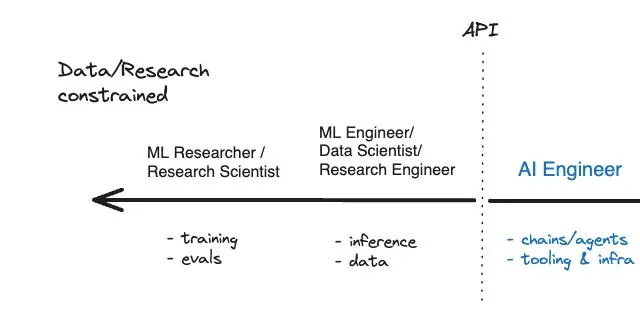
Describes AI engineering as productizing foundation models with software, data and evaluations.

First-party current index linking agent engineering work and the 2025 agent-lab essay; establishes scope, not a catastrophe forecast.

Argues agent labs translate model capabilities into useful products through extensive integration and engineering; acknowledges many harnesses are superseded and uncertainty about competition from model labs.

Acknowledges AI-linked wealth concentration but rejects fatalistic permanent-underclass narratives, arguing AI lowers barriers to learning, entrepreneurship and upward mobility for people who exercise agency.

His keynote essay treats intent, tools, control flow, planning, memory and delegated authority as essential agent ingredients. Argues improved models, tools and economics create a major engineering opportunity; emphasizes trust and verification rather than equating autonomy with reliability.

Speaker-attributed transcript: at 32:53 he expects coding agents to expand beyond coding; at 40:01–41:18 he raises biosafety concerns and doubts broad enterprise distribution is truly private access. At 44:30–48:58 he identifies memory constraints, revises upward on open models, and favors automated testing and verification as human code review becomes a bottleneck. No numeric p(doom) given.

His own questions at 45:42–47:58 distinguish inaccessible reasoning traces, observable actions and simulations without real consequences for lying. This supports attention to evaluation validity; the guests’ model-behavior findings and risk judgments remain theirs, not his.

At 33:41–36:24 he identifies GPU access as a constraint on autonomous research, questions how widely research loops are used beyond demonstrations, and favors agents provisioning their own infrastructure. Modal deployment and performance claims belong to guest Akshat Bubna.

Argues applying AI engineering to hard science could be among this century’s most important missions, spanning medicine, materials, climate and AI research. Explicitly avoids assigning AGI or superintelligence timelines; calls for engineering talent to pursue science rather than low-value output.

あなたはどの位置でしょうか?
自分の世界観をマッピングする