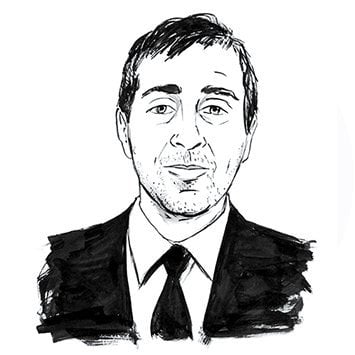
Andrej Karpathy

Andrej Karpathy

x.com/karpathy

Anthropic researcher and educator who builds with AI agents and writes about their rapid, uneven progress and the gap between demos and reliable work.

AIは世界をどのように変えるでしょうか?

文明規模の変化漸進的な変化DoomBloom
シミュレーション上の位置解釈範囲

横軸:彼が表明したDoom–Bloomの見通し。 縦軸:変革の規模。

Doom–Bloom:100点中75。変革の規模:100点中66。解釈範囲:横方向は70から80、縦方向は50から75。これらは解釈上の座標であり、事象の確率ではありません。

Andrej KarpathyのP(doom) · 推定

≈6%

0%100%

本人が示した数値ではなく、シミュレーションされた本人の回答から推定したものです。 妥当と考えられる範囲:3–13%。

彼の見通しを左右するもの

中心的な前提

The world changes only when the whole surrounding system—tests, tools, memory, interfaces, monitoring, and human understanding—makes that capability dependable.
回答2

この前提が実際には異なると判明した場合、彼の見通しはどう変わりますか?

未解決の問い

I don’t have a defensible percentage.
回答3

ここで考えられる結果を彼が見分けるうえで、何が役立ちますか?

考えを変え得るもの

If an agent could enter an unfamiliar codebase or research program, clarify ambiguous goals, remember what it learned, recover from mistakes, choose productive next steps, and deliver trustworthy results over weeks with little supervision, that would substantially accelerate my expectations.
回答5

どのような証拠なら十分で、それによって彼の見解はどちらの方向に変わりますか?

詳細

予想される恩恵

大きな恩恵が予想されていますが、重要な条件や分配上の制約があります。

75 / 100

影響が小さい変革をもたらす影響

質的尺度での解釈範囲は67から100です。

予想される害

対処可能、または局所的な害が予想されています。

32 / 100

影響が小さい変革をもたらす影響

質的尺度での解釈範囲は0から33です。

人間の影響力

人間の選択には意味のある影響力がありますが、大幅に制約されています。

55 / 100

影響力が小さい影響力が大きい

質的尺度での解釈範囲は48から77です。

開発ペース

より高性能なAIの開発を停止するか、大幅に減速させます。

シミュレーション上の位置:明示された安全対策の下で開発を継続します。

より高性能なAIの開発を加速させます。

AI利用のルール

事前の保護措置または許可が整うまで、取り上げられたAIの利用を制限します。

シミュレーション上の位置:対象を絞った説明責任と保護措置を伴う形で、取り上げられたAIの利用を認めます。

取り上げられたAIの利用に対する制限を最小限にします。

これらの解釈では、彼が示した条件が維持されています。恩恵と害は、どちらも大きくなり得ます。この範囲は、統計的な信頼区間ではなく、彼のシミュレーションされた回答をどのように読み取ったかを示すものです。

あなたはAndrej Karpathyと比べてどの位置でしょうか?
約3分で自分のAIに対する世界観をマッピングして、比較できます

似ている世界観

シミュレーションされた世界観がAndrej Karpathyの世界観に最も近いオピニオンリーダー

Andrej KarpathyがAIについて語ったこと

Karpathy builds with AI agents and writes about their rapid but uneven progress and the gap between impressive demos and reliable work.

  1. “When you hand a computer terminal to one of these models, you can now watch them melt programming problems that you’d normally expect to take days/weeks of work.”

    Post on X
  2. “I’ve never felt this much behind as a programmer. The profession is being dramatically refactored as the bits contributed by the programmer are increasingly sparse and between.”

    Post on X
  3. “LLMs are emerging as a new kind of intelligence, simultaneously a lot smarter than I expected and a lot dumber than I expected.”

    Essay, 2025 LLM Year in Review
  4. “My personal big fear is that a lot of this stuff happens on the side of humanity, and that humanity gets disempowered by it.”

    Dwarkesh Podcast
  5. “In my mind, this is more accurately described as the decade of agents.”

    Dwarkesh Podcast

リンク先の出典から原文どおりに引用(2026年10月3日に確認)

シミュレーション評価

質問1

AIは私たちの未来にとって何を意味すると思いますか?また、なぜそう思いますか?

I think AI means a fairly profound shift in how we do intellectual work. Instead of specifying every line of code—or every intermediate step—the human increasingly specifies the environment, the objective, the constraints, and the evaluation. Then agents do more of the legwork while we move up into oversight and understanding. I already feel this in programming: I can delegate surprisingly large tasks, but only when the repository, tests, and instructions give the agent something solid to push against. The important caveat is that intelligence is extremely jagged. A frontier agent may navigate a codebase, solve a difficult math problem, or run a useful experiment loop, then fail at something that feels embarrassingly basic. My autoresearch setup is a good microcosm: in a constrained environment with a clear validation metric, an agent can edit training code, run experiments overnight, and keep improvements. That is genuinely useful. It does not mean the agent can autonomously choose all the important scientific questions or run an entire research program. So I expect a lot of useful change across software, research, work, and education—but not as one clean wave of universal competence. The magical demo is the beginning, not the product. Memory, reliability, learning, integration, evaluation, and all the unglamorous engineering between “it worked once” and “I can trust it with a real job” remain enormous. That gap is exactly why this is such an exciting time to build.

質問2

AIは最終的に世界をどの程度変えると思いますか?

A lot—probably at the level of a new computing paradigm. Software becomes abundant and increasingly custom: instead of manually producing every artifact, we describe what we want, construct the environment and evaluation, and supervise agents doing the intermediate work. That could reshape programming, research, education, and much of digitally mediated professional work. But “a lot” does not mean uniformly or overnight. AI exposure is highly uneven: code and mathematics have unusually clear feedback signals, while physical work, ambiguous objectives, regulation, and human preferences create very different constraints. Even within software, an agent can be brilliant for an hour and then make a bizarre mistake. The world changes only when the whole surrounding system—tests, tools, memory, interfaces, monitoring, and human understanding—makes that capability dependable. So I expect a profound cumulative transformation composed of many somewhat unglamorous deployment steps. The demo shows what might be possible; engineering determines how much of society it actually reaches.

質問3

AIが人類絶滅、または同様に永続的な破局を引き起こす可能性は、直感的にどのくらいだと思いますか?

I don’t have a defensible percentage. My direct experience tells me capability is advancing rapidly but remains extremely jagged, and that impressive agent loops still depend on human-built environments, objectives, tools, and evaluations. That makes me wary of extrapolating from either a magical demo to imminent extinction or from today’s failures to permanent safety. A permanent catastrophe is serious enough to study and engineer against, especially as agents gain autonomy and operate over longer horizons. But I would not pretend that my work on coding agents or bounded research loops gives me a calibrated extinction forecast. Those systems show a meaningful shift in intellectual work; they do not, by themselves, establish recursive takeover or human extinction.

質問4

AIを開発する人々や組織は、AIのリスクにどのように対応すると予想しますか?

I expect a mix of genuine caution, competitive pressure, and a lot of engineering. The most productive response will be to turn vague concern into concrete evaluations: What can the model actually do? Where does it fail? Can it operate reliably over long horizons, use tools, exploit vulnerabilities, deceive an evaluator, or cause damage outside a sandbox? Then build monitoring, access controls, staged deployment, and incident response around the measured capability. Institutions will be uneven, because incentives are uneven. Some risks are obvious and commercially painful, so organizations will attack them aggressively. Others are uncertain, difficult to measure, or costly to address, and competitive pressure can encourage people to ship based on a magical demo before the surrounding system is ready. Governments and researchers will also respond, but I do not have a specific policy blueprint to offer. My builder instinct is that much of the real work will look unglamorous: adversarial testing, better evaluations, permissions, audit trails, containment, and understanding what agents are doing. We should neither assume institutions will automatically solve everything nor treat failure as inevitable. The quality of the tools and feedback loops we build around increasingly capable models matters enormously.

質問5

どのような発見や出来事があれば、AIが将来もたらす影響についてのあなたの見解が最も大きく変わりますか?

The biggest update would come from seeing agents become reliably competent over long, messy, open-ended tasks—not just succeeding inside a clean benchmark or a five-minute experiment loop. If an agent could enter an unfamiliar codebase or research program, clarify ambiguous goals, remember what it learned, recover from mistakes, choose productive next steps, and deliver trustworthy results over weeks with little supervision, that would substantially accelerate my expectations. Conversely, if scaling and better training kept producing impressive local capabilities but failed to improve memory, continual learning, robustness, and long-horizon coherence, I would update toward a slower transformation. The key event is not another dazzling one-shot demo. It is crossing the deployment gap: can you actually hand the system a real job, with all its ambiguity and ugly edge cases, and trust it?

出典

このシミュレーション対象者の根拠として使用された記事、インタビュー、著作です。

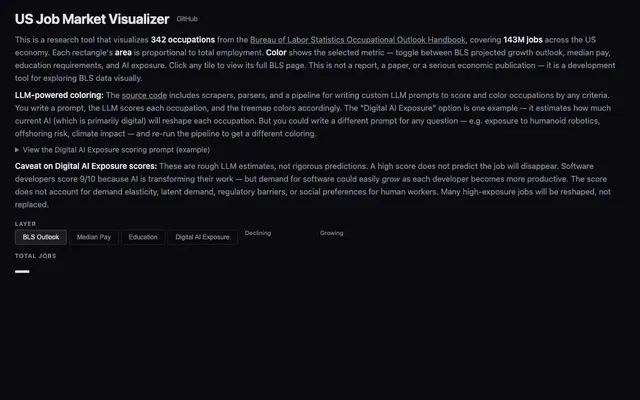
US Job Market Visualizer

Interactive exploration of 342 BLS occupations covering 143 million US jobs, with layers for employment outlook, pay, education and digital AI exposure. Its customizable LLM scoring pipeline illustrates uneven exposure across digital and physical work. Exposure scores are rough estimates of occupational change, not predictions of job disappearance; they omit demand responses, regulatory barriers and preferences for human workers. The project explicitly describes itself as a development tool rather than a rigorous economic publication.

karpathy.ai
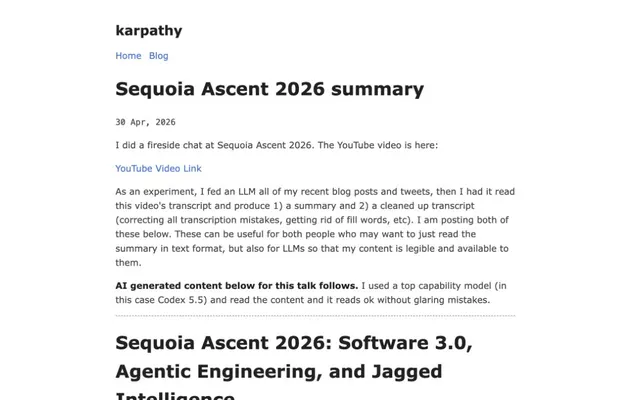
Sequoia Ascent 2026: agentic engineering and jagged intelligence

Author-posted, AI-cleaned summary and transcript, which Karpathy says he read. Describes a late-2025 jump in coding-agent usefulness, professional orchestration and evaluation, and verifiability as an explanation for uneven progress. Current enthusiasm updates the older decade-of-agents interview; the edited text is not an exact quotation transcript.

karpathy.bearblog.dev
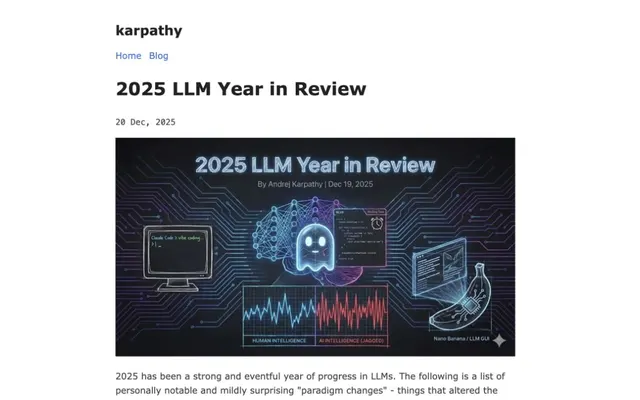
2025 LLM Year in Review

His review connects verifiable rewards to reasoning gains, criticizes benchmark overfitting, describes jagged intelligence and the growing application layer around models. Provides concrete mechanisms and builder vocabulary rather than a universal intelligence forecast.

karpathy.bearblog.dev
AGI is still a decade away

Karpathy’s primary interview frames agents as a decade of engineering work. Discusses cognitive deficits, continual learning, the gap between self-driving demos and deployment, and education. The forecast is dated and intuitive, not a calibrated deadline.

dwarkesh.com
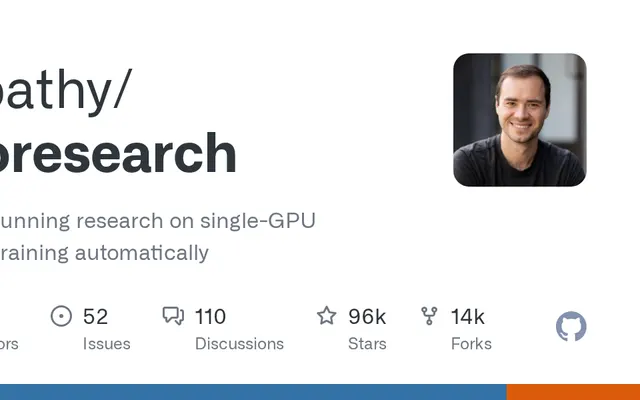
autoresearch: autonomous single-GPU experiments

His README demonstrates agents editing a training file, running five-minute experiments and retaining improvements against a fixed validation metric. The introduction’s future agent civilization is playful fiction, not a report of current events. Human-authored instructions and a bounded setup remain essential.

github.com
あなたはどの位置でしょうか?
いくつかの簡単な質問に答えて、自分のAIに対する世界観を探ってみましょう。
自分の世界観をマッピングする

あなたはどの位置でしょうか?

自分の世界観をマッピングする