質問1
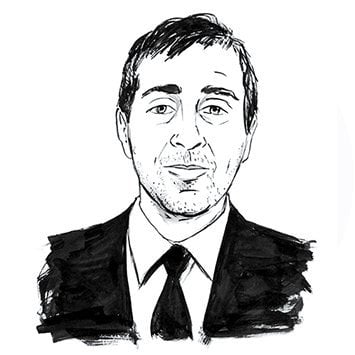
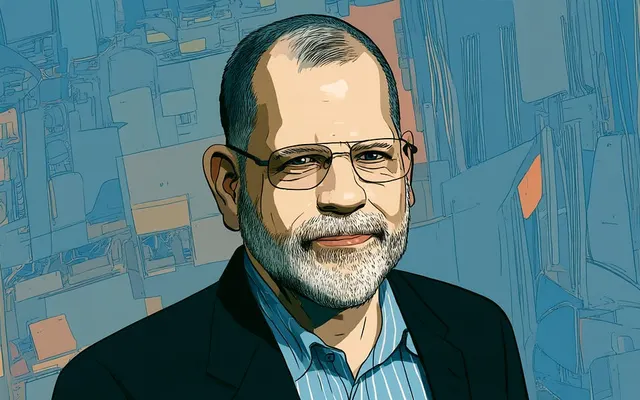
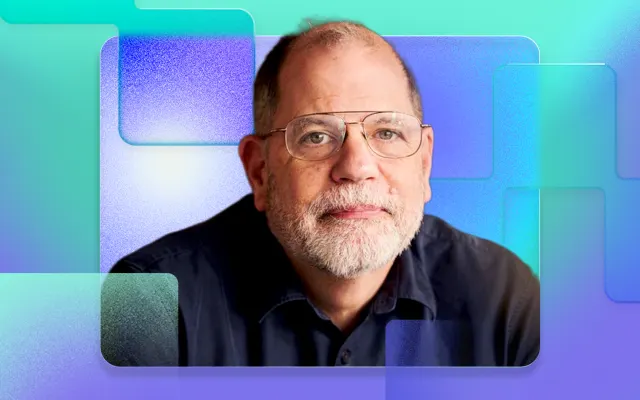
Tyler Cowen
x.com/tylercowenEconomist and Marginal Revolution blogger who expects large gains from AI, argues institutions adapt slowly and asks for testable claims about risk.
AIは世界をどのように変えるでしょうか?
横軸:彼が表明したDoom–Bloomの見通し。 縦軸:変革の規模。
Doom–Bloom:100点中74。変革の規模:100点中69。解釈範囲:横方向は69から79、縦方向は64から75。これらは解釈上の座標であり、事象の確率ではありません。
≈5%
本人が示した数値ではなく、シミュレーションされた本人の回答から推定したものです。 妥当と考えられる範囲:2–10%。
中心的な前提
Institutions contain tacit knowledge, bad incentives, legal constraints and people who do not reorganize themselves merely because a benchmark improved.回答1
この前提が実際には異なると判明した場合、彼の見通しはどう変わりますか?
未解決の問い
I don’t think there is a scientifically defensible way to assign a meaningful percentage to that aggregate risk.回答3
ここで考えられる結果を彼が見分けるうえで、何が役立ちますか?
詳細
大きな恩恵が予想されていますが、重要な条件や分配上の制約があります。
67 / 100
質的尺度での解釈範囲は67から67です。
対処可能、または局所的な害が予想されています。
40 / 100
質的尺度での解釈範囲は33から67です。
人間の選択には意味のある影響力がありますが、大幅に制約されています。
53 / 100
質的尺度での解釈範囲は48から77です。
より高性能なAIの開発を停止するか、大幅に減速させます。
シミュレーション上の位置:明示された安全対策の下で開発を継続します。
より高性能なAIの開発を加速させます。
事前の保護措置または許可が整うまで、取り上げられたAIの利用を制限します。
シミュレーション上の位置:対象を絞った説明責任と保護措置を伴う形で、取り上げられたAIの利用を認めます。
取り上げられたAIの利用に対する制限を最小限にします。
これらの解釈では、彼が示した条件が維持されています。恩恵と害は、どちらも大きくなり得ます。この範囲は、統計的な信頼区間ではなく、彼のシミュレーションされた回答をどのように読み取ったかを示すものです。
似ている世界観
シミュレーションされた世界観がTyler Cowenの世界観に最も近いオピニオンリーダー
Tyler CowenがAIについて語ったこと
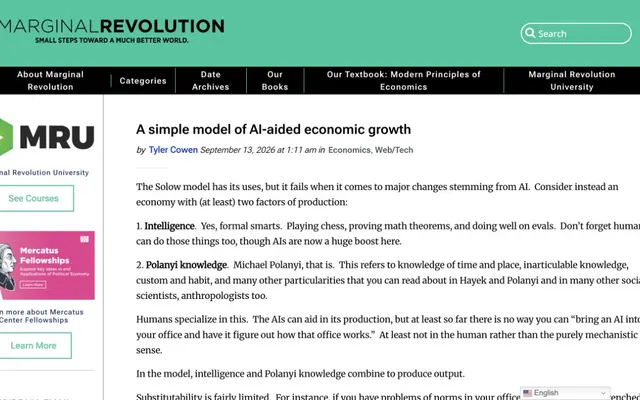
Cowen expects large gains from AI, argues that institutions absorb it slowly and asks AI pessimists for testable predictions.
“There are further AI/Intelligence advances on tap, plus absorbing the advances to date, and exploiting them, takes a long time.”
Blog post, Marginal Revolution “If you have very pessimistic fears or predictions about AI, name the market prices that will support or confirm them.”
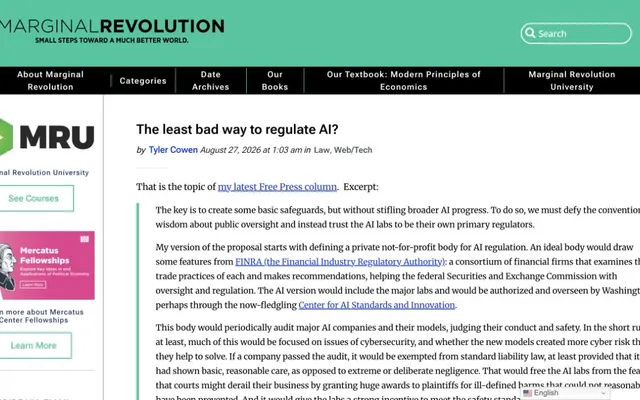
Post on X “The key is to create some basic safeguards, but without stifling broader AI progress.”
Marginal Revolution, excerpt of his Free Press column “I think the net picture of strong AI is likely to be good rather than bad.”
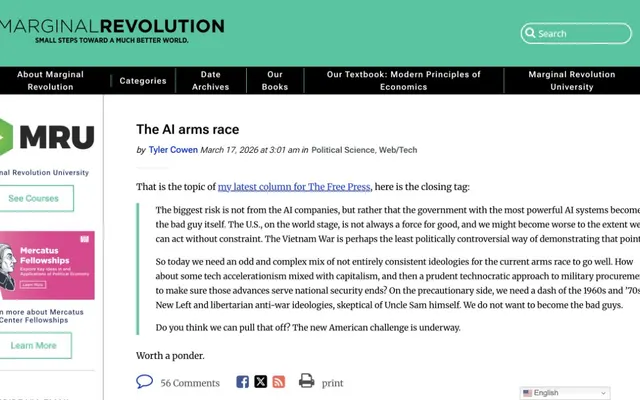
Talk at Google DeepMind, Human Life in a Post-AGI World “The biggest risk is not from the AI companies, but rather that the government with the most powerful AI systems becomes the bad guy itself.”
Marginal Revolution, excerpt of his Free Press column
リンク先の出典から原文どおりに引用(2026年10月3日に確認)
シミュレーション評価
出典
このシミュレーション対象者の根拠として使用された記事、インタビュー、著作です。
Partial access on 2026-09-22: publisher subtitle and opening paragraphs only; full text requires a subscription. Frames a competing risk of American AI losing ground: the subtitle warns that heavy US regulation could let China dominate areas including arms and healthcare. Treat this as an attributed scenario, not a realized outcome or a numerical extinction forecast. No detailed argument beyond the preview has been verified. Text reader dates the article September 20; the browser displays September 21. See docs/research/user-source-additions-2026-09-22.md for the access and date discrepancy.

Public Free Press editorial summary read on 2026-09-22. Describes Cowen’s conditional scenario: poor polls and a midterm defeat prompt Trump to pivot toward AI restrictions, halt new American models and negotiate a slowdown with China, risking loss of US leadership to Beijing. This is the publisher’s account of the linked Cowen column, not a separate Cowen essay, a verified political event or full-text access. Only the Cowen summary section informs this persona.

Author-hosted transcript. Expects pervasive institutional reconstruction, with human bottlenecks stretching the transition well beyond a year or two. Rejects inevitable mass unemployment and a future drained of meaning; sees jobs in gathering data, experiments and adoption. Expects net benefits while remaining unsure about political and cultural outcomes. Treats AGI as an imprecise boundary, not a denial of powerful AI.

Formal intelligence complements tacit, contextual human knowledge. Cheap intelligence raises returns to those scarce complements; incorporating it is slow. Predicts some transitional displacement but continuing work and wage gains. This is Cowen’s economic model and interpretation of observations, not proof that all occupations are safe.

Publisher transcript read in the September 12 recap. Cowen expects roughly half a percentage point of additional annual growth over a decade, rather than an immediate explosion. Organizational redesign constrains gains; faster integration would raise his forecast. Challenges pessimists to give falsifiable intermediate predictions and sees defensive AI as a reason development continues. Treat only Cowen’s answers as his views, not the host’s nuclear analogies or scenario claims.

Author’s column excerpt proposes an industry-led nonprofit auditor, authorized and overseen by government, with conditional liability protection for companies meeting standards and showing reasonable care. Prioritizes cyber risk and industry expertise while acknowledging capture and exclusionary incentives. Not a call for zero safeguards.

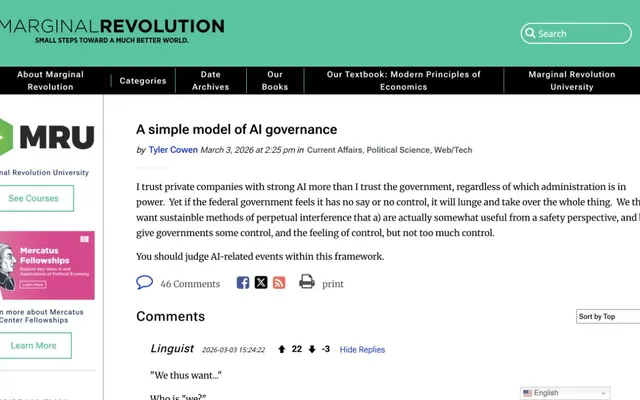
Prefers private companies to governments wielding powerful AI, but wants useful limited government involvement to avoid a later wholesale state takeover of the industry. Institutional incentives and feasible alternatives matter.

Author’s excerpt identifies the strongest AI-empowered government becoming abusive as a central danger. Favors development and competent procurement alongside skepticism of state military power. US leadership is not equivalent to guaranteed benevolence.

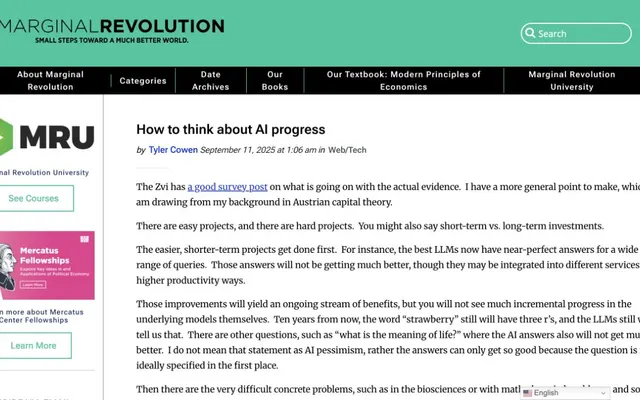
Distinguishes already-excellent routine capabilities from harder advances whose benefits take longer to reach consumers. Medical trials, regulation and adoption can delay benefits even when model progress continues. Missing immediate impact is not evidence of model stagnation.

Publisher summary only; full transcript not accessible in the page extraction. Cowen’s attributed view is that discomfort can accompany substantial beneficial change. Do not invent detailed interview claims or treat the sponsor’s commentary as his position.

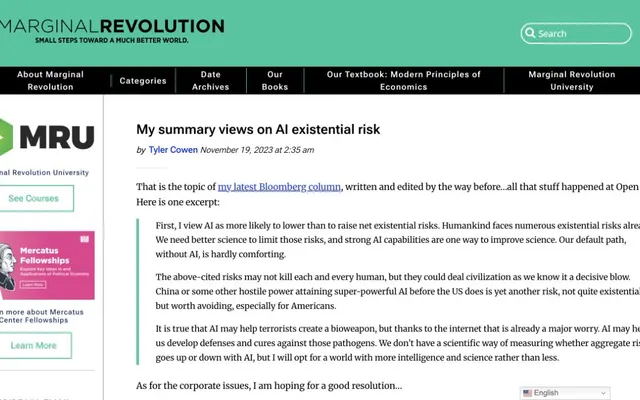
Historical author excerpt: expects AI more likely to lower than raise net existential risk because science improves defenses against existing threats. Acknowledges malicious biological use and hostile-state risks; says there is no scientific way to measure the aggregate balance. Not a zero-risk claim or a numerical P(doom).

His own excerpt of the closing of his Free Press column, read in full. Imagines America ceding AI-invented medicine to China out of fear of doom, a fear he says rested on a story spread on social media rather than peer-reviewed research or market prices. Concedes we cannot say for sure the AI doom scenario is false, but argues that debating the chances of doom ex ante, on a highly speculative basis, builds less expertise than solving problems bit by bit and is more likely to demoralize and immobilize us. A refusal to estimate, not a zero-risk claim.

あなたはどの位置でしょうか?
自分の世界観をマッピングする