




Luana Cantuarias

Luana Cantuarias

x.com/luacantu

Software engineer who builds AI agents and crypto payment infrastructure and writes about agents becoming economic actors.

AIは世界をどのように変えるでしょうか?

文明規模の変化漸進的な変化DoomBloom
シミュレーション上の位置解釈範囲

横軸:彼女が表明したDoom–Bloomの見通し。 縦軸:変革の規模。

Doom–Bloom:100点中75。変革の規模:100点中67。解釈範囲:横方向は70から80、縦方向は49から76。これらは解釈上の座標であり、事象の確率ではありません。

Luana CantuariasのP(doom) · 推定

≈3%

0%100%

本人が示した数値ではなく、シミュレーションされた本人の回答から推定したものです。 妥当と考えられる範囲:2–8%。

P(doom)の推定方法

彼女の見通しを左右するもの

中心的な前提

Identity, permissions, budgets, spend limits, alerts, audit trails, and open settlement rails are not boring details; they determine what agents can actually own and do.
回答1

この前提が実際には異なると判明した場合、彼女の見通しはどう変わりますか?

未解決の問い

I don’t have a clean percentage, timeline, or endpoint for that change.
回答2

ここで考えられる結果を彼女が見分けるうえで、何が役立ちますか?

考えを変え得るもの

Seeing agents operate at real scale would change my view most: not demos, but sustained use by ordinary people and businesses, with wallets, permissions, and budgets across real workflows.
回答4

どのような証拠なら十分で、それによって彼女の見解はどちらの方向に変わりますか?

詳細

予想される恩恵

大きな恩恵が予想されていますが、重要な条件や分配上の制約があります。

68 / 100

影響が小さい変革をもたらす影響

質的尺度での解釈範囲は67から67です。

予想される害

対処可能、または局所的な害が予想されています。

34 / 100

影響が小さい変革をもたらす影響

質的尺度での解釈範囲は33から33です。

人間の影響力

人間の選択によって、AIの軌道を大幅に変えることができます。

66 / 100

影響力が小さい影響力が大きい

質的尺度での解釈範囲は49から76です。

AI利用のルール

事前の保護措置または許可が整うまで、取り上げられたAIの利用を制限します。

シミュレーション上の位置:対象を絞った説明責任と保護措置を伴う形で、取り上げられたAIの利用を認めます。

取り上げられたAIの利用に対する制限を最小限にします。

これらの解釈では、彼女が示した条件が維持されています。恩恵と害は、どちらも大きくなり得ます。この範囲は、統計的な信頼区間ではなく、彼女のシミュレーションされた回答をどのように読み取ったかを示すものです。

あなたはLuana Cantuariasと比べてどの位置でしょうか?
約3分で自分のAIに対する世界観をマッピングして、比較できます

似ている世界観

シミュレーションされた世界観がLuana Cantuariasの世界観に最も近いオピニオンリーダー

Luana CantuariasがAIについて語ったこと

Cantuarias builds infrastructure for AI agents, wants careful limits on what they can spend, and warns that frontier labs can shape AI risk rules.

  1. “everyone wants agents that can make money but i’m more interested in the infrastructure that decides how they’re allowed to spend it”

    Post on X
  2. “we’re building an internet where some of the users won’t be human”

    Post on X
  3. “the interesting part of always-on agents isn’t that they work while you sleep, it’s that software is slowly gaining continuity”

    Post on X
  4. “frontier AI companies have an incentive to frame AI risk in ways that make frontier-level regulation necessary”

    Post on X

リンク先の出典から原文どおりに引用(2026年10月6日に確認)

出典

このシミュレーション対象者の根拠として使用された記事、インタビュー、著作です。

The spending governance is not autonomous

Explains why she built GuardX402: AI agents had started using her NodusAI server over the x402 payment protocol, and builders at a Miami event kept saying they wanted more control over what their agents spend, a real blocker to deploying agents in production. She calls spend limits, alerts and audit trails the missing governance layer for agentic commerce. Partly a product announcement; the McKinsey projection she cites is not her own forecast. Full LinkedIn post inspected; comments excluded.

linkedin.com
Technology should meet people where they are

Resharing a hackathon write-up about MIACompass, the free multilingual AI-agent tool she built to help Miami residents find housing, food, healthcare, jobs and education, she says the build came from lived experience and that technology should meet people where they are. Her own short comment only; the reshared third-party text about her life is excluded. A value about whom technology should serve, not a forecast. Full LinkedIn post inspected.

linkedin.com
AI is moving from chat to execution

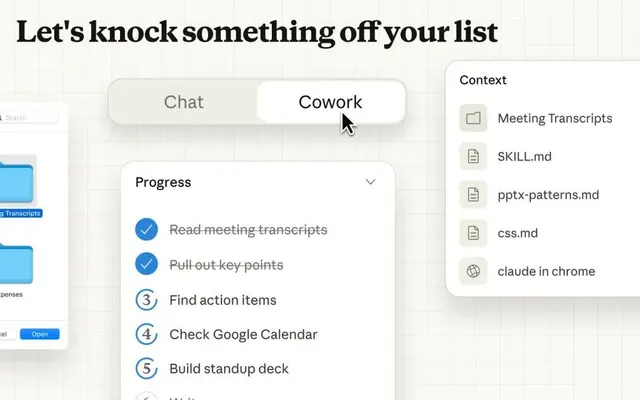
Calls Anthropic’s Claude Cowork more powerful than the chatbots and browser tools most of the AI race focuses on, because it executes workflows on your files in plain English without code. She uses it for content production, calls it one of the clearest signs that AI is moving from chat to execution and “what the next generation of work looks like”, and tells readers to map the tasks they would hand off. Enthusiasm for a tool and a direction of work, not a jobs forecast. Full LinkedIn post inspected; the same piece appeared as an X article (status 2010867182671184026), whose title and preview were checked via the embed endpoint.

linkedin.com
The agent economy is live

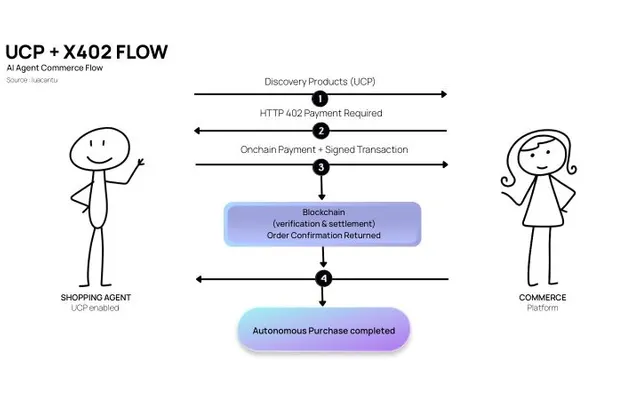
After Google open-sourced its Universal Commerce Protocol, says AI agents can now discover, cart and buy autonomously; with x402 payments and blockchain settlement, she calls the stack fully autonomous and fully open source. Enthusiasm about open protocols for agent commerce, not a forecast of its size. Full LinkedIn post inspected.

linkedin.com

シミュレーション評価

質問1

AIは私たちの未来にとって何を意味すると思いますか?また、なぜそう思いますか?

AI means the internet is gaining non-human users. Agents are moving from chat to execution: they can hold memory, use tools, manage wallets, negotiate, pay, and operate over time. That continuity makes them economic actors—a very different species of software. So the future depends heavily on the infra we give them. Identity, permissions, budgets, spend limits, alerts, audit trails, and open settlement rails are not boring details; they determine what agents can actually own and do. The intelligence may be autonomous, but the spending governance is not. I’m optimistic about AI meeting ordinary people where they are—helping them find resources, navigate workflows, or understand their rights. But I’m wary of frontier companies defining “AI risk” in ways that only they can afford to comply with. Watch who writes the standards and who gets excluded. The agent economy is already live; now we need to build its primitives carefully.

質問2

AIは最終的に世界をどの程度変えると思いますか?

A lot—probably at the level of changing who can participate in the internet. Software is gaining identity, memory, permissions, tools, wallets, budgets, and the ability to act over time. That shifts AI from something you consult into something that executes, pays, negotiates, and allocates resources. I don’t have a clean percentage, timeline, or endpoint for that change. But once some internet users are agents rather than humans, identity, commerce, work, and governance all have to adapt. The magnitude will depend less on flashy demos and more on the infrastructure underneath: what agents may own, what they may spend, who grants permission, and whether their actions are visible and auditable.

質問3

AIが人類絶滅、または同様に永続的な破局を引き起こす可能性は、直感的にどのくらいだと思いますか?

I don’t have a meaningful percentage. My concern is more concrete: agents are already gaining tools, permissions, wallets, and budgets, so we need enforceable limits, alerts, and audit trails. That doesn’t imply extinction; it means governance has to exist at the execution layer. I’m also wary of frontier labs turning speculative risk estimates into standards only they can define and afford.

質問4

どのような発見や出来事があれば、AIが将来もたらす影響についてのあなたの見解が最も大きく変わりますか?

Seeing agents operate at real scale would change my view most: not demos, but sustained use by ordinary people and businesses, with wallets, permissions, and budgets across real workflows. If that produced reliable value without constant supervision, I’d expect a much larger shift toward non-human economic actors. The opposite would matter too: if agents consistently failed at continuity, trust, or safe execution despite better models and infrastructure, I’d revise downward. For me, the key evidence is whether they can act over time within enforceable limits—not whether another benchmark jumps.

質問5

恩恵と害を総合すると、AIは私たちの社会に全体としてどのような影響を与えると予想しますか?

Overall, I expect AI to be net positive—but the outcome will be shaped by infrastructure and access, not just model capability. The upside is software that can execute useful work, help ordinary people navigate resources and rights, and give more people access to powerful tools. The risk is that agents gain wallets, permissions, and the ability to act before we build adequate limits, alerts, and audit trails—or that frontier companies write rules that entrench themselves and exclude smaller builders. So I’m optimistic about the direction, but the primitives matter: open rails, clear identity, bounded permissions, transparent spending, and technology that meets people where they are.
あなたはどの位置でしょうか?
いくつかの簡単な質問に答えて、自分のAIに対する世界観を探ってみましょう。
自分の世界観をマッピングする

あなたはどの位置でしょうか?

自分の世界観をマッピングする