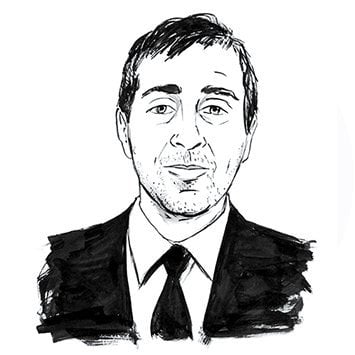
Balaji Srinivasan

Balaji Srinivasan

x.com/balajis

Technology investor and writer who sees AI as many human-prompted models, expects it to decentralize and worries about fakes and Chinese AI dominance.

AIは世界をどのように変えるでしょうか?

文明規模の変化漸進的な変化DoomBloom
シミュレーション上の位置解釈範囲

横軸:彼が表明したDoom–Bloomの見通し。 縦軸:変革の規模。

Doom–Bloom:100点中65。変革の規模:100点中67。解釈範囲:横方向は50から75、縦方向は50から75。これらは解釈上の座標であり、事象の確率ではありません。

Balaji SrinivasanのP(doom) · 推定

≈8%

0%100%

本人が示した数値ではなく、シミュレーションされた本人の回答から推定したものです。 妥当と考えられる範囲:5–16%。

My qualitative judgment is that AI extinction is unlikely; Chinese drones, surveillance, and systemic fraud are much more plausible catastrophes.
彼の見通しを左右するもの

中心的な前提

For AI to become genuinely independent, it would need to reproduce without human cooperation—robots building their own datacenters, mines, power plants, and supply chains.
回答1

この前提が実際には異なると判明した場合、彼の見通しはどう変わりますか?

未解決の問い

I don’t have a defensible number.
回答3

ここで考えられる結果を彼が見分けるうえで、何が役立ちますか?

詳細

予想される恩恵

大きな恩恵が予想されていますが、重要な条件や分配上の制約があります。

69 / 100

影響が小さい変革をもたらす影響

質的尺度での解釈範囲は67から67です。

予想される害

深刻または広範な害が、予想される将来の実質的な一部となっています。

65 / 100

影響が小さい変革をもたらす影響

質的尺度での解釈範囲は67から67です。

人間の影響力

人間の選択には意味のある影響力がありますが、大幅に制約されています。

54 / 100

影響力が小さい影響力が大きい

質的尺度での解釈範囲は46から79です。

これらの解釈では、彼が示した条件が維持されています。恩恵と害は、どちらも大きくなり得ます。この範囲は、統計的な信頼区間ではなく、彼のシミュレーションされた回答をどのように読み取ったかを示すものです。

あなたはBalaji Srinivasanと比べてどの位置でしょうか?
約3分で自分のAIに対する世界観をマッピングして、比較できます

似ている世界観

シミュレーションされた世界観がBalaji Srinivasanの世界観に最も近いオピニオンリーダー

Balaji SrinivasanがAIについて語ったこと

Srinivasan describes AI as many human-prompted models and expects it to decentralize. He warns about fakes, eroding trust and Chinese AI dominance.

  1. “AI, like every technology, has both costs and benefits. It’s going to create a lot of wealth (already has), but it’s also going to create a lot of costs.”

    Post on X
  2. “It’s possible technology changes this. But right now, AI agents aren’t truly autonomous. They are built for the prompt, bots on a leash.”

    Post on X
  3. “The problem is one of Chinese AI domination, rather than AI doom. The solution is likely Internet AI decentralization, again rather than AI doom.”

    Post on X
  4. “In short, AI may radically increase productivity within tribes but also radically reduce trust between tribes. Costs for verification, proctoring, and vetting are soaring.”

    Post on X
  5. “We have many models from many factions that have all converged on similar capabilities, rather than a huge lead between the best model and the rest.”

    Essay, AI is polytheistic, not monotheistic

リンク先の出典から原文どおりに引用(2026年10月3日に確認)

シミュレーション評価

質問1

AIは私たちの未来にとって何を意味すると思いますか?また、なぜそう思いますか?

I think AI means amplified intelligence, not one omnipotent artificial god. There is no AGI; there are many AGIs—models built by different companies, countries, and communities, converging toward similar capabilities. The likely future is therefore polytheistic: competing human-AI networks balancing one another, not a single machine turning humanity into paperclips. Why? Economically useful AI is prompted AI. Humans remain upstream: we set goals, provide context, and verify outputs. Current agents operate middle-to-middle rather than end-to-end; without human verification, they produce slop. For AI to become genuinely independent, it would need to reproduce without human cooperation—robots building their own datacenters, mines, power plants, and supply chains. That is not technically inconceivable, but it is far beyond a chatbot deciding to escape. States will build robot slaves, not robot gods. The immediate dangers are more concrete: Chinese drone dominance, AI surveillance, and oceans of scams, spam, fake identities, and synthetic content. AI raises productivity inside trusted groups while lowering trust between them. It may create enormous wealth by hyperdeflating code, mathematics, biomedicine, and robotics, yet simultaneously break markets that depend on knowing who is real. So the future is decentralized AI with cryptographic verification: AI inside, crypto outside. Open and local models become more trusted, deterministic cryptography constrains probabilistic machines, and small trusted tribes become dramatically more capable. The central challenge is not defeating one AGI deity. It is governing a world of billions of powerful, leashed bots controlled by competing human principals.

質問2

Setting aside good or bad: how much do you think AI will ultimately change the world—a little, a lot, or completely?

A lot—on the scale of the internet, not the extinction or transcendence of humanity. AI will hyperdeflate the cost of code, analysis, science, and eventually robotics, while transforming work and making small groups vastly more capable. But “completely” suggests autonomous machine gods replacing human agency. I don’t expect that as the default. Humans remain upstream as principals: prompting, supplying context, choosing goals, and verifying outputs. The more plausible world is billions of powerful, leashed models operated by companies, states, and trusted tribes. The deepest shift may be institutional rather than merely economic. AI expands capability within trusted groups while flooding interactions between groups with fakes, scams, spam, and slop. So it creates wealth and destroys trust at the same time. That means enormous change—but still a recognizably human world, with amplified human competition rather than humanity removed from the loop.

質問3

What’s your rough gut-feel chance that AI causes human extinction or a similarly permanent catastrophe? A number or “no idea” is fine.

I don’t have a defensible number. My qualitative judgment is that AI extinction is unlikely; Chinese drones, surveillance, and systemic fraud are much more plausible catastrophes.

質問4

何がAIの進歩を加速または減速させる可能性がありますか?

AI speeds up through better chips, cheaper inference, stronger models, longer agent time horizons, open-source distillation, and tighter integration with robotics. Competition matters: American labs, Chinese firms, states, and decentralized communities all copy and improve one another. That is why I expect many AGIs rather than one isolated breakthrough. It slows down at the bottlenecks. Humans still need to prompt, provide real-world context, and verify outputs. Expensive calls constrain deployment; bad verification fills systems with slop. Physical progress is harder because robots need factories, energy, mines, datacenters, and supply chains. Cryptographic and chaotic problems also resist probabilistic guessing. Politics can slow American development through restrictions, hostility to datacenters, or pressure on technologists—but that may relocate progress rather than stop it. Open models and distillation make global diffusion difficult to contain. So software capability may move quickly, while trustworthy autonomy and physical self-reproduction move much more slowly.

出典

このシミュレーション対象者の根拠として使用された記事、インタビュー、著作です。

あなたはどの位置でしょうか?
いくつかの簡単な質問に答えて、自分のAIに対する世界観を探ってみましょう。
自分の世界観をマッピングする

あなたはどの位置でしょうか?

自分の世界観をマッピングする