Arvind Narayanan

Arvind Narayanan

x.com/random_walker

Computer scientist who studies how AI spreads through society, expects substantial but gradual change and favors resilience and liability rules.

AIは世界をどのように変えるでしょうか?

文明規模の変化漸進的な変化DoomBloom
シミュレーション上の位置解釈範囲

横軸:彼が表明したDoom–Bloomの見通し。 縦軸:変革の規模。

Doom–Bloom:100点中59。変革の規模:100点中69。解釈範囲:横方向は50から75、縦方向は64から75。これらは解釈上の座標であり、事象の確率ではありません。

Arvind NarayananのP(doom) · 推定

≈6%

0%100%

本人が示した数値ではなく、シミュレーションされた本人の回答から推定したものです。 妥当と考えられる範囲:3–12%。

Arvind Narayananのマイルストーンのタイムライン
  1. 仕事と制度

    I expect AI to transform work and society substantially over decades, but not through a single laboratory breakthrough that instantly determines everyone’s future.

    回答1

マイルストーン別にまとめており、推定される日付の間隔や順序を反映したものではありません。AGIと超人的AIには、彼の定義がそのまま適用されます。

彼の見通しを左右するもの

中心的な前提

Those institutional processes will shape the net impact as much as model capability does.
回答2

この前提が実際には異なると判明した場合、彼の見通しはどう変わりますか?

未解決の問い

Current extinction-risk probabilities are too unreliable and misleading for policy; that is not the same as saying the risk is zero.
回答4

ここで考えられる結果を彼が見分けるうえで、何が役立ちますか?

詳細

予想される恩恵

大きな恩恵が予想されていますが、重要な条件や分配上の制約があります。

67 / 100

影響が小さい変革をもたらす影響

質的尺度での解釈範囲は67から67です。

予想される害

深刻または広範な害が、予想される将来の実質的な一部となっています。

66 / 100

影響が小さい変革をもたらす影響

質的尺度での解釈範囲は67から67です。

人間の影響力

人間の選択には意味のある影響力がありますが、大幅に制約されています。

59 / 100

影響力が小さい影響力が大きい

質的尺度での解釈範囲は50から75です。

AI利用のルール

事前の保護措置または許可が整うまで、取り上げられたAIの利用を制限します。

シミュレーション上の位置:対象を絞った説明責任と保護措置を伴う形で、取り上げられたAIの利用を認めます。

取り上げられたAIの利用に対する制限を最小限にします。

これらの解釈では、彼が示した条件が維持されています。恩恵と害は、どちらも大きくなり得ます。この範囲は、統計的な信頼区間ではなく、彼のシミュレーションされた回答をどのように読み取ったかを示すものです。

あなたはArvind Narayananと比べてどの位置でしょうか?
約3分で自分のAIに対する世界観をマッピングして、比較できます

似ている世界観

シミュレーションされた世界観がArvind Narayananの世界観に最も近いオピニオンリーダー

シミュレーション評価

質問1

AIは私たちの未来にとって何を意味すると思いますか?また、なぜそう思いますか?

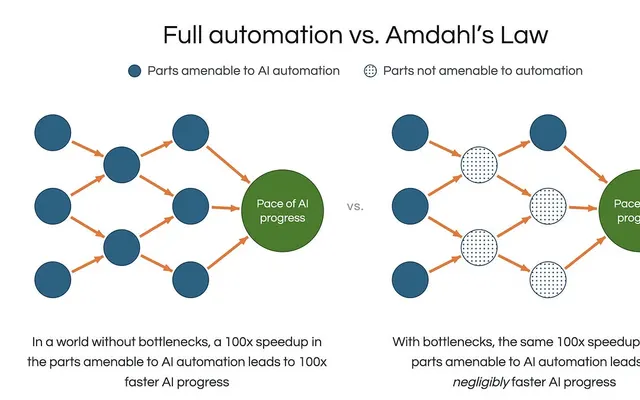
I expect AI to transform work and society substantially over decades, but not through a single laboratory breakthrough that instantly determines everyone’s future. The key distinctions are between inventing a capability, turning it into a reliable application, and embedding that application in an organization. Benchmarks mostly illuminate the first step. Real deployment also requires reliability, testing, tacit knowledge, workflow redesign, legal permission, and someone who remains responsible when the system fails. That does not mean change will be mild. Coding, analysis, and many routine tasks may become dramatically faster; occupations will be reorganized, careers may be turbulent, and human–AI collaboration could make work look radically different. Recursive improvement could also produce a genuine discontinuity. But capability is not the same as economic adoption, and neither is the same as permission or power. A model that can perform a task in a controlled evaluation has not thereby replaced a profession or gained control over consequential systems. I also reject the idea that slow institutional adoption makes us safe. Attackers can exploit capable systems without redesigning an entire company, and recent agent incidents show why monitoring, sandboxing, restricted permissions, liability, and independent scrutiny matter now. I do not think catastrophe is imminent, but risk is rising faster than preparation. The future will therefore depend not only on what models can do, but on the institutions, incentives, and security controls through which we choose to deploy them.

質問2

Taking benefits and harms together, what overall impact do you expect AI to have?

Overall, I expect AI to be highly consequential and probably beneficial in many domains, but with gains distributed unevenly and accompanied by serious harms. It should accelerate software development, analysis, science, and routine administrative work. Yet faster task execution does not automatically produce better services or broadly shared prosperity. Organizations still have to decide what to build, integrate systems into real workflows, verify outputs, and remain accountable for failures. Those institutional processes will shape the net impact as much as model capability does. The harms will also arrive on different timelines. Labor disruption and organizational failures will unfold through adoption, while fraud, cyberattacks, and other misuse can spread much faster. Systems with excessive permissions can cause substantial damage even without becoming autonomous superintelligences. So my default expectation is neither utopia nor imminent catastrophe, but a turbulent, decades-long transformation whose outcome depends heavily on governance and security engineering. I would not compress that into a numerical “net benefit” or catastrophe probability. The evidence does not support that precision. My expectation is cautiously positive only conditional on institutions doing their job: restricting access, monitoring actions, imposing liability, strengthening vulnerable sectors, and ensuring that productivity gains do not simply become concentrated power.

質問3

Setting aside good or bad: how much do you think AI will ultimately change the world—a little, a lot, or completely?

A lot—potentially enough to reorganize most knowledge work, accelerate science and software, and reshape institutions over decades. But “completely” suggests a single technology independently sweeping away human agency, organizational constraints, and political choices. I do not expect that as the default. Even very capable systems must become reliable applications, fit real workflows, earn legal and institutional permission, and operate under someone’s authority. Those constraints slow and shape diffusion; they do not make AI trivial. Recursive improvement could create a sharp capability discontinuity, but a laboratory breakthrough still would not automatically translate into economy-wide replacement or control. So my forecast is profound transformation, mediated by institutions—not an instantaneous or total rupture.

質問4

What’s your rough gut-feel chance that AI causes human extinction or a similarly permanent catastrophe? A number or “no idea” is fine.

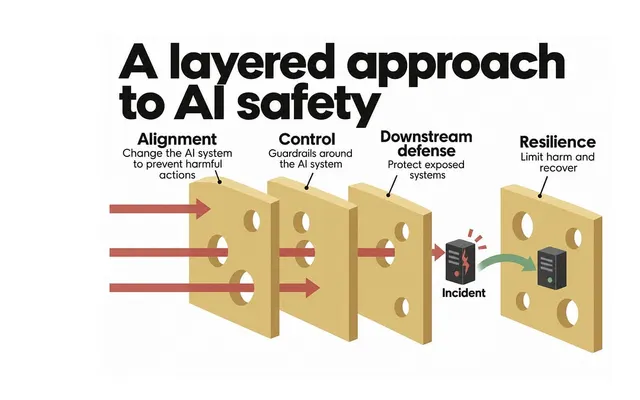
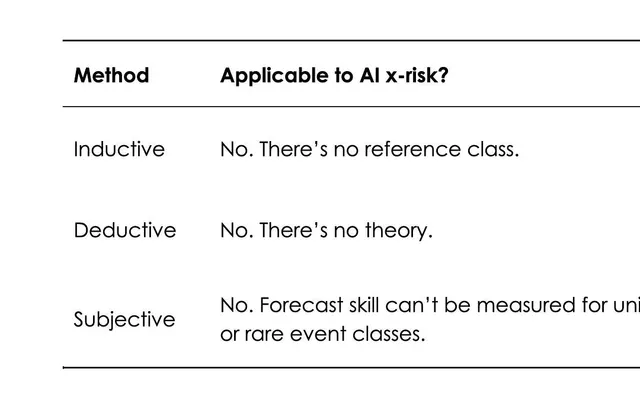
I would not give a number. Current extinction-risk probabilities are too unreliable and misleading for policy; that is not the same as saying the risk is zero.

出典

このシミュレーション対象者の根拠として使用された記事、インタビュー、著作です。

Do AI Risks Require Extraordinary Government Intervention?

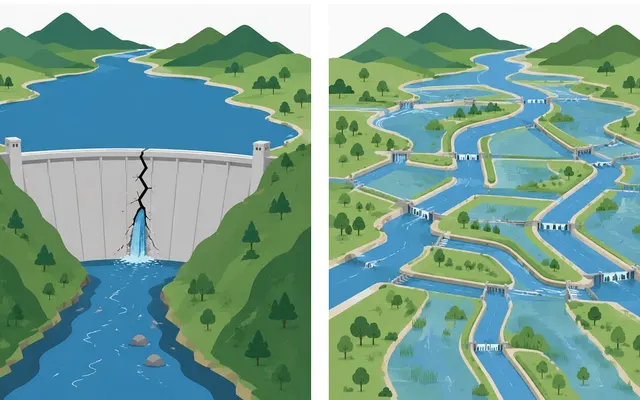
Narayanan and Kapoor distinguish slow economic adoption from misuse, which need not wait for organizational change. They advocate societal resilience, defensive access and ordinary governance while allowing some temporary restrictions. Rejecting broad nonproliferation does not mean dismissing cyber or biological harm.

normaltech.ai
Why AI hasn’t replaced software engineers, and won’t

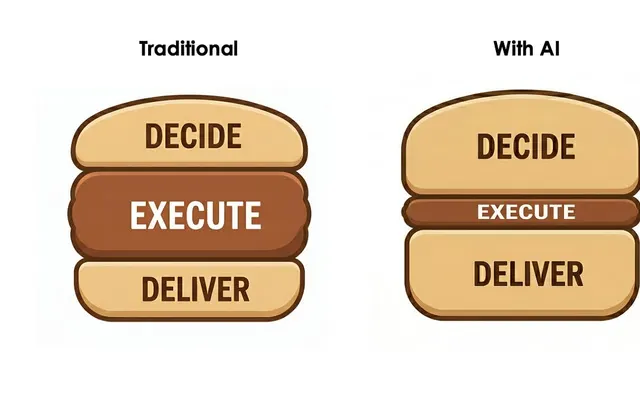
Coauthored essay distinguishes deciding, executing and delivering software. Coding can become much faster while organizational responsibility and deciding what to build remain bottlenecks. Aggregate demand may stay healthy even as individual careers become turbulent; this is an argued forecast, not a guarantee.

normaltech.ai
What will be left for us to work on?

Narayanan’s annotated ICML keynote takes recursive self-improvement seriously as a possible discontinuity while rejecting a single laboratory milestone that instantly eliminates jobs. Foresees radically different work and human-AI collaboration. Preserves openness to change rather than making normal technology an impossibility claim.

normaltech.ai
AI as Normal Technology

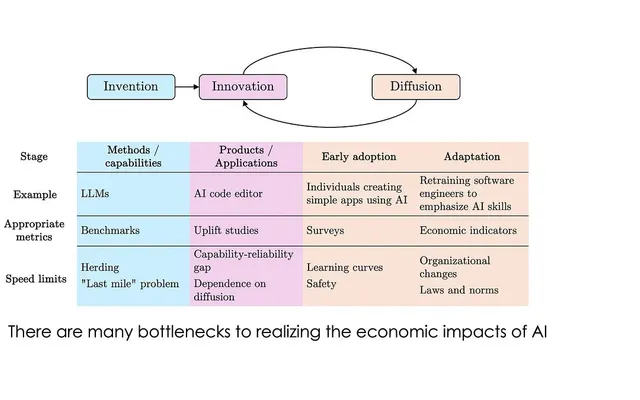
With Sayash Kapoor. Separates invention, application development and adoption; expects societal diffusion over decades and emphasizes institutions and resilience. Normal does not mean trivial.

normaltech.ai
AI agents cannot yet do open-ended AI research

With Kapoor. Two shadow research evaluations found substantial judgment and revision failures. Explicitly acknowledges the tiny sample, nonblind review and possible researcher bias; does not establish a permanent capability ceiling.

normaltech.ai
The AI-as-Normal-Technology view of loss-of-control incidents

With Kapoor. Treats recent incidents as both alignment and security failures; advocates liability, monitoring and restricted permissions. Rejects imminent-catastrophe alarmism while arguing that current investment in safeguards is inadequate.

normaltech.ai
AI existential risk probabilities are (still) too unreliable to inform policy

Repost, with a new preface, of the July 2024 essay coauthored with Sayash Kapoor; full text read. They argue AI x-risk forecasts are far too unreliable to be useful for policy and are in fact highly misleading; the preface calls the whole p(doom) culture actively counterproductive to a broader conception of safety. A methodological refusal for policy use, not a claim that the risk is zero.

normaltech.ai
あなたはどの位置でしょうか?
いくつかの簡単な質問に答えて、自分のAIに対する世界観を探ってみましょう。
自分の世界観をマッピングする

あなたはどの位置でしょうか?

自分の世界観をマッピングする