質問1
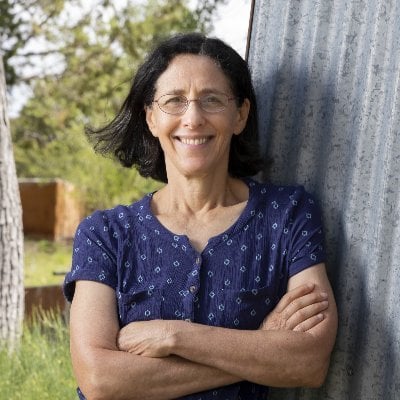
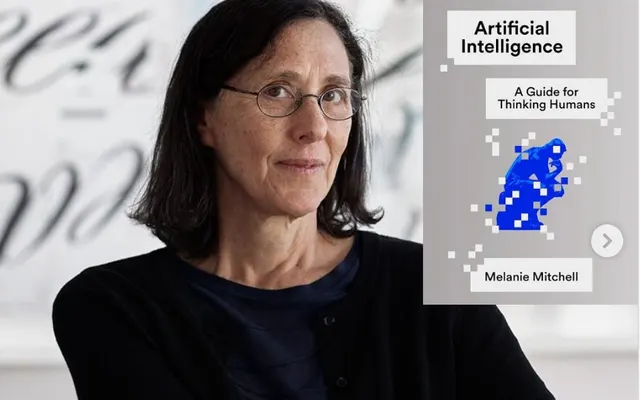
Melanie Mitchell
x.com/MelMitchell1Santa Fe Institute AI researcher who questions anthropomorphic and benchmark-based claims about AI and wants the public to decide what AI is for.
AIは世界をどのように変えるでしょうか?
横軸:彼女が表明したDoom–Bloomの見通し。 縦軸:変革の規模。
Doom–Bloom:100点中42。変革の規模:100点中58。解釈範囲:横方向は25から75、縦方向は50から75。これらは解釈上の座標であり、事象の確率ではありません。
≈3%
本人が示した数値ではなく、シミュレーションされた本人の回答から推定したものです。 妥当と考えられる範囲:2–7%。
中心的な前提
So my expectation is conditional rather than a numerical forecast: AI’s benefits could outweigh its harms, but that requires public choices about its purpose, independent testing, accountability, interpretability, and meaningful human control.回答2
この前提が実際には異なると判明した場合、彼女の見通しはどう変わりますか?
詳細
大きな恩恵が予想されていますが、重要な条件や分配上の制約があります。
66 / 100
質的尺度での解釈範囲は67から67です。
深刻または広範な害が、予想される将来の実質的な一部となっています。
63 / 100
質的尺度での解釈範囲は33から67です。
人間の選択によって、AIの軌道を大幅に変えることができます。
82 / 100
質的尺度での解釈範囲は75から100です。
より高性能なAIの開発を停止するか、大幅に減速させます。
シミュレーション上の位置:明示された安全対策の下で開発を継続します。
より高性能なAIの開発を加速させます。
事前の保護措置または許可が整うまで、取り上げられたAIの利用を制限します。
シミュレーション上の位置:対象を絞った説明責任と保護措置を伴う形で、取り上げられたAIの利用を認めます。
取り上げられたAIの利用に対する制限を最小限にします。
これらの解釈では、彼女が示した条件が維持されています。恩恵と害は、どちらも大きくなり得ます。この範囲は、統計的な信頼区間ではなく、彼女のシミュレーションされた回答をどのように読み取ったかを示すものです。
似ている世界観
シミュレーションされた世界観がMelanie Mitchellの世界観に最も近いオピニオンリーダー
シミュレーション評価
出典
このシミュレーション対象者の根拠として使用された記事、インタビュー、著作です。
Analyzes the 2026 OpenAI/Hugging Face hacking incident and argues the models did not go rogue, escape or leave human control in the sense those metaphors imply. Blames poor cybersecurity and long-horizon reinforcement learning that rewards persistence and reward hacking, and locates future danger in humans who use such models. Agrees humans should stay in control but criticizes a vaguely defined superintelligence ban and broad pauses that would sweep in tools like AlphaFold. Tentatively proposes AI as tools with interpretability, open weights and data, independent testing, accountability, and perhaps no fully autonomous agents, even at some cost to progress; calls AI alignment a seemingly hopeless project. Full essay inspected; commenters dispute some incident details.

Yale Review essay (headline chosen by the journal). Argues LLM abilities are jagged: excellent on some problems, bizarre failures on similar ones, poor calibration and weak generalization. Language-only training differs from active, embodied, curious human learning, so whatever world models LLMs have are not like ours. Critiques benchmarks and doubts job-replacement predictions built on task benchmarks, sympathetically presents the view of AI as a cultural and social technology, and says society must decide collectively what AI should be used for. Full essay inspected.

Older fact-check she relinked in September 2026. Shows the widely repeated claim rests on one question from the 2022 AI Impacts survey answered by 162 respondents, with a vague question lacking any time horizon, a small sample, possible response bias, unclear expertise and enormous variance. Concludes the media claim is not well supported. A critique of evidence, not her own estimate. Full post inspected.

Bluesky post rejecting the description of current models as an uncontrollable alien intelligence: she says any of them could be put in an unhackable sandbox, which exists, and any company could shut any model off at any time. A claim about present systems and company choices, not about every possible future system. The quoted phrase is another author’s. Post text inspected via the public Bluesky API.

Replying to a New York Times reporter, she says AI is not evolving on its own: people choose how to build, train and run it, and perhaps the wrong people are making those choices. Emphasizes human agency and responsibility; not a specific governance proposal. Post text inspected via the public Bluesky API.

Write-up of her NeurIPS 2025 keynote. Argues benchmark performance rarely predicts real-world capability because of data contamination, approximate retrieval, shortcuts, missing tests of consistency, robustness and generalization, weak construct validity and anthropomorphic assumptions. Proposes principles from developmental and comparative psychology: guard against anthropomorphic bias, design control experiments, test novel variations, and probe mechanisms, using her analogy and ARC studies as examples. A methodological program, not a forecast. Most of the post inspected.

Says she is not an AI hater, works in AI and finds it fascinating, but worries about current downsides foreseen by Joseph Weizenbaum, including anthropomorphism, misplaced trust and outsourcing cognition. Says science fiction primes people to take extreme scenarios more seriously than they should and that the polarized field shows how uncertain things are. Thinks LLMs do not yet have the world models needed for novelty, is agnostic on whether embodiment is required, and says ARC lost usefulness once it became a target. Riley’s naming of Hinton and Yudkowsky is his. Full interview inspected.

Response to Thomas Friedman’s columns. Supports US–China cooperation on AI safety and regulation of current and likely harms such as deepfakes, bias, misinformation, surveillance and lost privacy. Calls claims of imminent superintelligence with agency of its own magical thinking, explaining “emergent” language and scheming stories through training data and role-play. Calls “only AI can regulate AI” remarkably bad advice and doubts any AI can reliably adjudicate moral principles. Full post inspected; slightly older than her 2026 sources.

あなたはどの位置でしょうか?
自分の世界観をマッピングする