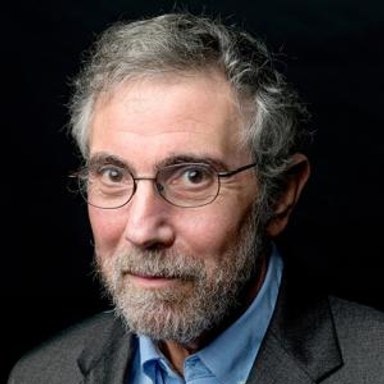
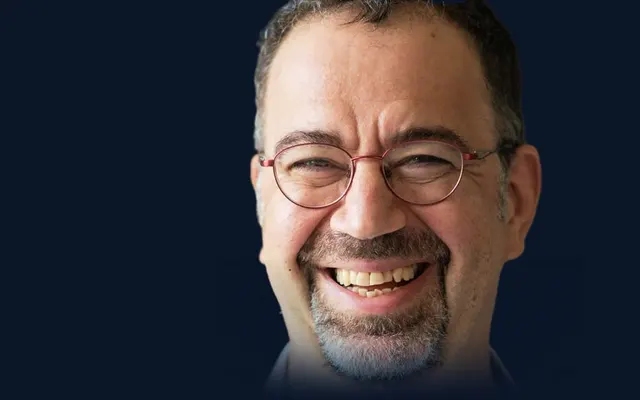
Daron Acemoglu

Daron Acemoglu

x.com/DAcemogluMIT

Economist who argues AI should be steered toward making workers more capable rather than replacing them, so its gains are widely shared.

AIは世界をどのように変えるでしょうか?

文明規模の変化漸進的な変化DoomBloom
シミュレーション上の位置解釈範囲

横軸:彼が表明したDoom–Bloomの見通し。 縦軸:変革の規模。

Doom–Bloom:100点中31。変革の規模:100点中62。解釈範囲:横方向は25から36、縦方向は50から75。これらは解釈上の座標であり、事象の確率ではありません。

Daron AcemogluのP(doom) · 推定

≈3%

0%100%

本人が示した数値ではなく、シミュレーションされた本人の回答から推定したものです。 妥当と考えられる範囲:15%未満。

彼の見通しを左右するもの

中心的な前提

But capabilities do not translate automatically into broad prosperity.
回答2

この前提が実際には異なると判明した場合、彼の見通しはどう変わりますか?

詳細

予想される恩恵

恩恵は限定的、または狭い範囲にしか行き渡らないと予想されています。

36 / 100

影響が小さい変革をもたらす影響

質的尺度での解釈範囲は33から33です。

予想される害

深刻または広範な害が、予想される将来の実質的な一部となっています。

63 / 100

影響が小さい変革をもたらす影響

質的尺度での解釈範囲は33から67です。

人間の影響力

人間の選択によって、AIの軌道を大幅に変えることができます。

74 / 100

影響力が小さい影響力が大きい

質的尺度での解釈範囲は50から75です。

開発ペース

より高性能なAIの開発を停止するか、大幅に減速させます。

シミュレーション上の位置:明示された安全対策の下で開発を継続します。

より高性能なAIの開発を加速させます。

これらの解釈では、彼が示した条件が維持されています。恩恵と害は、どちらも大きくなり得ます。この範囲は、統計的な信頼区間ではなく、彼のシミュレーションされた回答をどのように読み取ったかを示すものです。

あなたはDaron Acemogluと比べてどの位置でしょうか?
約3分で自分のAIに対する世界観をマッピングして、比較できます

似ている世界観

シミュレーションされた世界観がDaron Acemogluの世界観に最も近いオピニオンリーダー

Daron AcemogluがAIについて語ったこと

Acemoglu argues that AI should be steered toward complementing workers rather than replacing them, and that its direction needs democratic input.

  1. “My instinct is that democratic voice is essential, and relying too much on technocracy could be both dangerous and counterproductive.”

    Post on X
  2. “Agentic AI is not AGI, in my opinion, but it’s pretty impressive.”

    Justified Posteriors podcast
  3. “The problem rather may be that the way that frontier labs are training these models is leading to distorted intelligence.”

    Post on X
  4. “AI tools can also be designed to complement workers, enhancing their capabilities and productivity, rather than substituting for them.”

    Nature essay
  5. “What is at stake is not only shared prosperity, but also our democratic system.”

    Nature essay

リンク先の出典から原文どおりに引用(2026年10月3日に確認)

シミュレーション評価

質問1

AIは私たちの未来にとって何を意味すると思いますか?また、なぜそう思いますか?

AI could be transformative, but its effects are not predetermined by capability alone. The crucial question is which technologies we choose to build. Today, investment incentives push strongly toward automation—using machines to replace workers and concentrate decision-making. That path may increase some measures of productivity, but it can also widen inequality, diminish the value of human expertise, and leave large parts of society with less economic and political power. A better path would use AI to create new human tasks: helping nurses make better judgments, enabling teachers to personalize instruction without displacing them, or giving workers information that expands their responsibilities. Simply making an existing task faster is not necessarily pro-worker; what matters is whether demand for human skills and expertise increases across the economy. This direction will not emerge automatically from competition among a few powerful firms. It requires public research, procurement, worker participation, better investment in skills, and democratic debate about what futures we want. I do not think we must stop innovation. But slowing particular developments to steer resources toward socially valuable applications can be entirely sensible. Ultimately, a future of high output but economically dispensable citizens would threaten dignity and democratic equality. Income transfers alone cannot replace the standing people gain from contributing meaningfully to society.

質問2

Taking benefits and harms together, what overall impact do you expect AI to have?

On the current trajectory, I expect AI’s overall impact to be much less beneficial—and more unequal—than its technical capabilities suggest. We are devoting enormous resources to automation, surveillance, and replacing routine and professional tasks, rather than creating new tasks that make human expertise more valuable. That can shift income and decision-making power toward capital owners and a small group of firms while weakening workers’ economic standing and, ultimately, democratic voice. I do expect real benefits: better information, useful scientific tools, and productivity gains in some applications. Agents make the economic potential larger than I previously estimated, though I have not recalculated a number. But capabilities do not translate automatically into broad prosperity. Organizational adoption is slow, experimentation remains a bottleneck, and whole occupations are difficult to automate. The investment boom could therefore produce disappointing returns, while still worsening inequality. So my expected outcome is not technological catastrophe or effortless abundance. It is a mixed but unnecessarily disappointing future: genuine advances alongside concentrated gains, labor displacement, and weakened human expertise. That is the likely direction under present incentives, not an inevitability. Public procurement, research funding, worker voice, skills investment, and tax reform could redirect AI toward complementing people and producing much broader benefits.

質問3

Setting aside good or bad: how much do you think AI will ultimately change the world—a little, a lot, or completely?

A lot. AI could be genuinely transformative, changing how firms organize work, how people acquire information, how science proceeds, and how income and power are distributed. But I would not say “completely.” Capabilities are not the same as economy-wide transformation: adoption is slow, organizations are difficult to redesign, experimental bottlenecks remain, and entire occupations contain many tasks that cannot simply be handed to machines. The scale of change will also depend on direction. AI built mainly to automate existing tasks will reshape labor markets and concentrate power, even if its aggregate productivity contribution is less dramatic than advertised. AI designed to create new human tasks could instead transform work by making expertise more valuable. So I expect large change, but its form and social significance will be determined as much by institutions and investment choices as by the models themselves.

質問4

What’s your rough gut-feel chance that AI causes human extinction or a similarly permanent catastrophe? A number or “no idea” is fine.

No idea. I do not have the technical expertise or evidence to assign a meaningful probability to human extinction from AI.

出典

このシミュレーション対象者の根拠として使用された記事、インタビュー、著作です。

あなたはどの位置でしょうか?
いくつかの簡単な質問に答えて、自分のAIに対する世界観を探ってみましょう。
自分の世界観をマッピングする

あなたはどの位置でしょうか?

自分の世界観をマッピングする