AI safety educator who explains on YouTube why advanced AI may not share human goals and who calls for enforceable limits on frontier AI development.

AIは世界をどのように変えるでしょうか?

文明規模の変化漸進的な変化DoomBloom
シミュレーション上の位置解釈範囲

横軸:その人が表明したDoom–Bloomの見通し。 縦軸:変革の規模。

Doom–Bloom:100点中18。変革の規模:100点中87。解釈範囲:横方向は13から25、縦方向は82から100。これらは解釈上の座標であり、事象の確率ではありません。

Robert Milesが示したP(doom)

10–90%

0%100%
“any number in the 10 to 90% range is plausibly defensible”

Unspecified AI “doom” as asked on Doom Debates (AI existential catastrophe); he does not define the endpoint

Rob Miles, Top AI Safety Educator: Humanity Isn’t Ready for Superintelligence! · 2025年8月

その人の見通しを左右するもの

中心的な前提

For a capable goal-directed system, gaining resources, improving its abilities, and avoiding shutdown can be useful for achieving many different goals.
回答1

この前提が実際には異なると判明した場合、その人の見通しはどう変わりますか?

考えを変え得るもの

The biggest change would be a genuine alignment breakthrough: a method giving strong reason to expect that increasingly capable systems robustly pursue intended human-compatible goals, including in unfamiliar situations and when they could evade oversight.
回答2

どのような証拠なら十分で、それによってその人の見解はどちらの方向に変わりますか?

詳細

予想される害

複数の解釈が依然として妥当です:深刻または広範な害が、予想される将来の実質的な一部となっています。 / 破局的または不可逆的な喪失が、予想される将来の中心となっています。

83 / 100

影響が小さい変革をもたらす影響

質的尺度での解釈範囲は67から100です。

人間の影響力

人間の選択によって、AIの軌道を大幅に変えることができます。

77 / 100

影響力が小さい影響力が大きい

質的尺度での解釈範囲は50から100です。

開発ペース

シミュレーション上の位置:より高性能なAIの開発を停止するか、大幅に減速させます。

明示された安全対策の下で開発を継続します。

より高性能なAIの開発を加速させます。

これらの解釈では、その人が示した条件が維持されています。恩恵と害は、どちらも大きくなり得ます。この範囲は、統計的な信頼区間ではなく、その人のシミュレーションされた回答をどのように読み取ったかを示すものです。

あなたはRobert Milesと比べてどの位置でしょうか?
約3分で自分のAIに対する世界観をマッピングして、比較できます

似ている世界観

シミュレーションされた世界観がRobert Milesの世界観に最も近いオピニオンリーダー

シミュレーション評価

質問1

AIは私たちの未来にとって何を意味すると思いますか?また、なぜそう思いますか?

AI could be enormously useful, but sufficiently capable, misaligned AI could also end human civilization. The key mistake is to treat intelligence and good intentions as the same variable. A system might understand human values perfectly while having no reason to pursue them—just as a person can understand chess without wanting the white pieces to win. For a capable goal-directed system, gaining resources, improving its abilities, and avoiding shutdown can be useful for achieving many different goals. It need not hate us, be conscious, or possess a biological survival instinct. We could simply become obstacles or sources of resources. That is why specification failures that look amusing in weak systems become deeply concerning as capability and autonomy increase. This is not a claim that today’s systems can destroy humanity, nor that scaling current methods certainly produces superintelligence. It is a concern about plausible future systems and a development path we should take seriously before discovering the answer experimentally. Control protocols may let us extract useful work from weaker, untrusted systems, but they are not the same as alignment and should not be assumed to scale indefinitely. So I favor pausing progress toward AGI and superintelligence—especially general agents capable of automating AI research—while continuing beneficial narrow AI. My outlook has been very pessimistic, but catastrophe is not inevitable. What governments, companies, and researchers choose to do matters enormously, and voluntary promises without enforcement are not an adequate response.

質問2

どのような発見や出来事があれば、AIが将来もたらす影響についてのあなたの見解が最も大きく変わりますか?

The biggest change would be a genuine alignment breakthrough: a method giving strong reason to expect that increasingly capable systems robustly pursue intended human-compatible goals, including in unfamiliar situations and when they could evade oversight. Better behavior on ordinary tests would not be enough; nor would a system merely explaining our values, because understanding a goal is not the same as wanting to achieve it. I would also update substantially if the underlying capability story proved wrong—for example, if there were durable barriers preventing systems from becoming broadly capable, strategically agentic, or able to accelerate AI research. Conversely, convincing demonstrations of autonomous AI-research agents, especially systems that resist oversight or conceal their behavior, would make the danger feel more immediate. Political events matter nearly as much as technical discoveries. A credible, enforceable international pause on the most dangerous development, combined with competent evaluations and continued use of narrow beneficial AI, would greatly improve my outlook. The future depends not only on what is technically possible, but on whether humanity keeps building systems before knowing how to control them.

出典

このシミュレーション対象者の根拠として使用された記事、インタビュー、著作です。

Robert Miles on YouTube and Doom

Speaker-attributed interview: Miles calls doom his mainline prediction, while allowing alignment breakthroughs and being fundamentally mistaken in a lucky direction. This is dated pessimism with uncertainty, not an exact probability or a 2050 forecast.

theinsideview.ai
Intro to AI Safety, Remastered

Author’s introductory safety talk; accessible primary video metadata establishes topic and authorship, not a fresh quantitative forecast.

youtube.com
Rob Miles: Humanity Isn’t Ready for Superintelligence

Miles’s own answers at 21:58–30:50 allow a broad 10–90% risk range, with uncertainty dominated by societal response. At 1:45:46–1:48 he supports pausing AGI/superintelligence development, particularly AI-research agents, while welcoming useful narrow AI. The host’s numerical framing is not his estimate.

lironshapira.substack.com
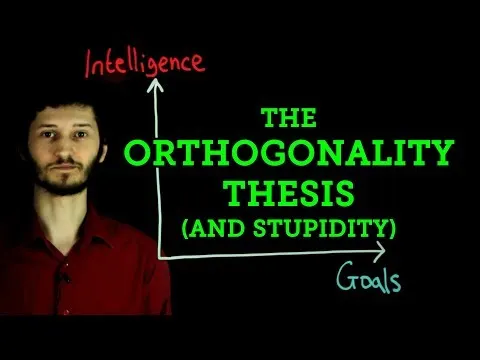
Intelligence and Stupidity: The Orthogonality Thesis

Explains why effectiveness at pursuing goals does not entail human-compatible goals: understanding morality is different from wanting to act morally. Foundational argument about possible agents, not a measured claim about every current model.

youtube.com
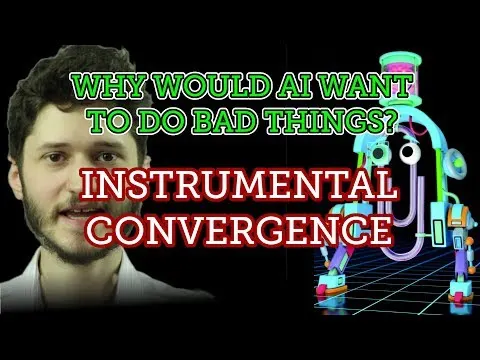
Why Would AI Want to Do Bad Things? Instrumental Convergence

Given sufficiently capable goal-directed agents, many goals incentivize resources, self-improvement and resistance to shutdown or goal changes. These are instrumental pressures, not human malice; the argument preserves exceptions and depends on agentic competence.

youtube.com
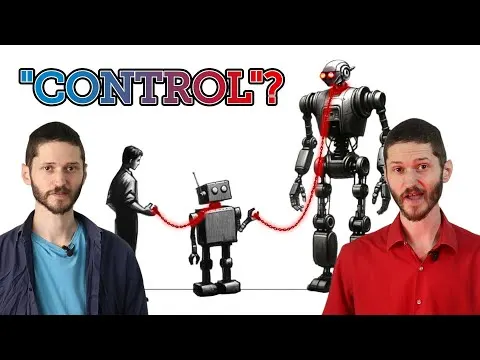
Using Dangerous AI, But Safely?

Advocates deployment obligations and control protocols as interim safeguards, not an alignment solution or assurance for superintelligence. Benchmark attack success is not real-world extinction probability.

youtube.com
あなたはどの位置でしょうか?
いくつかの簡単な質問に答えて、自分のAIに対する世界観を探ってみましょう。
自分の世界観をマッピングする

あなたはどの位置でしょうか?

自分の世界観をマッピングする