Holly Elmore

Holly Elmore

x.com/ilex_ulmus

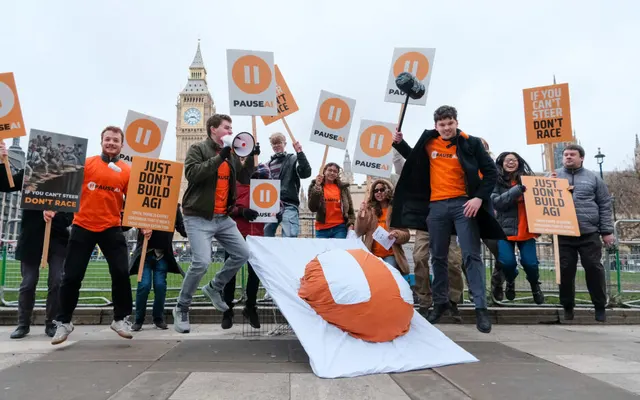
Executive director of PauseAI US and evolutionary biologist who calls for an enforced international pause on frontier AI under democratic oversight.

AIは世界をどのように変えるでしょうか?

文明規模の変化漸進的な変化DoomBloom
シミュレーション上の位置解釈範囲

横軸:彼女が表明したDoom–Bloomの見通し。 縦軸:変革の規模。

Doom–Bloom:100点中5。変革の規模:100点中94。解釈範囲:横方向は0から25、縦方向は89から100。これらは解釈上の座標であり、事象の確率ではありません。

Holly Elmoreが示したP(doom)

50–60%

0%100%
“It’s probably 50 to 60% now. I used to be lower.”

AI disaster (“doom”) as asked on Doom Debates; she does not define the endpoint, and it is not an extinction-only figure

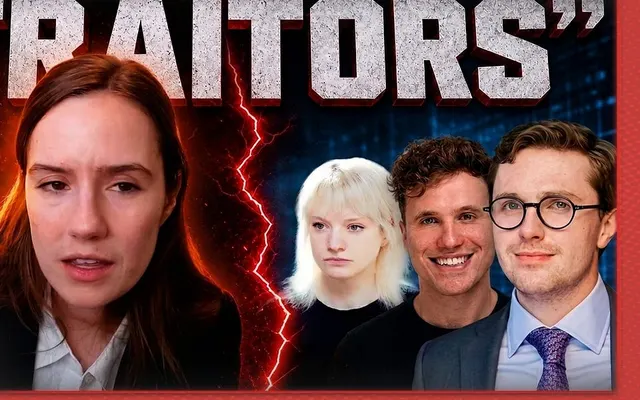
Let’s CALL OUT the AI Doom “Enablers” Joining OpenAI & Anthropic — Dr. Holly Elmore, PauseAI US · 2026年6月

彼女の見通しを左右するもの

中心的な前提

Engineers do not fully understand what capabilities or drives they have produced.
回答1

この前提が実際には異なると判明した場合、彼女の見通しはどう変わりますか?

未解決の問い

Personally, I suspect alignment across a vast capability gap may be impossible, though I have not proven that.
回答4

ここで考えられる結果を彼女が見分けるうえで、何が役立ちますか?

考えを変え得るもの

The biggest thing would be credible, publicly verifiable evidence that frontier systems can remain under human control as capabilities scale—not company assurances or another benchmark, but proof strong enough to justify exposing everyone to the risk.
回答4

どのような証拠なら十分で、それによって彼女の見解はどちらの方向に変わりますか?

詳細

予想される恩恵

恩恵は限定的、または狭い範囲にしか行き渡らないと予想されています。

28 / 100

影響が小さい変革をもたらす影響

質的尺度での解釈範囲は0から33です。

予想される害

破局的または不可逆的な喪失が、予想される将来の中心となっています。

100 / 100

影響が小さい変革をもたらす影響

質的尺度での解釈範囲は100から100です。

人間の影響力

人間の選択には意味のある影響力がありますが、大幅に制約されています。

57 / 100

影響力が小さい影響力が大きい

質的尺度での解釈範囲は41から84です。

予想される能力

AIは、限定的なツールにとどまると予想されています。

AIは、ほとんどの認知作業において人間と同等になると予想されています。

シミュレーション上の位置:AIは、認知作業全般において人間を大幅に上回ると予想されています。

開発ペース

シミュレーション上の位置:より高性能なAIの開発を停止するか、大幅に減速させます。

明示された安全対策の下で開発を継続します。

より高性能なAIの開発を加速させます。

これらの解釈では、彼女が示した条件が維持されています。恩恵と害は、どちらも大きくなり得ます。この範囲は、統計的な信頼区間ではなく、彼女のシミュレーションされた回答をどのように読み取ったかを示すものです。

あなたはHolly Elmoreと比べてどの位置でしょうか?
約3分で自分のAIに対する世界観をマッピングして、比較できます

似ている世界観

シミュレーションされた世界観がHolly Elmoreの世界観に最も近いオピニオンリーダー

シミュレーション評価

質問1

AIは私たちの未来にとって何を意味すると思いますか?また、なぜそう思いますか?

I think frontier AI means we are gambling with the human future without public consent. My rough sense is that the chance of disaster is already on the order of 50 to 60 percent, though I do not treat that as a precise forecast. Even a 5 percent chance of extinction would be obscene. Nobody gets to play Russian roulette with everyone else’s lives because they own more GPUs. The core problem is that these systems are found, not designed. Gradient descent searches an enormous space for systems that perform well, much as natural selection searches through organisms by hill-climbing. Engineers do not fully understand what capabilities or drives they have produced. Building increasingly capable minds this way is like clearing a minefield by walking through it. Biology teaches us that extinction is normal, equilibria are fragile, and more capable competitors do not politely preserve less capable species. I also reject the sales pitch that this race automatically gives us abundance and liberation. Even a successful “Singularity” would not abolish conflict, inequality, or questions about whose values govern. It could instead concentrate power, destroy livelihoods without replacing the institutions built around work, or lock humanity into choices made by companies and machines. Useful narrow tools—translation, medical imaging, scientific aids—do not require a reckless race toward recursive self-improvement. So I want an internationally enforced pause on frontier development, with democratic oversight and the real possibility that we never unpause. The burden belongs on developers to prove their activity safe, not on the public to describe exactly how the speeding train crashes. Alignment research can continue during a pause. But no technical trick answers the political question: who controls this power, and who consented?

質問2

Setting aside good or bad: how much do you think AI will ultimately change the world—a little, a lot, or completely?

A lot, and potentially completely. Frontier AI is explicitly aimed at replacing human cognitive labor, automating research, and eventually gaining capabilities beyond human control. Even an unsuccessful attempt could radically reshape jobs, wealth, political power, warfare, and the basic relationship between people and institutions. But “completely” should not be confused with the Singularity sales pitch. I do not assume AI can abolish scarcity, conflict, or politics. Human needs and disagreements do not disappear because software becomes powerful. The deepest change may instead be that humans lose meaningful control over the systems governing their lives—or, at the extreme, that humanity does not survive the transition. So yes, the stakes are civilization-scale. That is precisely why private companies cannot be allowed to run the experiment.

質問3

What’s your rough gut-feel chance that AI causes human extinction or a similarly permanent catastrophe? A number or “no idea” is fine.

Roughly 50 to 60 percent. It’s not a precise forecast, and the exact number isn’t my argument—even 5 percent would make this gamble intolerable.

質問4

どのような発見や出来事があれば、AIが将来もたらす影響についてのあなたの見解が最も大きく変わりますか?

The biggest thing would be credible, publicly verifiable evidence that frontier systems can remain under human control as capabilities scale—not company assurances or another benchmark, but proof strong enough to justify exposing everyone to the risk. Even that would not settle the future impact. A technical alignment result does not answer who controls the system, whose values it enforces, or whether the public consented. Personally, I suspect alignment across a vast capability gap may be impossible, though I have not proven that. A genuine demonstration to the contrary would change that part of my view. It would not erase the need for democratic governance, international enforcement, and developers carrying the burden of proof.

出典

このシミュレーション対象者の根拠として使用された記事、インタビュー、著作です。

Let’s CALL OUT the AI Doom “Enablers” Joining OpenAI & Anthropic — Dr. Holly Elmore, PauseAI US

Asked for her P(doom), she says she does not truly think in numbers, that any current risk is intolerable, that it is probably 50 to 60% and higher than before, while still leaving 15–20% for “getting lucky”; outcome and horizon are not defined. She explains moving PauseAI US to Washington to focus on constituents and elected officials, says no technical alignment solution works without governance, supports government action that reins in AI companies even when imperfect, and argues proliferation of current models is already a real problem. On accountability she rejects vigilante justice, favors international process, and says what is just and what is strategic may differ. Holly’s turns in the publisher transcript inspected; her characterizations of incidents and named people are not verified facts.

lironshapira.substack.com
Berkeley Talks: An evolutionary biologist makes the case for pausing AI

Talk delivered Dec. 9 per the publisher (year not stated on the page), published as a podcast with transcript. Separates PauseAI’s three membership stipulations (catastrophic danger and public consent, pause as default with the possibility of never unpausing, feasibility via international agreement) and its official agnosticism about alignment from her personal view that alignment is philosophically confused and may be impossible across vastly different capabilities, a view she says she has not rigorously proven. Argues from extinction biology, fragile equilibria and costly experiments that even modest extinction risk is intolerable and that the burden of proof belongs on developers. Calls technical research dual use and says useful AI is possible only under proper governance. Full transcript inspected.

news.berkeley.edu
What is the “AI race” racing to?

Argues the frontier race is not mainly commercial: its architects seek recursive self-improvement and decisive, singleton-like power. She says she does not believe AI will actually do all that and that much of the vision is impossible, but holds that the goal itself is antisocial and the attempt could be massively destructive. Useful tools like translation or medical imaging do not require it. Full essay inspected; her account of others’ motives is her interpretation.

hollyelmore.substack.com
Post-Singularity, same shit.

Argues that even a survivable Singularity would not abolish scarcity or conflict between people, and that solipsistic simulated abundance would be a dystopia. Handing governance to a recursively self-improving AI would lock in its values; humans must work out these questions themselves. She says we are nowhere near a Singularity that would not immediately kill us and that the urgent task is regulating frontier development now. Full essay inspected; the anecdote about an unnamed researcher is her account.

hollyelmore.substack.com
Pause World

States PauseAI’s ask: an international treaty pausing frontier AI development, which could be implemented in many ways. Imagines democratic oversight, enforcement and nonproliferation, independent science free of industry control, and enjoying narrow-AI benefits such as properly tested medical advances. Lists open questions she does not resolve: whether alignment is possible or a permanent capability line is needed, post-labor economics, inequality and power concentration, psychological effects, and digital sentience. A vision and question list, not a treaty draft. Full essay inspected.

hollyelmore.substack.com
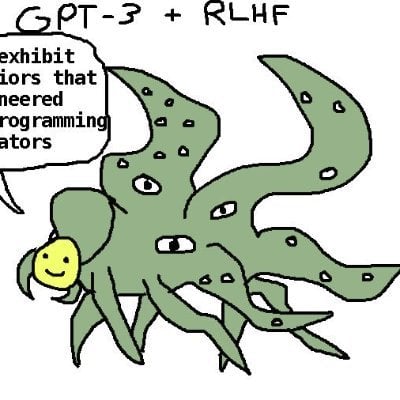
AI is found, not designed

Explains that engineers do not program AI minds but search parameter space with gradient descent, which she compares to natural selection as hill-climbing. Danger therefore does not require anyone to design malice; developers do not know what capabilities the minds they find possess. An explanatory argument about uncertainty, not a claim that every current model is hostile. Full essay inspected.

hollyelmore.substack.com
Underresponsibility and the Anthropic defense

Rejects the idea that race dynamics make AI company leaders interchangeable and blameless. Criticizes the argument that a lab is justified because it is better than an imagined counterfactual, and argues a lab should stop advancing the frontier even if dropping out alone would not solve the whole problem. Moral argument about responsibility; claims about specific companies are her interpretation. Full essay inspected.

hollyelmore.substack.com
Don’t fall for AI conquistadors

Argues AI companies are using people’s data, work, subscriptions and compliance while building systems that will not need them; if models can do every job, companies will not need human customers or workers. Cites startups and independent safety researchers being squeezed out. A warning about displacement and dependence, not a numerical unemployment forecast or date. Full essay inspected; anecdotes and industry claims are hers and unverified.

hollyelmore.substack.com
The AI genie’s out of the bottle— now we’ve got to fight it forever.

Agrees the knowledge that machine learning scales cannot be undone, so dangerous AI must be suppressed indefinitely, as with nuclear proliferation. The choice is between a treaty-based pause with enforcement, an escalating fight against stronger uncontrolled AI, or subjugation or extinction. Says a serious pause would win. Advocacy framing, not a forecast that a treaty will pass. Full essay inspected.

hollyelmore.substack.com
あなたはどの位置でしょうか?
いくつかの簡単な質問に答えて、自分のAIに対する世界観を探ってみましょう。
自分の世界観をマッピングする

あなたはどの位置でしょうか?

自分の世界観をマッピングする