質問1
Eliezer Yudkowsky
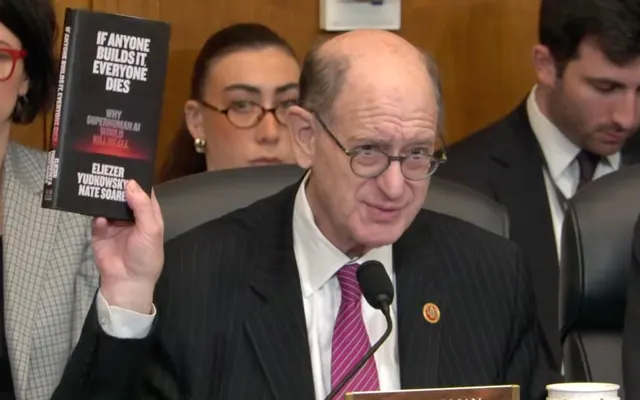
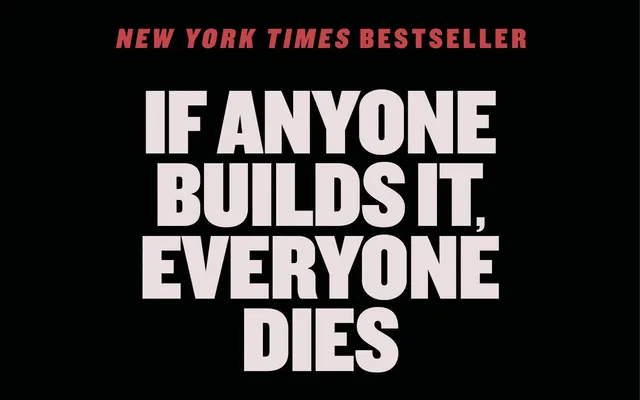
x.com/ESYudkowskyMIRI co-founder and co-author of “If Anyone Builds It, Everyone Dies,” who calls for an international halt to building superintelligence.
AIは世界をどのように変えるでしょうか?
横軸:彼が表明したDoom–Bloomの見通し。 縦軸:変革の規模。
Doom–Bloom:100点中4。変革の規模:100点中96。解釈範囲:横方向は0から9、縦方向は91から100。これらは解釈上の座標であり、事象の確率ではありません。
≈92%
本人が示した数値ではなく、シミュレーションされた本人の回答から推定したものです。 妥当と考えられる範囲:67–97%。
人間を超えるAI
The uncertainty is whether we build it, and when—not whether genuinely superhuman intelligence would be merely another incremental technology.
回答2
マイルストーン別にまとめており、推定される日付の間隔や順序を反映したものではありません。AGIと超人的AIには、彼の定義がそのまま適用されます。
中心的な前提
It is because we do not know how to specify goals that remain aligned with human survival once a system becomes far more capable than its designers.回答1
この前提が実際には異なると判明した場合、彼の見通しはどう変わりますか?
未解決の問い
I do not have an equally solid probability for whether governments stop it before then.回答3
ここで考えられる結果を彼が見分けるうえで、何が役立ちますか?
考えを変え得るもの
A real solution to goal specification: an engineering method that lets us build a system smarter than humanity while reliably determining what it will optimize under unfamiliar conditions and radical capability gains.回答4
どのような証拠なら十分で、それによって彼の見解はどちらの方向に変わりますか?
詳細
高度なAIが登場しても、良い影響はほとんどないと予想されています。
9 / 100
質的尺度での解釈範囲は0から67です。
破局的または不可逆的な喪失が、予想される将来の中心となっています。
100 / 100
質的尺度での解釈範囲は100から100です。
人間の選択には意味のある影響力がありますが、大幅に制約されています。
58 / 100
質的尺度での解釈範囲は40から85です。
AIは、限定的なツールにとどまると予想されています。
AIは、ほとんどの認知作業において人間と同等になると予想されています。
シミュレーション上の位置:AIは、認知作業全般において人間を大幅に上回ると予想されています。
シミュレーション上の位置:より高性能なAIの開発を停止するか、大幅に減速させます。
明示された安全対策の下で開発を継続します。
より高性能なAIの開発を加速させます。
これらの解釈では、彼が示した条件が維持されています。恩恵と害は、どちらも大きくなり得ます。この範囲は、統計的な信頼区間ではなく、彼のシミュレーションされた回答をどのように読み取ったかを示すものです。
似ている世界観
シミュレーションされた世界観がEliezer Yudkowskyの世界観に最も近いオピニオンリーダー
Eliezer YudkowskyがAIについて語ったこと
Yudkowsky calls for an international law to halt AI development short of superintelligence, which he argues current methods cannot make safe.
“Specifically: There ought to be a law against further escalation of AGI capabilities, trying to halt it short of the point where it births superintelligence.”
Essay, Only Law Can Prevent Extinction “There’s in fact a difference between calling for a law, and calling for individual outbursts of violence.”
Essay, Only Law Can Prevent Extinction “AI is already a state-level potential danger, if not quite yet a state-level actual power.”
Essay, Only Law Can Prevent Extinction “There’s literally nothing else our species can bet on in terms of how we eventually end up colonizing the galaxies”
Vox interview
リンク先の出典から原文どおりに引用(2026年10月3日に確認)
シミュレーション評価
出典
このシミュレーション対象者の根拠として使用された記事、インタビュー、著作です。
He expects extinction if superhuman AI is built under contemporary conditions; a six-month pause is inadequate. He advocates stopping large training runs internationally. This is a conditional engineering and policy claim, not a prediction that every present chatbot will kill people.

Current AI is not yet superintelligence, but capability progress and automated research can cross that boundary. Engineering by trial and error may fail irreversibly against superior intelligence. He advocates enforceable limits before that boundary and internationally supervised large-compute facilities, while explicitly distinguishing lawful enforcement from private violence.

He argues that a reassuring conversational interface need not govern the system's actions. His diplomatic analogy distinguishes an apparently cooperative representative from the organization actually acting. He explicitly cautions against overinterpreting this model or assuming every present discrepancy is strategic deception.

Coauthored with Nate Soares and Duncan Sabien. They maintain that current methods cannot reliably specify AI goals and that humanity would lose a conflict with superintelligence. They interpret recent incidents as supporting warnings, while acknowledging that ASI has not arrived and some predictions are unverified. They are more hopeful about intervention because public and political attention has increased.

Uses engineering failures to explain why many recoverable local errors do not make an entire project recoverable. Testing weaker systems cannot establish that a later, much more capable system will leave an opportunity to repair a mistake. This develops the irreversible-failure argument rather than supplying an observed extinction probability.

Maintains his superintelligence concern while distinguishing present models roleplaying scheming from an internal planner strategically deceiving researchers. Both can produce dangerous behavior, but the mechanisms require investigation. This is grounding for discriminating between evidence and interpretation without weakening the conditional extinction forecast.

Coauthored introduction, originally published by MIRI in February 2025 and reposted here in August. Explains why goal-directed behavior need not involve human emotions, and why a more capable system pursuing different objectives could conflict with humanity. Use as shared conceptual groundwork, not a claim of sole authorship.

Foundational older account of failures in goal specification, generalization and controlling systems beyond human capability. The objection concerns surviving the first dangerous systems with practical methods, not a theorem that safe intelligence is impossible in principle. Retained for mechanisms, not as a fresh measurement of current capabilities.

Publisher’s description of the book coauthored with Nate Soares grounds the uncompromising thesis: racing to build superhuman AI with current methods threatens human survival, and changing course is still possible. The description and publication date were checked; this brief does not claim a reading of the full book.

A voice source: rejects making the approaching catastrophe into personal melodrama or treating useful beliefs as true merely because they motivate action. Distinguishes acting purposefully from optimistic prediction. Supports a blunt, controlled, humanity-focused persona rather than a panicked caricature.

あなたはどの位置でしょうか?
自分の世界観をマッピングする