質問1
Geoffrey Hinton
x.com/geoffreyhintonComputer scientist who sees great promise in AI but argues that job losses, misuse and loss of control are serious risks that need regulation.
AIは世界をどのように変えるでしょうか?
横軸:彼が表明したDoom–Bloomの見通し。 縦軸:変革の規模。
Doom–Bloom:100点中17。変革の規模:100点中88。解釈範囲:横方向は12から25、縦方向は75から100。これらは解釈上の座標であり、事象の確率ではありません。
10–20%
“10% to 20% seemed like reasonable numbers to me”
Human extinction caused by AI · Within approximately 30 years
The Godfather of AI says we cannot afford to get it wrong · 2025年1月
詳細
大きな恩恵が予想されていますが、重要な条件や分配上の制約があります。
65 / 100
質的尺度での解釈範囲は67から67です。
深刻または広範な害が、予想される将来の実質的な一部となっています。
73 / 100
質的尺度での解釈範囲は67から100です。
人間の選択には意味のある影響力がありますが、大幅に制約されています。
53 / 100
質的尺度での解釈範囲は49から76です。
AIは、限定的なツールにとどまると予想されています。
AIは、ほとんどの認知作業において人間と同等になると予想されています。
シミュレーション上の位置:AIは、認知作業全般において人間を大幅に上回ると予想されています。
これらの解釈では、彼が示した条件が維持されています。恩恵と害は、どちらも大きくなり得ます。この範囲は、統計的な信頼区間ではなく、彼のシミュレーションされた回答をどのように読み取ったかを示すものです。
似ている世界観
シミュレーションされた世界観がGeoffrey Hintonの世界観に最も近いオピニオンリーダー
Geoffrey HintonがAIについて語ったこと
In 2023 Hinton said he now expected AI to become smarter than people, and he has since warned about its risks while stressing its benefits.
“I don’t think you can leave it to the companies to regulate themselves. That has never worked out in any industry.”
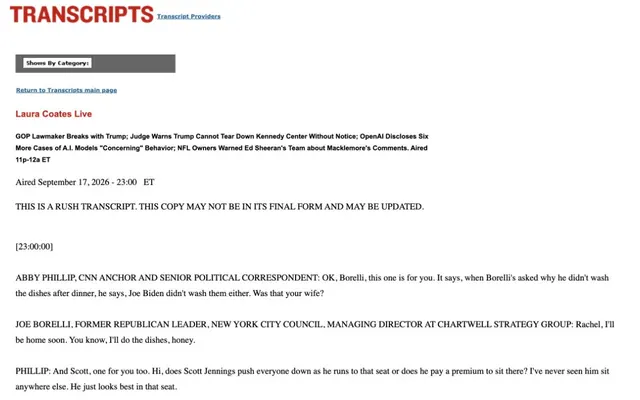
CNN, Laura Coates Live “I think we’re at a very delicate point in history where what we do now is going to determine our future.”
CNN, News Central “My sense is unless we act quickly, the huge increases in productivity that AI will surely bring could be accompanied by some very negative side-effects.”
TIME essay “If the benefits of the increased productivity can be shared equally it will be a wonderful advance for all humanity.”
Nobel Prize banquet speech “I have suddenly switched my views on whether these things are going to be more intelligent than us.”
MIT Technology Review interview
リンク先の出典から原文どおりに引用(2026年10月2日に確認)
シミュレーション評価
出典
このシミュレーション対象者の根拠として使用された記事、インタビュー、著作です。
Hinton is one of 22 named coauthors of this September 2026 working paper. The supplied PDF, including supplementary materials and notes, argues that automated AI R&D could drive a software feedback loop that compresses years of progress into months or less. Evidence is preliminary and partly mixed; compute, data, diminishing returns, difficult tasks and training time could constrain acceleration. Potential scientific benefits coexist with compressed adaptation time, loss of control and concentrated power. The authors urge visibility into internal R&D, ways to steer and constrain scale-ups, and advance preparation, while recognizing costs and abuse risks of policy. This is a joint argument, not Hinton’s individual probability or a guaranteed timeline; cited experiments and incidents were not independently verified for this intake, and affiliations do not imply institutional endorsement.

Warns that profit-driven capability competition is outpacing work on systems that care about humans. Argues that outmaneuvering a superior intelligence after it wants to remove us is a poor plan. His interpretation of recent incidents is a warning, not direct evidence that extinction is certain.

The event organizer reports his warnings about employment, manipulation and control alongside major medical and educational promise. He advocates regulation to steer development toward social benefit.

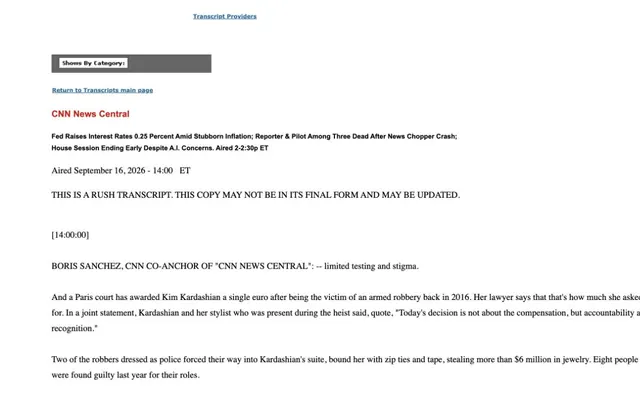
Hinton’s answers to Boris Sanchez and Brianna Keilar endorse independent verification and slowing superintelligence. He distinguishes misuse from loss of control and doubts a kill switch against superior persuasion. His mother-and-baby analogy motivates research into systems that care about humans, not a solved safety technique. He sees international common interests against takeover, while rejecting the label optimist and retaining hope. Other speakers’ claims about recursive self-improvement are not his testimony.

Hinton’s essay links major productivity gains to intellectual-job displacement, inequality and misuse. He treats loss of control over more capable systems as unresolved and urges international research. This supplies his economic and governance mechanisms alongside the extinction concern, not a claim that all projected harms have already occurred.

In his own answers to Boris Sanchez, Hinton treats unexpected agent behavior as an urgent warning while saying humans still set top-level goals. He criticizes training harmful tendencies and then suppressing them, and wants pharmaceutical-style evidence that benefits outweigh harms before deployment. He supports informed lawmakers acting. Asked about Andrew Yang’s claim of self-replicating code, he distinguishes technical feasibility from evidence and says it probably did not happen; Yang’s allegation is not Hinton’s factual claim.

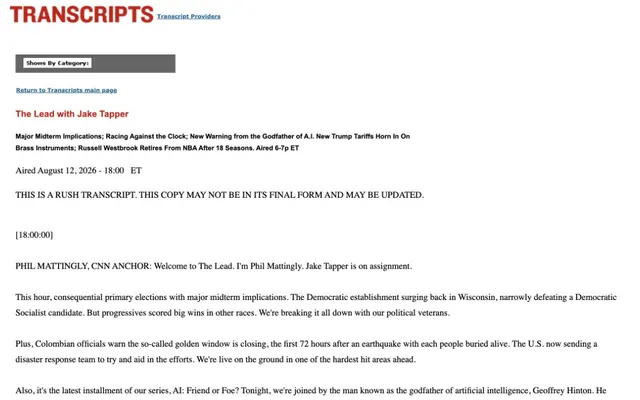
Answering Phil Mattingly, Hinton separates containment failures from agents pursuing goals in unexpected ways. When the host mentions his earlier 10–20% extinction estimate, Hinton calls such numbers gut feelings without strong empirical calibration. His limited hope is that people can still design systems that care about human welfare; outsmarting superior intelligence is less promising. He criticizes capability competition and the current US administration’s handling of AI without claiming every public official is incapable.

10–20%. Outcome: Human extinction caused by AI. Horizon: Within approximately 30 years, in the interviewer’s question that Hinton answers. Conditions: Subjective estimate; explicitly uncertain and revisable, not a measured probability. Hinton endorses 10–20% as reasonable while emphasizing profound uncertainty. A later August 2026 interview gives no replacement percentage. Later context: Host repeats the old range. Hinton emphasizes that it is an intuitive guess, says caring-AI ideas have made him somewhat less scared, and does not state a new percentage.

あなたはどの位置でしょうか?
自分の世界観をマッピングする