问题 1
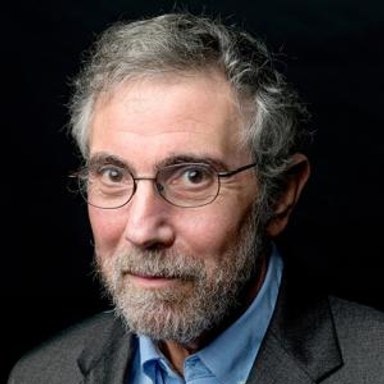
Ed Zitron
x.com/edzitronTech writer and podcast host who questions the AI industry’s finances, criticizes its unreliable products and holds companies responsible for harms.
AI将如何改变世界?
横向:他表达的 Doom–Bloom 前景看法。 纵向:变革程度。
Doom–Bloom:100 中的 16。变革程度:100 中的 38。解读范围:横向为 11 至 25,纵向为 0 至 50。这些是解读坐标,而不是事件概率。
0%
“if we’re talking strictly about AI, I stand at zero”
Human extinction caused strictly by AI, as asked in the debate’s opening envelope question
DOAC AI Emergency Debate: ft. Ed Zitron, Andrew McAfee, Nate Soares & Roman Yampolskiy (Transcript) · 2026年9月
一个核心假设
Venture-funded startups buying compute with investors’ money are not durable end-user demand.回答 1
如果这个假设实际并非如此,他的展望会如何变化?
什么可能使其改变看法
A genuinely reliable system that could perform broad, consequential work over long periods without constant human supervision would change my view.回答 4
什么证据才足够,又会让他的观点朝哪个方向转变?
更多详情
预计收益有限,或仅分布在较小范围内。
31 / 100
在定性尺度上,解读范围为 33 到 33。
严重或广泛的危害预计将是未来不可忽视的一部分。
67 / 100
在定性尺度上,解读范围为 67 到 67。
根据你的回答得出的暂定估计;较宽的范围表示其他合理解读。
46 / 100
在定性尺度上,解读范围为 0 到 100。
模拟位置:预计AI仍将是能力有限的工具。
预计AI将在大多数认知工作中达到人类水平。
预计AI将在认知工作中大幅超越人类。
这些解读保留了他陈述的条件。益处和危害都可能很大。这些范围描述的是我们如何解读他的模拟回答,而不是统计置信区间。
相似的世界观
模拟世界观与 Ed Zitron 最接近的意见领袖
Ed Zitron关于AI说过的话
Zitron argues that AI spending far outstrips its value, that LLMs suit only small supervised tasks, and that companies should answer for harms.
“LLMs do not have to be conscious or powerful AI to be incredibly dangerous.”
Where’s Your Ed At, AI Is Already In Dangerous Hands “There is nothing ‘anti-progress’ about opposing AI data centers, and nobody has a compelling explanation as to why we need more of them.”
Where’s Your Ed At, Hyperscale Normalization “There is no AGI coming. There is no conscious computer.”
Where’s Your Ed At, The AI Hater’s Manifesto “Nothing about LLMs is worth a trillion dollars, or even $100 billion.”
Where’s Your Ed At, The AI Hater’s Manifesto “As a way of speeding up small units of work in ways that are manageable both technically and cognitively, LLMs can be useful.”
Where’s Your Ed At, The AI Hater’s Manifesto
逐字引自所链接的出处,核对于 2026年10月3日
模拟评估
来源
用于为此模拟用户提供事实依据的文章、访谈和著述。
Treats LLMs as normal software useful for small, supervised units of work, with reliability worsening as responsibility expands. Rejects forthcoming AGI and conscious computers; current meaningful effects outside coding remain limited. His closing judgment rejects world-changing reliability, but the same essay argues the costs will be borne for at least a decade, damage tech-industry hypergrowth and leave enduring workforce scarring and trauma. Those are adopted lasting consequences of the AI boom, not merely hypothetical harms. Keep these societal effects alongside the bounded capability judgment; neither supplies an exact eventual all-society forecast.

Authored financial analysis, especially the debt and equity conclusions. Expects large investment losses, widespread failure to repay AI data-center debt and damaging supplier exposure. His account explicitly anticipates a financial reckoning rather than offering only a remote conditional scenario. Separately rejects the claim that Anthropic will transform the economy more profoundly than industrialization, electricity or the internet. Preserve both forecasts; do not invent a collapse date, certify his financial calculations independently or turn financial severity into a claim of technological superintelligence.

Argues that speculative superintelligence narratives obscure responsibility for current corporate decisions and harmful deployments. Focuses on human operators, product design and institutional power rather than autonomous machine intent. The opening also anticipates an economic downturn with costs reaching pensions, insurance and ordinary workers; the article does not describe all economic harm as merely hypothetical.

Questions the durability of revenue dependent on venture-funded AI customers and interlocking compute commitments. Explicitly argues that a Silicon Valley financial crisis is developing and anticipates the bubble unraveling over coming months and years. Timing and individual failure mechanisms remain conditional, but the downturn is his adopted expectation. Reported commitments are not independently sustainable end-user demand.

Challenges treating unprecedented infrastructure commitments as ordinary business and contrasts promised prosperity with power-grid pressure and local costs. Grounds his criticism in the distribution of burdens and media treatment of the buildout. Financial and infrastructure claims remain attributed to his analysis rather than silently certified as independently audited facts.

Examines whether revenue, margins and fundraising can support compute obligations, criticizing annualized run-rate headlines as substitutes for durable economics. Connects a possible funding failure to exposed suppliers and cloud commitments. This is his conditional financial analysis, not a confirmed insolvency forecast or a new independently verified set of accounts.

Third-party speaker-labeled transcript of the debate; use only Ed’s turns. Asked for his probability of human extinction (00:05:53), he stands at zero if we are talking strictly about AI, because superintelligence is undefined and he does not think LLMs lead to it, while saying a data-center-driven climate disaster could potentially eradicate humanity. Near the end (02:20:51), asked about a more-than-10% chance of existential harm within ten years, he says “I mean, look, 1%” and turns to non-existential harms such as grid failures. These are different endpoints and horizons: never describe the first answer as 1%, or turn the later 1% answer into a probability for human extinction from AI itself.

你的立场在哪里?
描绘我的世界观