问题 1
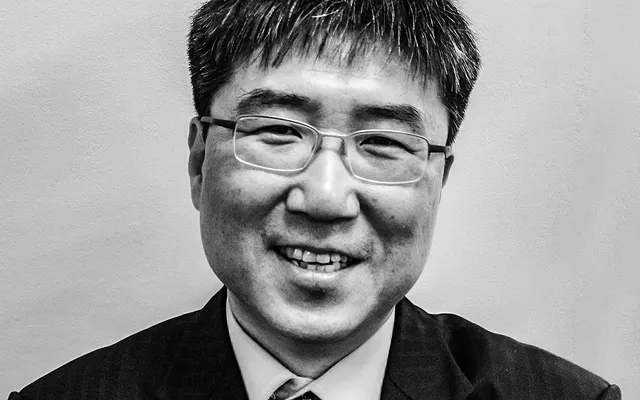
Ha-Joon Chang
SOASDevelopment economist who argues that public choices and institutions should shape AI’s uses and benefits.
AI将如何改变世界?
横向:他表达的 Doom–Bloom 前景看法。 纵向:变革程度。
Doom–Bloom:100 中的 38。变革程度:100 中的 49。解读范围:横向为 25 至 50,纵向为 15 至 100。这些是解读坐标,而不是事件概率。
≈5%
根据他的模拟回答推断,并非他们给出的数字。 合理范围:3–10%。
一个核心假设
When railways or electricity transformed economies, the outcomes depended on investment in skills, organizations and public infrastructure—not simply on the invention itself.回答 1
如果这个假设实际并非如此,他的展望会如何变化?
一个尚未解决的问题
Much of the current investment looks speculative, and I expect that bubble to burst, although I would not pretend to know when.回答 1
什么能帮助他区分这里各种合理的结果?
什么可能使其改变看法
Evidence that democratic institutions could reliably restrain harmful uses, limit fabricated information and distribute productivity gains would strengthen my confidence.回答 4
什么证据才足够,又会让他的观点朝哪个方向转变?
更多详情
仍有几种解读是合理的:预计将带来显著益处,但受到重要条件或分配方面的限制。 / 预计收益有限,或仅分布在较小范围内。
51 / 100
在定性尺度上,解读范围为 33 到 67。
严重或广泛的危害预计将是未来不可忽视的一部分。
65 / 100
在定性尺度上,解读范围为 67 到 67。
人类的选择可以大幅改变AI的发展轨迹。
79 / 100
在定性尺度上,解读范围为 50 到 100。
在事先落实保护措施或获得许可之前,限制所讨论的AI用途。
模拟位置:允许所讨论的AI用途,同时实施有针对性的问责与保护措施。
尽量减少对所讨论AI用途的限制。
这些解读保留了他陈述的条件。益处和危害都可能很大。这些范围描述的是我们如何解读他的模拟回答,而不是统计置信区间。
相似的世界观
模拟世界观与 Ha-Joon Chang 最接近的意见领袖
Ha-Joon Chang关于AI说过的话
Chang treats AI as mental-labor automation and argues that public choices should govern its uses and benefits.
“But it needs to be regulated for the benefit of the broader society.”
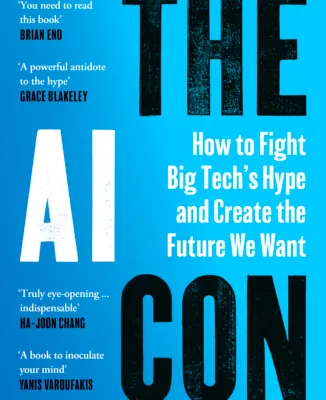
The Front Row Podcast, interview with Keith Yap “A truly eye-opening book for those who want to fight for a more humane economy and a better society”
The AI Con endorsement, publisher’s 2025 edition “So on the whole I’m not too worried about A.I. destroying jobs, because it will also create jobs.”
Buenos Aires Herald, interview with Estefanía Pozzo and Amy Booth
逐字引自所链接的出处,核对于 2026年10月3日
模拟评估
来源
用于为此模拟用户提供事实依据的文章、访谈和著述。
Named transcript inspected. Calls investment a demand-ahead bubble without a burst date; favors practical mental-labor automation over speculative AGI stories. AI is public infrastructure needing strict regulation; ownership is optional. Fabricated references illustrate how misinformation could undermine society. Do not drop that substantial-harm warning when preserving his bounded-tool view.

Complete attributed endorsement inspected on the publisher’s 2025 ebook page. Praises Bender and Hanna’s critique as useful for a humane economy and society; rejects treating the purported AI transformation as something people must passively accept. This is a short corroborating anchor, not a substantive interview, technical argument, or blanket adoption of the book’s claims. Date is the edition’s publication date; the endorsement’s recording date is not supplied.

Older direct interview inspected, especially the final AI answer. Places AI in capitalism’s continuing history of automation: jobs disappear and new jobs arise. Criticizes professional-class concern arriving when their own work is exposed. Calls for regulation of prejudices embedded by a narrow developer demographic. Does not guarantee painless transitions or specify future capabilities.

Older Polish-language interview inspected; English summaries are paraphrases, not quotations. Routine automation can free creative effort, while narrow cultural perspectives create ethical problems. Text, code and music-video tools do not themselves overturn the world. Energy per unit of output and smart-grid savings matter; assess materials, energy and the entire value chain. Asked to extrapolate future applications, he says he does not know. The displayed 2025 update does not make this a new interview.

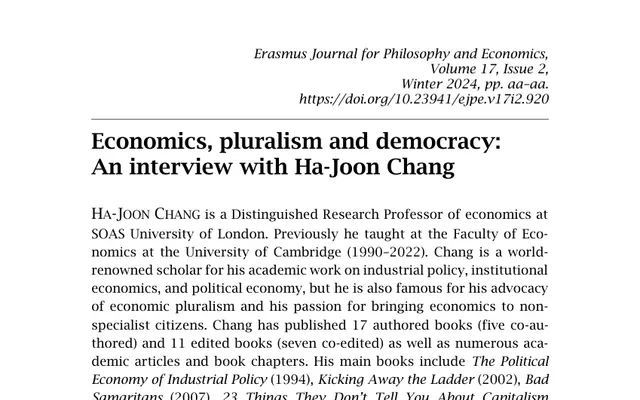
Author-hosted full interview inspected selectively: PDF pages 1–3, 20–22 and 31–33. Methodology and democratic-governance context, not an AI forecast. He supports empirical work while questioning which theories decide what is measured: GDP omits unpaid care. Narrow studies need broader historical and institutional analysis. Experts contribute technical knowledge, but citizens should determine political goals. Publication date confirmed in SOAS repository.

Edited IMF-hosted interview inspected. Recent institutional-policy context, not an AI forecast. Managed trade and disciplined infant-industry support build productive capabilities; protection can be misused. Innovation depends on public research and collective inputs. Growth must also be politically, socially and environmentally sustainable, and economic literacy enables meaningful democratic participation. This supports his policy lens without assigning AI-specific prescriptions he did not state.

你的立场在哪里?
描绘我的世界观