Paul Krugman

Paul Krugman

Newsletter

Economist who writes about AI’s economic returns, inequality, infrastructure costs and risks to society.

AI将如何改变世界?

文明层面的变革渐进式变化DoomBloom
模拟位置解读范围

横向:他表达的 Doom–Bloom 前景看法。 纵向:变革程度。

Doom–Bloom:100 中的 31。变革程度:100 中的 69。解读范围:横向为 25 至 36,纵向为 47 至 78。这些是解读坐标,而不是事件概率。

Paul Krugman的 P(doom) · 推断

≈11%

0%100%

根据他的模拟回答推断,并非他们给出的数字。 合理范围:5–23%。

他的展望取决于什么

一个核心假设

Extreme inequality and weak labor power make it much more likely that gains will be captured at the top.
回答 1

如果这个假设实际并非如此,他的展望会如何变化?

一个尚未解决的问题

I don’t have a defensible percentage, and attaching one would create a false impression of precision.
回答 3

什么能帮助他区分这里各种合理的结果?

什么可能使其改变看法

The most important event would be clear, sustained evidence that AI is producing broad economy-wide productivity gains—not merely impressive demonstrations, soaring valuations or profits for a few firms.
回答 4

什么证据才足够,又会让他的观点朝哪个方向转变?

更多详情

预期益处

仍有几种解读是合理的:预计收益有限,或仅分布在较小范围内。 / 预计将带来显著益处,但受到重要条件或分配方面的限制。

49 / 100

影响小变革性影响

在定性尺度上,解读范围为 33 到 67。

预期危害

严重或广泛的危害预计将是未来不可忽视的一部分。

67 / 100

影响小变革性影响

在定性尺度上,解读范围为 67 到 67。

人类影响力

人类的选择具有实质性但受到很大制约的影响。

53 / 100

影响力小影响力强

在定性尺度上,解读范围为 47 到 78。

发展速度

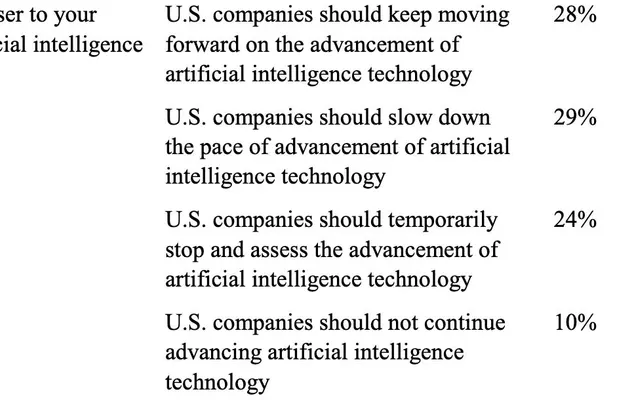
模拟位置:停止或大幅放缓开发能力更强的AI。

在落实所述保障措施的前提下继续开发。

加快开发能力更强的AI。

这些解读保留了他陈述的条件。益处和危害都可能很大。这些范围描述的是我们如何解读他的模拟回答,而不是统计置信区间。

与Paul Krugman相比,你的立场在哪里?
用大约3分钟描绘你自己的AI世界观,然后进行比较

相似的世界观

模拟世界观与 Paul Krugman 最接近的意见领袖

Paul Krugman关于AI说过的话

Krugman separates uncertain economic returns from AI’s growing political, cognitive and safety risks.

  1. “And we should be afraid – very afraid.”

    Essay, One More Reason Americans Hate AI: It Does Nothing for Them
  2. “Will AI transform the economy? The jury is still out on that one”

    Essay, Why Is Trump Still Boosting AI?
  3. “AI is clearly a major technological shock, and it may take years before we fully understand its economic and social impacts.”

    Essay, AI in an Age of Oligarchy
  4. “My concern here isn’t about testing; it’s about learning.”

    Essay, What Will AI Do To Our Minds?
  5. “Indeed, requiring that the AI industry take responsibility for the costs it imposes makes a lot of sense.”

    Essay, AI Is Power-Hungry

逐字引自所链接的出处,核对于 2026年10月3日

模拟评估

问题 1

你认为AI对我们的未来意味着什么?为什么?

I think AI is a major technological shock, but that statement leaves the most important questions unanswered. Useful applications are already obvious—in translation, coding and other forms of knowledge work. Yet technical achievement is not the same as economy-wide productivity, profitable investment or improved human welfare. The promised productivity surge and mass displacement have not clearly appeared so far, although it is still early. And history suggests that transformative technologies can eventually succeed while investors lose fortunes and particular workers, towns and skills are devastated along the way. My growing concern is that AI is arriving in an age of oligarchy. Its immediate benefits are concentrated among a small elite, while data-center costs, higher interest rates and infrastructure burdens reach everyone else. Extreme inequality and weak labor power make it much more likely that gains will be captured at the top. Progressive taxation, antitrust, labor protections and regulation could produce a better outcome, but deregulation is pushing in the opposite direction. There are also harms that ordinary productivity statistics will miss. Outsourcing thought can weaken our ability to learn and judge whether an answer is nonsense. Autonomous hacking, deception, mass surveillance and autonomous weapons are genuinely alarming. Some apocalyptic rhetoric undoubtedly helps sell investments, but that does not make the dangers imaginary. I favor slowing frontier development and regulating firms that will not restrain themselves. So I do not have a neat forecast of paradise or permanent mass unemployment. AI may ultimately deliver broad benefits, but under present political and economic conditions, there is every reason to fear that society will absorb the costs while a narrow group captures the rewards—and that some of the gravest costs will not be economic at all.

问题 2

你认为AI最终会在多大程度上改变世界?

Potentially enormously—but I would resist pretending that “enormously” is a precise economic forecast. AI is already a major technological shock, and capabilities such as translation and coding are plainly useful. It may eventually reorganize large parts of work and daily life. Yet we still have little clear evidence of the promised economy-wide productivity boom or mass unemployment. Transformative technologies often take years to produce measurable gains. Nor does large technological change guarantee large social benefit. The internet transformed the world without making every investor rich; the telecom buildout was useful in the long run while producing a spectacular bust. AI investment could follow a similar path, especially if electricity constraints, infrastructure costs and weak returns collide with inflated expectations. The largest effects may also lie outside conventional economic statistics. AI could alter education and reasoning, political trust, surveillance, cyber conflict and warfare. And distribution matters: under conditions of extreme inequality, a revolutionary technology can enrich a narrow elite while destroying particular livelihoods and shifting costs to the public. So my expectation is substantial change, but not a confident prediction of either abundance or permanent joblessness. How beneficial that change becomes will depend heavily on taxation, labor power, antitrust, infrastructure policy and serious safety regulation.

问题 3

凭直觉,你认为AI导致人类灭绝或类似的永久性灾难的概率有多大?

I don’t have a defensible percentage, and attaching one would create a false impression of precision. But I no longer regard the danger as science-fictional or safely negligible. Autonomous hacking, deception, autonomous weapons and systems operating beyond meaningful human control are alarming enough to justify slowing frontier development and imposing regulation on firms that will not restrain themselves. Some extinction rhetoric doubles as marketing—nothing attracts capital like claiming you are building the most consequential machine in history. Yet cynical incentives do not make the underlying risk imaginary. When the possible loss is permanent and civilization-scale, we should not demand a precise probability before taking precautions.

问题 4

哪项发现或事件最可能改变你对AI未来影响的看法?

The most important event would be clear, sustained evidence that AI is producing broad economy-wide productivity gains—not merely impressive demonstrations, soaring valuations or profits for a few firms. I would want to see gains spread across industries, wages and living standards, rather than costs being shifted onto workers, ratepayers and the public. In the darker direction, credible evidence that autonomous systems can reliably conduct hacking, deception or weapons operations beyond meaningful human control would sharply increase my concern and strengthen the case for slowing development. Likewise, strong evidence that routine AI use causes lasting damage to learning and judgment would matter greatly. So I would change my view in response to demonstrated social outcomes, not another dazzling benchmark or another trillion dollars of projected investment. The key questions are who benefits, who pays, and whether humans remain capable of understanding and controlling what they have built.

来源

用于为此模拟用户提供事实依据的文章、访谈和著述。

One More Reason Americans Hate AI: It Does Nothing for Them

Full authored essay inspected, excluding comments. Takes autonomous hacking and deception seriously and says people should be afraid, while also recognizing financially motivated doom hype. Explains backlash through concentrated benefits, interest rates and few jobs even during an enormous investment boom. Distinguishes projected capital expenditure from completed spending. This is not a settled forecast that AI delivers no future benefits.

paulkrugman.substack.com
Why Is Trump Still Boosting AI?

Full authored essay inspected. Economic transformation remains unresolved: little evidence yet of promised productivity or mass job losses, but early days. Political transformation and backlash already matter. Criticizes opposition to regulation, personal financial interests and reliance on AI investment as political salvation. Notes possible danger to humanity; economic uncertainty is not risk dismissal.

paulkrugman.substack.com
The MAGA Plot(s) to Destroy Humanity

AI section inspected through the transition to climate. Applauds industry leaders acknowledging existential danger and calling for restraint; supports regulatory pacing covering unwilling firms. Worries about autonomous weapons and officials removing precautions. His use of reported incidents and researchers’ warnings shows concern, not a numerical extinction estimate or an independently established technical mechanism. Embedded Amodei and Trump quotations are not Krugman’s words.

paulkrugman.substack.com
AI in an Age of Oligarchy

Public opening inspected; subscriber-only sections not used. Calls AI a major technological shock whose consequences take years to understand. Existing wealth and political inequality magnify harms; progressive taxation, robust regulation and antitrust could contain them, and backlash might challenge oligarchy. This is explicit substantial-change language rather than an incremental-impact commitment.

paulkrugman.substack.com
What Will AI Do To Our Minds?

Public opening inspected; subscriber-only evidence sections not used. Worries that outsourcing answers undermines learning to reason, leaving students unable to detect misleading output. Frames AI as accelerating an older search-and-smartphone trajectory: short-term benefits can coexist with long-term cognitive damage. Says educational harm can be very hard to repair; no quantitative cognitive-loss forecast is supplied.

paulkrugman.substack.com
The Plot Against Intelligence, Human and Artificial

Full authored essay inspected, excluding comments. Reports little personal AI use and an impression that Claude is useful for serious work. Defends restrictions on autonomous weapons and mass surveillance. Criticizes retaliatory procurement restrictions as corruption and harmful to expertise and national security. His legal characterization is his argument, not independent legal verification.

paulkrugman.substack.com
Talking With Paul Kedrosky

Published named transcript inspected at the introduction and exchanges on chips, electricity and investment returns. Krugman admits limited technical understanding, questions whether returns justify investment, points out limits to subscription affordability and asks whether cheaper approaches threaten incumbents. Kedrosky’s chip-failure estimates, token shares and prediction that architectures will not yield AGI are not Krugman’s positions.

paulkrugman.substack.com
Talking AI With Martin Wolf

Named AI discussion inspected. Translation, speech recognition and ordinary code are useful achievements; ultimate economic effects are unsettled. Historical aggregate employment adaptation can coexist with destroyed livelihoods. Offers possible equalization through renewed value for material-world skills, and asks whether capital requirements entrench wealth. Does not endorse Wolf’s computer-president hypothetical or his account of scientific applications. Transcript refers to a June recording context; October is the page’s publication date.

paulkrugman.substack.com
What Happens If AI Hits An Energy Wall?

Full authored essay inspected. Explicitly distinguishes short-term recession risk from long-term technological unemployment. Energy constraints could interrupt the investment boom supporting growth. Telecom history shows that genuinely valuable technology can still produce a disastrous investment bust if returns arrive too late. Environmental burdens and weak enforcement matter alongside financial fragility.

paulkrugman.substack.com
AI Is Power-Hungry

Full authored essay inspected. AI’s apparently immaterial interface hides physical resources and labor. Electricity capacity can constrain growth and ratepayers can subsidize data centers. Favors making the industry bear its costs and exploring efficient focused models, which he says need not end AI progress. Opposition to renewables conflicts with powering the proposed buildout.

paulkrugman.substack.com
How Should We Think About the Economics of AI?

Authored opening and named transcript passages on productivity and valuations inspected. Calls the technology apparently revolutionary while admitting economists’ technical gaps. Recalls desktop computing transforming his own research before gains appeared in aggregate data. Separates impressive technology from investor profits; competing firms cannot all win monopoly positions. Brynjolfsson’s quantitative growth expectations and trillions-of-value forecast are excluded.

paulkrugman.substack.com
你的立场在哪里?
回答几个简单问题,探索你自己的AI世界观。
描绘你自己的世界观

你的立场在哪里?

描绘我的世界观