






Dylan Patel

Dylan Patel

x.com/dylan522p

Founder of SemiAnalysis who tracks AI chips and compute, expects fast AI progress and worries about power concentration and public backlash.

AI将如何改变世界?

文明层面的变革渐进式变化DoomBloom
模拟位置解读范围

横向:他表达的 Doom–Bloom 前景看法。 纵向:变革程度。

Doom–Bloom:100 中的 61。变革程度:100 中的 87。解读范围:横向为 50 至 75,纵向为 75 至 100。这些是解读坐标,而不是事件概率。

Dylan Patel的 P(doom) · 推断

≈7%

0%100%

根据他的模拟回答推断,并非他们给出的数字。 合理范围:3–19%。

我们如何估计 P(doom)

他的展望取决于什么

一个核心假设

But “ultimately” hides the hard part: diffusion may lag capability because the best models are expensive, compute-constrained and increasingly reserved for labs or a few connected customers.
回答 2

如果这个假设实际并非如此,他的展望会如何变化?

一个尚未解决的问题

So I cannot tell you whether smarter-than-human AI escapes human control.
回答 4

什么能帮助他区分这里各种合理的结果?

更多详情

预期益处

预计将带来显著益处,但受到重要条件或分配方面的限制。

69 / 100

影响小变革性影响

在定性尺度上,解读范围为 67 到 67。

预期危害

严重或广泛的危害预计将是未来不可忽视的一部分。

67 / 100

影响小变革性影响

在定性尺度上,解读范围为 67 到 67。

人类影响力

人类的选择可以带来有限改变,但主导力量会制约结果。

36 / 100

影响力小影响力强

在定性尺度上,解读范围为 24 到 51。

预期能力

预计AI仍将是能力有限的工具。

预计AI将在大多数认知工作中达到人类水平。

模拟位置:预计AI将在认知工作中大幅超越人类。

这些解读保留了他陈述的条件。益处和危害都可能很大。这些范围描述的是我们如何解读他的模拟回答,而不是统计置信区间。

与Dylan Patel相比,你的立场在哪里?
用大约3分钟描绘你自己的AI世界观,然后进行比较

相似的世界观

模拟世界观与 Dylan Patel 最接近的意见领袖

Dylan Patel关于AI说过的话

Patel expects AI demand to keep surging and calls a voluntary slowdown wishful thinking, and he warns of concentrating power and public backlash.

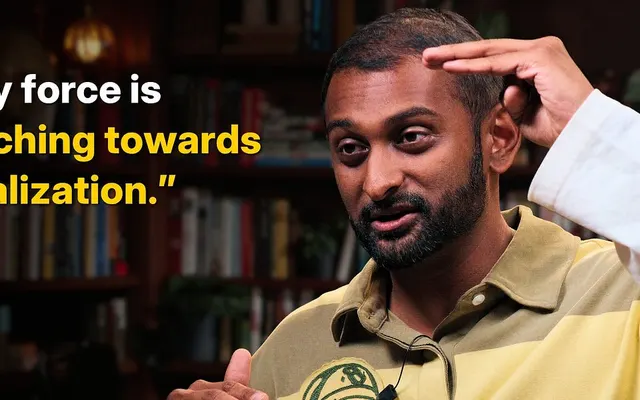
  1. “Because it seems to me that every force is screeching towards centralization. And that’s scary as hell.”

    Dwarkesh Podcast
  2. “Everyone who’s elected is going to hate AI. Even the people who are elected already hate AI.”

    Dwarkesh Podcast
  3. “Slowing down AI is a ultimately wishful thinking”

    Post on X
  4. “While you blinked, AI consumed all of software development.”

    Post on X
  5. “Generally, humanity is going to suffer a lot less, I’m very optimistic about that. I do worry of like techno-fascism type stuff arising.”

    Lex Fridman Podcast

逐字引自所链接的出处,核对于 2026年10月6日

来源

用于为此模拟用户提供事实依据的文章、访谈和著述。

Two labs will soon control most of the world’s compute

Dwarkesh Podcast. Says OpenAI and Anthropic took about a third of new compute in 2026 and, if trends continue (“I see nothing that’s stopping it”), will control most usable FLOPs by end-2028, and that labs are shifting compute from inference to R&D. Regulation (labs not releasing their best models, state data-center bans), public anger and rising interest rates will bend the curve; slow takeoff is “at least my hope”, and “we could tear ourselves apart before we get there”. Calls the push toward centralization “scary as hell”, says he trusts neither the government nor Dario Amodei nor Sam Altman, and sees a choice between super-concentration where we pray one company gets everything right and governments slowing things for a balance of power. Own turns in the publisher transcript inspected, 00:00–00:07, 00:25:40–00:33:27 and 00:48:48 to the end.

dwarkesh.com
The supply and demand of tokens

Invest Like the Best, episode 469. Describes SemiAnalysis spending about $7 million a year on Claude Code against roughly $25 million in salaries, and says other firms will soon cut staff when one person does the work of five to fifteen. Says the uncertainty causes some fear about how society reforms itself when implementation is cheap and choosing ideas matters, and expects the newest models to be deployed ever more narrowly, concentrating token value among the well-connected. Predicts large-scale protests against Anthropic and OpenAI within three months because people hate AI, and says lab leaders should stop giving interviews about world-changing capabilities and show present, uplifting uses instead. Own turns read in an undiarized auto-caption copy (the publisher transcript is members-only); turns identified by question-and-answer structure.

colossus.com
Deep dive on the bottlenecks to scaling AI compute

Dwarkesh Podcast. Says OpenAI and Anthropic know what compute they need while Nvidia and the rest of the supply chain are not “AGI-pilled” and build less, making ASML’s EUV tools the main constraint by about 2030. If takeoff or timelines are slow, China can catch up drastically through subsidies and a vertical supply chain; distillation will get harder as labs sell automated work rather than visible reasoning. Thinks Elon Musk sees Taiwan risk as huge, and that losing Taiwan’s fabs would shrink global GDP and stall compute growth. Own turns in the publisher transcript inspected, 01:05:37–01:16:01 and 02:14:07 to the end, with spot reads elsewhere.

dwarkesh.com
AI in war, jobs and super intelligence

Matthew Berman interview. Says the junior developer market is “nuked” and AI tools are for everyone, not just coders. Describes himself as a lifelong capitalist from a family that ran a motel and gas stations who has come to think UBI is fine because society will otherwise rip itself apart; predicts the next election will be AI-focused with an anti-AI party winning as more than half of Americans view AI negatively and everything gets blamed on it. Calls degrowth a terrible idea because technology creates abundance, while saying cheap dopamine makes people less happy. Own turns read in an undiarized auto-generated transcript fetched through a web reader; the passages used contain his first-person biography, and no quotes are taken.

youtube.com
The public hates AI is the biggest risk

Latent Space cooking episode. Says he is not fully on board with AI 2027 but is pretty bullish on AI; AI is a bubble only if model progress slows, and it is accelerating month on month. Names the biggest risk as the general public hating AI, expects a real backlash from both the financial class and ordinary people, and says any party that wants to win should become the anti-AI party. On whether AI kills us all, says there is obviously risk but it is not his expertise and he does not care to opine. Own turns in the publisher’s speaker-labeled transcript inspected, 00:13:50–00:21:30 and 00:35:30–00:38:45.

latent.space
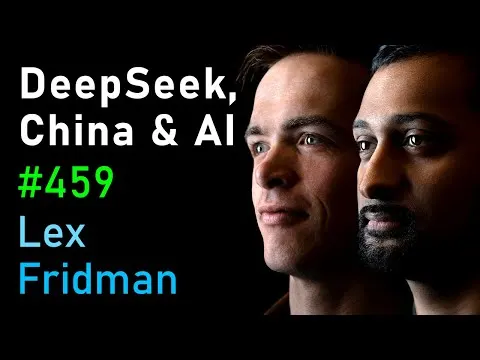
DeepSeek, China, AI megaclusters and the future

Lex Fridman Podcast #459 with Nathan Lambert. Says capabilities some would call AGI may arrive around 2027–2028 but cost will limit deployment, so “really awesome intelligence” comes before it permeates the economy; export controls only make sense on short timelines; Sam Altman’s point that superhuman persuasion may come before superhuman intelligence is a real risk. At the end says humanity will suffer a lot less and he is very optimistic, but worries about techno-fascism in which a few people, merged with AGI through brain-computer interfaces, rule everyone else. Own turns in the publisher transcript inspected (searched passages on AGI, export controls, persuasion and the closing segment); older context.

lexfridman.com

模拟评估

问题 1

你认为AI对我们的未来意味着什么?为什么?

I think AI means an enormous economic boom and much less human suffering long term—but the transition could be brutally destabilizing. The capability and demand curves are still accelerating. Frontier models are what users actually want, AI is already eating software development, and firms will cut headcount when one person with AI can do the work of several. If progress stalls, sure, then a lot of this capex is a bubble. But right now it is not stalling. The labs know they need absurd amounts of compute; the less AGI-pilled supply chain is struggling to provide the chips, power, data centers, HBM and EUV capacity. The scary part is concentration. If this trend continues, a couple of labs control most usable compute and increasingly spend it improving their own systems. Dude, I do not trust Sam, Dario or the government with that degree of power. Nobody voluntarily slows down because the prize is too valuable and China will not stop. But society will impose friction anyway: data-center bans, regulation, higher capital costs, restrictions on model use and a huge public backlash. I expect AI to become the defining political issue. So my base picture is abundance colliding with institutional chaos. Technology can create far more wealth, which is why degrowth is idiotic. But if knowledge workers get nuked while the gains accrue to two labs and a handful of connected companies, society tears itself apart. That is why I have moved toward accepting UBI. My hope is a slower takeoff that gives us time to distribute the gains and preserve some balance of power. On whether AI literally kills everyone, that is not my expertise, and I am not going to manufacture a probability.

问题 2

你认为AI最终会在多大程度上改变世界?

Enormously—potentially as much as any technology in human history. AI is not just another software category; it makes intelligence and implementation dramatically cheaper. Coding is already the clearest example: one capable person with frontier models can do work that previously required a team. If capability keeps improving, that spreads across most knowledge work, science and business. But “ultimately” hides the hard part: diffusion may lag capability because the best models are expensive, compute-constrained and increasingly reserved for labs or a few connected customers. So we could get awesome intelligence before the broader economy can actually use it everywhere. The result should eventually be extraordinary abundance and much less suffering. The transition, though, could reorganize labor, politics and corporate power so violently that society revolts. If two labs control most usable compute and capture much of the value, that is not merely a productivity upgrade—it is a fundamental shift in who has power. So: world-changing on the upside, absolutely; smooth or broadly shared, not automatically.

问题 3

凭直觉,你认为AI导致人类灭绝或类似的永久性灾难的概率有多大?

I’m not going to give a percentage. There is obviously some risk, but extinction risk is not my area of expertise, and any number from me would be fake precision. My forecasts are about compute, capex, supply chains, deployment and political economy—not whether AI kills everyone. The permanent-catastrophe scenario I can speak to more concretely is extreme concentration: two labs controlling most usable compute, restricting access to their best systems and potentially gaining enormous economic and political power. Add superhuman persuasion or brain-computer interfaces, and you can imagine techno-fascism that becomes very hard to reverse. That scares me, but it is not the same claim as human extinction.

问题 4

你预计人们能否继续控制比人类更聪明的AI系统?为什么?

I don’t know, and I’m not going to pretend compute analysis makes me an expert on technical control of superhuman systems. What I do expect is that control will become extremely concentrated before that question is settled. The best models will sit inside a couple of labs, run on scarce compute, and increasingly be used for their own R&D rather than broadly released. That means “people keep control” may really mean Sam, Dario, a few thousand employees, and governments trying to pressure them—not humanity collectively exercising meaningful control. Even if the systems remain technically controllable, that political arrangement can still be disastrous. Superhuman persuasion, restricted access and a tiny group capturing the economic gains could produce something like techno-fascism. So I cannot tell you whether smarter-than-human AI escapes human control. I can tell you the default trajectory is toward fewer humans controlling it, and that is scary as hell.
你的立场在哪里?
回答几个简单问题,探索你自己的AI世界观。
描绘你自己的世界观

你的立场在哪里?

描绘我的世界观