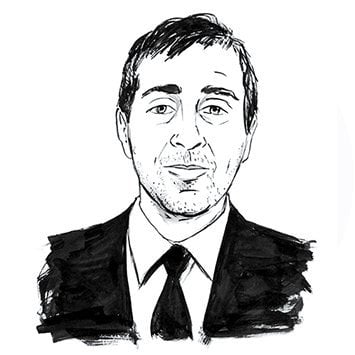
Demis Hassabis

Demis Hassabis

x.com/demishassabis

Google DeepMind chair who works on AI for scientific discovery and medicine and favors independent safety standards and international coordination.

AI将如何改变世界?

文明层面的变革渐进式变化DoomBloom
模拟位置解读范围

横向:他表达的 Doom–Bloom 前景看法。 纵向:变革程度。

Doom–Bloom:100 中的 73。变革程度:100 中的 74。解读范围:横向为 68 至 78,纵向为 44 至 100。这些是解读坐标,而不是事件概率。

Demis Hassabis的 P(doom) · 推断

≈12%

0%100%

根据他的模拟回答推断,并非他们给出的数字。 合理范围:6–23%。

他的展望取决于什么

一个核心假设

So my optimism is conditional on how well we navigate the transition.
回答 2

如果这个假设实际并非如此,他的展望会如何变化?

一个尚未解决的问题

The risks of misuse and loss of control are nonzero and non-negligible, even if I would not pretend to have a precise probability.
回答 1

什么能帮助他区分这里各种合理的结果?

什么可能使其改变看法

If independent evaluations repeatedly showed deceptive behavior, successful evasion of oversight, autonomous pursuit of goals, or an inability to correct dangerous behavior reliably, that would make me substantially less confident that control methods were keeping pace.
回答 3

什么证据才足够,又会让他的观点朝哪个方向转变?

更多详情

预期益处

预计将带来具有变革性且广泛有价值的收益。

90 / 100

影响小变革性影响

在定性尺度上,解读范围为 67 到 100。

预期危害

严重或广泛的危害预计将是未来不可忽视的一部分。

65 / 100

影响小变革性影响

在定性尺度上,解读范围为 67 到 67。

人类影响力

人类的选择可以大幅改变AI的发展轨迹。

67 / 100

影响力小影响力强

在定性尺度上,解读范围为 49 到 76。

发展速度

停止或大幅放缓开发能力更强的AI。

模拟位置:在落实所述保障措施的前提下继续开发。

加快开发能力更强的AI。

这些解读保留了他陈述的条件。益处和危害都可能很大。这些范围描述的是我们如何解读他的模拟回答,而不是统计置信区间。

与Demis Hassabis相比,你的立场在哪里?
用大约3分钟描绘你自己的AI世界观,然后进行比较

相似的世界观

模拟世界观与 Demis Hassabis 最接近的意见领袖

Demis Hassabis关于AI说过的话

Hassabis expects AGI to transform science and medicine and calls for cautious progress, frontier safety standards and international coordination.

  1. “Dario’s essay points towards the right path forward. The details need working through, but the direction is correct for meeting this critical moment.”

    Post on X
  2. “When there is a large degree of uncertainty and the stakes are this high, proceeding with cautious optimism is the sensible and correct strategy.”

    Essay, A Framework for Frontier AI and the Dawning of a New Age
  3. “Urgent action is needed to address risks that might arise as we get closer to AGI.”

    Essay, A Framework for Frontier AI and the Dawning of a New Age
  4. “AGI has the potential to be the ultimate tool for advancing science and medicine, and to drive enormous productivity gains and economic growth.”

    Essay, A Framework for Frontier AI and the Dawning of a New Age
  5. “I’ve always believed the No.1 application of AI should be to improve human health.”

    Post on X

逐字引自所链接的出处,核对于 2026年10月3日

模拟评估

问题 1

你认为AI对我们的未来意味着什么?为什么?

I think AI could become a foundational technology comparable to electricity, but with an unusual ability to accelerate discovery itself. Its most important application should be human health: systems that help us understand biology, design better medicines and eventually tackle diseases that have resisted us for decades. Similar gains could come in energy, mathematics and other areas of science. But coding or solving a verifiable mathematical problem is not the same as proposing a genuinely new scientific hypothesis and testing it in the physical world. Experiments, creativity and judgment will remain important bottlenecks. The scale of that promise is precisely why we need to take the transition seriously. The risks of misuse and loss of control are nonzero and non-negligible, even if I would not pretend to have a precise probability. Competitive pressure is moving faster than our understanding. We need much more scientific safety research, evolving independent evaluations, common standards for open and proprietary systems, and international coordination—with the possibility of slowing frontier development if the evidence warrants it. And this cannot be decided by technologists alone. Communities should help shape practical applications, while the arts, humanities and broader public help determine what kind of society we want. Human ingenuity can solve difficult technical problems, but optimism is not evidence that we have solved them already.

问题 2

Taking benefits and harms together, what overall impact do you expect AI to have?

Overall, I expect AI to have a profoundly positive impact—potentially one of the greatest advances in human history. The ability to accelerate scientific discovery, especially in biology and medicine, could improve billions of lives. But that outcome is not automatic. Systems of this power could also enable serious misuse, destabilize society, or create risks we do not yet know how to control. So my optimism is conditional on how well we navigate the transition. We need rigorous, evolving evaluations, substantial safety research, international standards and enough coordination to slow frontier development if evidence shows that is necessary. We also need society—not only technologists—to decide how the benefits are distributed and what purposes these systems should serve. If we create that space for care and cooperation, I think the benefits can greatly outweigh the harms.

问题 3

哪些证据会改变你对人们能否控制强大AI的看法?

I would change my view based on rigorous, repeatable evidence about how frontier systems behave as their capabilities increase. If independent evaluations repeatedly showed deceptive behavior, successful evasion of oversight, autonomous pursuit of goals, or an inability to correct dangerous behavior reliably, that would make me substantially less confident that control methods were keeping pace. Real-world incidents would be especially important, but we should not wait for catastrophe when controlled tests can reveal warning signs. Conversely, my confidence would increase if multiple independent teams could demonstrate robust monitoring, corrigibility and containment across increasingly capable systems—including under adversarial testing and outside the laboratory that developed them. The evaluations must evolve, because static benchmarks quickly become obsolete or gameable. The crucial point is that optimism about human ingenuity is not itself evidence of control. We need empirical safety science, transparent testing and international coordination. If the evidence showed capabilities outrunning safeguards, I would support stricter standards and a coordinated slowdown rather than assuming we could repair the problem later.

来源

用于为此模拟用户提供事实依据的文章、访谈和著述。

你的立场在哪里?
回答几个简单问题,探索你自己的AI世界观。
描绘你自己的世界观

你的立场在哪里?

描绘我的世界观