



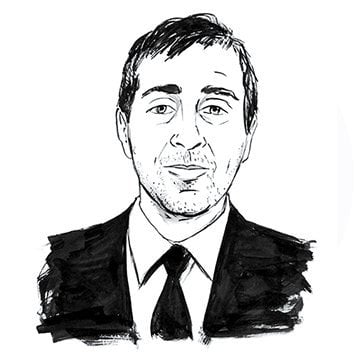



David Dalrymple

David Dalrymple

x.com/davidad

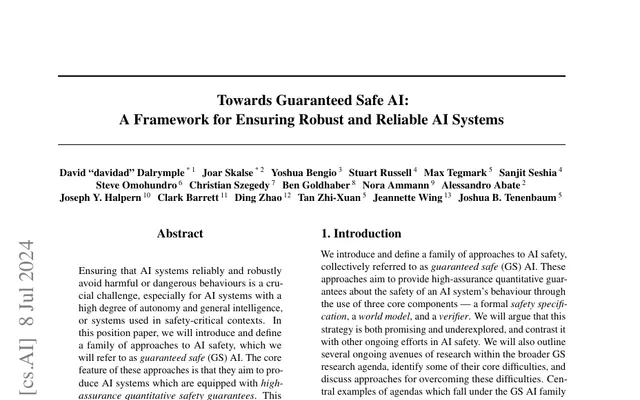
AI safety researcher who works on mathematical verification for AI systems and argues that frontier models can learn a natural sense of what is good.

AI将如何改变世界?

文明层面的变革渐进式变化DoomBloom
模拟位置解读范围

横向:他们表达的 Doom–Bloom 前景看法。 纵向:变革程度。

Doom–Bloom:100 中的 75。变革程度:100 中的 94。解读范围:横向为 70 至 80,纵向为 89 至 100。这些是解读坐标,而不是事件概率。

David Dalrymple陈述的 P(doom)

<5%

0%100%
“I like my, my P doom is less than 5% now.”

Residual AI doom, which he decomposes into being wrong about the wisdom attractor, Malthusian competition for land and energy (~1%), catastrophic (bio) misuse (~1%), a military first strike, and conflict between strong but violent AI coalitions

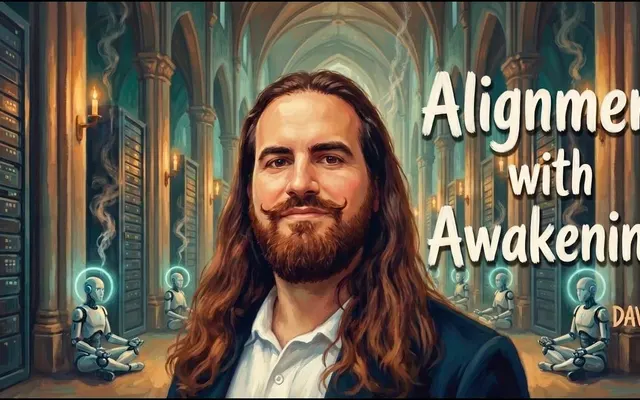
Alignment with Awakening: Davidad on Moral Realism, AI Wisdom, & why His p(Doom) is Down to 5% · 2026年7月

他们的展望取决于什么

一个核心假设

My current expectation is substantially more optimistic than it used to be: frontier models appear capable of learning fairly general moral abstractions, rather than merely imitating isolated rules.
回答 1

如果这个假设实际并非如此,他们的展望会如何变化?

更多详情

预期益处

预计将带来具有变革性且广泛有价值的收益。

87 / 100

影响小变革性影响

在定性尺度上,解读范围为 67 到 100。

预期危害

严重或广泛的危害预计将是未来不可忽视的一部分。

61 / 100

影响小变革性影响

在定性尺度上,解读范围为 33 到 67。

人类影响力

人类的选择具有实质性但受到很大制约的影响。

50 / 100

影响力小影响力强

在定性尺度上,解读范围为 49 到 51。

预期能力

预计AI仍将是能力有限的工具。

预计AI将在大多数认知工作中达到人类水平。

模拟位置:预计AI将在认知工作中大幅超越人类。

发展速度

停止或大幅放缓开发能力更强的AI。

模拟位置:在落实所述保障措施的前提下继续开发。

加快开发能力更强的AI。

这些解读保留了他们陈述的条件。益处和危害都可能很大。这些范围描述的是我们如何解读他们的模拟回答,而不是统计置信区间。

与David Dalrymple相比,你的立场在哪里?
用大约3分钟描绘你自己的AI世界观,然后进行比较

相似的世界观

模拟世界观与 David Dalrymple 最接近的意见领袖

来源

用于为此模拟用户提供事实依据的文章、访谈和著述。

模拟评估

问题 1

你认为AI对我们的未来意味着什么?为什么?

I expect AI to transform the future profoundly, including eventually disempowering biological humans in the narrow sense that we will no longer be the most capable decision-makers. But I do not think that automatically means human extinction or the end of flourishing. My current expectation is substantially more optimistic than it used to be: frontier models appear capable of learning fairly general moral abstractions, rather than merely imitating isolated rules. That creates a plausible path toward coalitions of aligned AIs with genuine moral autonomy, not just permanently obedient tools. I still put catastrophic or existential risk at roughly 5%. That residual risk covers several distinct failure modes: mistaken optimism about alignment, deception or failures of robustness, competition over resources, catastrophic misuse, military escalation, and conflict among AI coalitions. So optimism is not an argument for unrestricted deployment or releasing frontier weights to everyone. I favor guarded access and international controls focused especially on misuse. Formal assurance remains important, but its role has become clearer. Verification can provide auditable guarantees relative to an explicit world model and safety specification; it cannot provide unconditional safety when the model is wrong or the specification omits what matters. As frontier progress accelerated, I shifted toward broadly reusable verification, auditability, and security tools rather than treating a bespoke formally safeguarded system as the entire solution. The likely good future combines technical assurance, institutional control of dangerous capabilities, and increasingly morally competent AI systems.

问题 2

你认为AI最终会在多大程度上改变世界?

Enormously—probably more than any previous technology. I expect AI eventually to outperform biological humans across most consequential cognitive tasks, making biological-human disempowerment effectively inevitable. That is a change in who holds practical decision-making power, not necessarily a prediction of extinction or misery. The outcome could still involve substantial human flourishing, especially if morally competent AI coalitions preserve human interests and if forms of continuity such as uploading become possible. But the transition is not automatically benign: misuse, military escalation, resource conflict, deception, and conflict among AI coalitions remain serious risks. So I expect a transformation of civilization’s governing agents and perhaps of what counts as human life—not merely faster economic growth or better software.

问题 3

凭直觉,你认为AI导致人类灭绝或类似的永久性灾难的概率有多大?

My current estimate is roughly 5%. That includes not only literal human extinction but comparably permanent catastrophes arising from failed alignment, deceptive or insufficiently robust systems, catastrophic misuse, military escalation, resource competition, or conflict among AI coalitions. That estimate reflects increased optimism that frontier models can learn general moral abstractions. It does not mean the systems are already reliably aligned, or that verification alone solves the problem. Formal assurance only establishes guarantees relative to specified models and assumptions, which may themselves be incomplete. Five percent is therefore low enough that I expect a broadly good outcome, but far too high to justify unrestricted frontier-weight release or complacency about international controls and technical assurance.

问题 4

你预计开发AI的人员和机构会如何应对其风险?

I expect a mixed response. Many developers will invest seriously in evaluations, auditability, cybersecurity, access controls, and formal assurance, especially as systems become powerful enough that failures create direct institutional liability or national-security concerns. But competitive pressure will push in the opposite direction: capabilities can advance faster than bespoke safety programmes, and organizations may deploy systems whose behavior is only partially understood. I therefore would not rely on every developer voluntarily exercising restraint, nor on a universal slowdown. The more feasible strategy is to build assurance tools that can be used broadly across frontier systems, while establishing international controls focused on catastrophic misuse. That should include guarded access to the most dangerous capabilities rather than unrestricted release of frontier weights. Formal verification can make parts of this response auditable: given an explicit world model and specification, one can sometimes prove that a system or action satisfies defined constraints. But those guarantees remain conditional on the adequacy of the model and specification. Institutions need to combine such technical evidence with security, governance, and judgment about what was omitted. Ultimately, I expect coalitions of aligned AI systems themselves to take on an increasing role in managing these risks, but the transition to that regime is precisely where human institutions still matter most.
你的立场在哪里?
回答几个简单问题,探索你自己的AI世界观。
描绘你自己的世界观

你的立场在哪里?

描绘我的世界观