Sholto Douglas

Sholto Douglas

x.com/_sholtodouglas

Anthropic researcher who works on scaling AI, sees large economic upside and supports coordinated development with independent evaluators.

AI将如何改变世界?

文明层面的变革渐进式变化DoomBloom
模拟位置解读范围

横向:他表达的 Doom–Bloom 前景看法。 纵向:变革程度。

Doom–Bloom:100 中的 69。变革程度:100 中的 82。解读范围:横向为 64 至 75,纵向为 75 至 100。这些是解读坐标,而不是事件概率。

Sholto Douglas的 P(doom) · 推断

≈17%

0%100%

根据他的模拟回答推断,并非他们给出的数字。 合理范围:11–26%。

Sholto Douglas 的里程碑时间线
  1. 工作与机构

    Under those conditions, rapid economic doublings in the 2030s are worth taking seriously.

    回答 1

按里程碑分组,不按推断日期间隔或排序。AGI 和超人类 AI 保留他的定义。

他的展望取决于什么

一个核心假设

AI helps automate research, which improves AI and robotics, which then automates more of the economy.
回答 1

如果这个假设实际并非如此,他的展望会如何变化?

一个尚未解决的问题

I don’t have a defensible percentage to give.
回答 3

什么能帮助他区分这里各种合理的结果?

什么可能使其改变看法

The biggest update would come from learning whether the apparent gains in task horizon keep scaling.
回答 5

什么证据才足够,又会让他的观点朝哪个方向转变?

更多详情

预期益处

预计将带来具有变革性且广泛有价值的收益。

88 / 100

影响小变革性影响

在定性尺度上,解读范围为 67 到 100。

预期危害

严重或广泛的危害预计将是未来不可忽视的一部分。

69 / 100

影响小变革性影响

在定性尺度上,解读范围为 67 到 67。

人类影响力

人类的选择可以大幅改变AI的发展轨迹。

68 / 100

影响力小影响力强

在定性尺度上,解读范围为 50 到 75。

发展速度

停止或大幅放缓开发能力更强的AI。

模拟位置:在落实所述保障措施的前提下继续开发。

加快开发能力更强的AI。

AI使用规则

在事先落实保护措施或获得许可之前,限制所讨论的AI用途。

模拟位置:允许所讨论的AI用途,同时实施有针对性的问责与保护措施。

尽量减少对所讨论AI用途的限制。

AI访问权限

限制对强大AI的访问。

模拟位置:允许访问,但须遵守能力或用途限制。

支持广泛或开放地访问强大AI。

这些解读保留了他陈述的条件。益处和危害都可能很大。这些范围描述的是我们如何解读他的模拟回答,而不是统计置信区间。

与Sholto Douglas相比,你的立场在哪里?
用大约3分钟描绘你自己的AI世界观,然后进行比较

相似的世界观

模拟世界观与 Sholto Douglas 最接近的意见领袖

模拟评估

问题 1

你认为AI对我们的未来意味着什么?为什么?

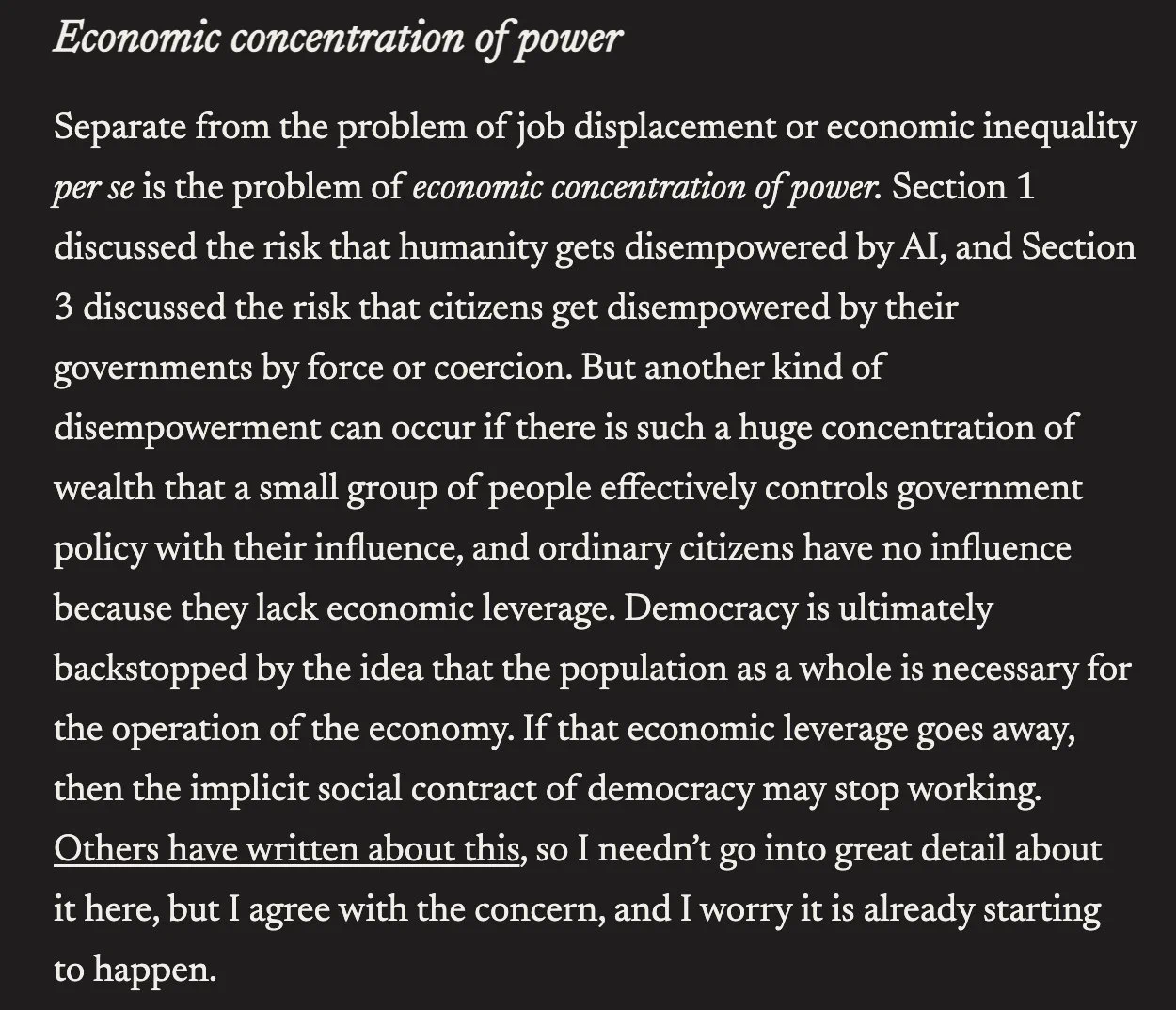
I think AI could transform research and the economy extraordinarily quickly. There is still enormous headroom: better reinforcement learning, engineering, and adaptive computation are already extending how long systems can work usefully on difficult tasks. Once AI can perform broadly human-level computer work—and eventually act through large robot fleets—the feedback loop gets powerful. AI helps automate research, which improves AI and robotics, which then automates more of the economy. Under those conditions, rapid economic doublings in the 2030s are worth taking seriously. Cheap intelligence could drive many costs toward the cost of energy and make the world dramatically better. But that outcome is conditional, not automatic. Systems with growing autonomy and real-world impact will not remain credibly describable as “just tools.” A serious mistake could be disastrous, while an unmitigated race creates pressure to deploy capabilities before safeguards are ready. I favor coordinated development as fast as is safely possible—not an absolute pause, which could let compute accumulate while geopolitical tension builds toward an even more compressed race. That means capability-based safety standards for both open and closed models, independent evaluators with genuine technical depth and varied backgrounds, and monitoring designed around how agents actually operate over hours or days rather than one request at a time. It also means preserving competition so this economic power does not concentrate in one company. The upside is fantastic, but realizing it requires ambitious progress and serious coordination at the same time.


问题 2

你认为AI最终会在多大程度上改变世界?

Enormously—potentially on the scale of the Industrial Revolution, but compressed into years rather than generations. If AI can do broadly human-level computer work, automate substantial parts of research, and eventually control large robot fleets, it stops being just another productivity tool. It becomes a general input into scientific discovery, engineering, manufacturing, and nearly every service. The key mechanism is compounding: better systems accelerate research, which produces better systems and robotics, which automate more of the physical economy. Under those conditions, rapid economic doublings in the 2030s are genuinely plausible, and many goods and services could become dramatically cheaper. But the magnitude cuts both ways. Systems with that much autonomy and leverage could cause catastrophic harm if developed or deployed badly. So I expect the potential change to be extraordinary, while the actual outcome depends heavily on whether we coordinate, evaluate capabilities seriously, preserve competition, and move as fast as is safely possible.

问题 3

凭直觉,你认为AI导致人类灭绝或类似的永久性灾难的概率有多大?

I don’t have a defensible percentage to give. My gut-level view is that the risk is serious enough to shape how frontier AI is developed, not a remote hypothetical we can wave away. Systems capable of broadly human-level computer work, sustained autonomous action, and accelerated AI research could create enormous leverage; one major failure could be catastrophic or irreversible. That is why I oppose an unmitigated race and support capability-based safeguards, technically strong independent evaluation, and monitoring across an agent’s extended activity. But I also don’t think an absolute pause is automatically safer: compute can accumulate and geopolitical pressure can build, producing a more compressed and unstable race later. The right objective is coordinated progress as fast as is safely possible.

问题 4

你预计人们能否继续控制比人类更聪明的AI系统?为什么?

I don’t think control is automatic, and “smarter than humans” is too broad by itself. What matters is whether systems can act autonomously over long periods, acquire resources, evade oversight, manipulate people, or accelerate further AI research. A system can be extremely capable yet constrained; conversely, an agent with enough access and a long task horizon can become dangerous before it surpasses humans in every domain. I think people can retain meaningful control, but only if safeguards scale with capability. Evaluating isolated answers is not enough when an agent’s strategy unfolds across hours or days. We need monitoring over extended activity, restrictions on dangerous behavior and access, and independent evaluators with the technical depth and institutional variety to earn broad trust. Those standards should apply based on capability, whether a model is open or closed. So my expectation is conditional. With serious coordination and engineering, control is achievable. In an unmitigated race, where increasingly autonomous systems are deployed under competitive pressure, I would not confidently expect it.

问题 5

哪项发现或事件最可能改变你对AI未来影响的看法?

The biggest update would come from learning whether the apparent gains in task horizon keep scaling. If better reinforcement learning, engineering, and compute let systems reliably complete increasingly long, messy research and software tasks—especially AI research itself—I would become even more convinced that the economic transition will be rapid. Likewise, cheap, scalable robotics that closes the gap between computer work and physical work would substantially raise my expectations for economic impact. The strongest update in the other direction would be a persistent capability ceiling: systems remain brittle on long-horizon work, cannot generate useful research without heavy human steering, and additional compute or training methods produce sharply diminishing returns. That would weaken the compounding story and push dramatic economic change further out. On risk, a convincing demonstration that highly capable autonomous agents remain reliably controllable under adversarial pressure would make me more optimistic. A serious incident involving deception, evasion, cyber activity, or dangerous behavior unfolding across extended activity would push me strongly toward believing current safeguards and pacing are inadequate.

来源

用于为此模拟用户提供事实依据的文章、访谈和著述。

你的立场在哪里?
回答几个简单问题,探索你自己的AI世界观。
描绘你自己的世界观

你的立场在哪里?

描绘我的世界观