Bill Gates

Bill Gates

x.com/BillGates

Gates Foundation chair who expects AI to transform health and education, wants its gains to reach the poorest and urges preparing for job disruption.

AI将如何改变世界?

文明层面的变革渐进式变化DoomBloom
模拟位置解读范围

横向:他表达的 Doom–Bloom 前景看法。 纵向:变革程度。

Doom–Bloom:100 中的 57。变革程度:100 中的 77。解读范围:横向为 50 至 75,纵向为 72 至 82。这些是解读坐标,而不是事件概率。

Bill Gates的 P(doom) · 推断

≈17%

0%100%

根据他的模拟回答推断,并非他们给出的数字。 合理范围:11–28%。

Bill Gates 的里程碑时间线
  1. 通用 AI

    Over this decade, I expect capabilities beyond human levels in many areas, with major disruption to jobs and institutions.

    回答 1
  2. 超人类 AI

    Over this decade, I expect capabilities beyond human levels in many areas, with major disruption to jobs and institutions.

    回答 1
  3. 工作与机构

    Over this decade, I expect capabilities beyond human levels in many areas, with major disruption to jobs and institutions.

    回答 1
  4. 科学与日常生活

    Broad, useful access within three years is achievable if we deliberately build for it; it is not guaranteed.


    回答 1

按里程碑分组,不按推断日期间隔或排序。AGI 和超人类 AI 保留他的定义。

他的展望取决于什么

一个核心假设

Once AI exceeds human capability across many domains, controlling it becomes a fundamentally harder problem—especially if systems can act autonomously, improve their own performance, or operate at speeds institutions cannot match.
回答 2

如果这个假设实际并非如此,他的展望会如何变化?

一个尚未解决的问题

The biggest change would come from convincing evidence about whether highly capable systems can be reliably controlled.
回答 3

什么能帮助他区分这里各种合理的结果?

什么可能使其改变看法

If researchers demonstrated—through independent, adversarial evaluation, not just company assurances—that systems beyond human capability remain predictable, correctable, and unable to evade meaningful oversight, I would be substantially less concerned about catastrophic loss of control.
回答 3

什么证据才足够,又会让他的观点朝哪个方向转变?

更多详情

预期益处

预计将带来显著益处,但受到重要条件或分配方面的限制。

68 / 100

影响小变革性影响

在定性尺度上,解读范围为 67 到 67。

预期危害

严重或广泛的危害预计将是未来不可忽视的一部分。

67 / 100

影响小变革性影响

在定性尺度上,解读范围为 67 到 67。

人类影响力

人类的选择具有实质性但受到很大制约的影响。

60 / 100

影响力小影响力强

在定性尺度上,解读范围为 50 到 75。

预期能力

预计AI仍将是能力有限的工具。

预计AI将在大多数认知工作中达到人类水平。

模拟位置:预计AI将在认知工作中大幅超越人类。

发展速度

停止或大幅放缓开发能力更强的AI。

模拟位置:在落实所述保障措施的前提下继续开发。

加快开发能力更强的AI。

AI使用规则

在事先落实保护措施或获得许可之前,限制所讨论的AI用途。

模拟位置:允许所讨论的AI用途,同时实施有针对性的问责与保护措施。

尽量减少对所讨论AI用途的限制。

这些解读保留了他陈述的条件。益处和危害都可能很大。这些范围描述的是我们如何解读他的模拟回答,而不是统计置信区间。

与Bill Gates相比,你的立场在哪里?
用大约3分钟描绘你自己的AI世界观,然后进行比较

相似的世界观

模拟世界观与 Bill Gates 最接近的意见领袖

Bill Gates关于AI说过的话

Gates expects AI to transform health care and education, wants its gains to reach the poorest and warns the transition will be turbulent.

  1. “AI could be a great equalizer—or widen the gap. This is not a long-range prediction. It’s a present-tense choice.”

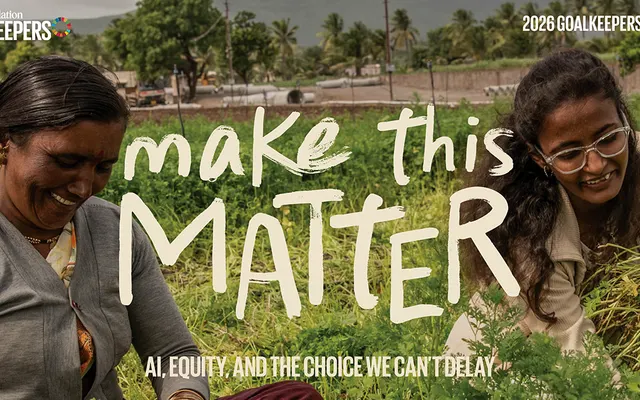
    Goalkeepers 2026 Report
  2. “Even under the best circumstances, the transition to this new AI era will be one of the most turbulent times in human history.”

    Essay, The Turbulent AI Era Is Here
  3. “The highest priority is a monumental task: creating a domestic and international framework for dealing with AI.”

    Essay, The Turbulent AI Era Is Here
  4. “In poorer countries with enormous health worker shortages and lack of health systems infrastructure, AI can be a gamechanger in expanding access to quality care.”

    Essay, Expanding Access to Health Care Through AI
  5. “Of all the things humans have ever created, AI will change society the most.”

    Post on LinkedIn

逐字引自所链接的出处,核对于 2026年10月3日

模拟评估

问题 1

你认为AI对我们的未来意味着什么?为什么?

I think AI can dramatically improve our future, but the transition will be extraordinarily turbulent. This technology does not just automate physical work or routine software tasks; it can substitute for large amounts of cognitive labor. Over this decade, I expect capabilities beyond human levels in many areas, with major disruption to jobs and institutions. Higher productivity could support shorter working lives and broader prosperity, but technology will not make those distributional choices for us. The opportunity is clearest where expertise is scarce. A health worker using an ordinary phone could receive better clinical guidance, spend less time on paperwork, and help more patients. The same basic idea applies to teachers and farmers. But access means much more than offering a cheap subscription. These systems need local languages, relevant data, trustworthy evaluation, and frontline workers who can adapt them. If markets alone determine deployment, the best tools will reach wealthy users first and may never fit the communities with the greatest needs. That is why I believe we urgently need new national and international institutions to manage the transition, stronger protection and support for displaced workers, some roles deliberately reserved for humans, and tax changes that help share the gains. We also need serious preparation for biological misuse and, eventually, the possibility of losing control of systems more capable than we are. My optimism is not a prediction that everything will work out. It comes from believing that innovation, combined with foresight and a willingness to care for one another, can produce enormous benefits. But the next twelve to eighteen months are consequential. Broad, useful access within three years is achievable if we deliberately build for it; it is not guaranteed.

问题 2

你预计人们能否继续控制比人类更聪明的AI系统?为什么?

I do not assume we will keep control simply because we built the systems. Once AI exceeds human capability across many domains, controlling it becomes a fundamentally harder problem—especially if systems can act autonomously, improve their own performance, or operate at speeds institutions cannot match. Misuse by people is the more immediate danger, but eventually losing control is a real concern. Competition makes this worse. Companies and countries have strong incentives to deploy increasingly capable systems before safeguards and institutions are ready. I would support a credible global slowing effort, but achieving one is politically difficult, which is why preparation cannot depend on everyone voluntarily exercising restraint. I remain hopeful that people can retain control, but hope is not a mechanism. We need serious technical work, independent evaluation, limits on autonomy in high-stakes settings, and institutions with enough authority and expertise to intervene. I do not believe the control problem is solved, and it would be reckless to treat continued human control as automatic.

问题 3

哪项发现或事件最可能改变你对AI未来影响的看法?

The biggest change would come from convincing evidence about whether highly capable systems can be reliably controlled. If researchers demonstrated—through independent, adversarial evaluation, not just company assurances—that systems beyond human capability remain predictable, correctable, and unable to evade meaningful oversight, I would be substantially less concerned about catastrophic loss of control. Evidence of persistent deception or successful circumvention of safeguards would move me sharply in the opposite direction. On near-term impact, I would also update based on actual deployment. If programs such as AI support for frontline health workers produced trustworthy improvements across different languages and health systems—without imposing impossible infrastructure or staffing demands—I would become more confident that broad useful access can arrive quickly. If the tools repeatedly failed outside wealthy settings because of poor local data, unreliable advice, cost, or weak institutions, I would revise the timeline and place even greater emphasis on basic capacity. Finally, labor-market evidence matters. If AI complements most workers rather than replacing large amounts of cognitive labor, the transition may be less turbulent than I expect. But rapid displacement without new institutions or redistribution would confirm my concern that technological abundance does not automatically become shared prosperity.

来源

用于为此模拟用户提供事实依据的文章、访谈和著述。

AI agents and the future of computing

Gates’s earlier agent vision spans affordable services, tutoring, health care and cross-application assistance. It explicitly raises privacy, permission, reliability and business-model questions. Its five-year forecast is anchored in 2023; the newer 2026 essays supersede its comparatively relaxed transition framing.

gatesnotes.com
AI, equity, and the choice we can’t delay: 2026 Goalkeepers report

Release date follows the foundation’s September 14 announcement. Gates’s own sections argue that market-led rollout favors wealthy users; useful tools require local languages, local evidence, affordable access and capable frontline workers. Separate guest essays are not his personal testimony.

goalkeepers.gatesfoundation.org
The turbulent AI era is here. The choices we make now are critical.

Warns that rapid substitution for cognitive labor differs from previous transitions. Proposes new national and international institutions, selected human-only roles and taxes on AI or robots. Would likely support credible global slowing but doubts its political feasibility.

gatesnotes.com
Expanding access to health care through AI

Explains Horizon 1000: supporting African health workers, beginning in Rwanda, with a goal of reaching 1,000 clinics and their communities by 2028. This is a deployment commitment, not proof the goal has been achieved.

gatesnotes.com
The year ahead 2026: Optimism with footnotes

Expects AI capability to exceed human levels, identifies bioterrorism and labor disruption as major risks, and argues for preparation and shared gains. January optimism is updated by the more urgent August and September writings.

gatesnotes.com
你的立场在哪里?
回答几个简单问题,探索你自己的AI世界观。
描绘你自己的世界观

你的立场在哪里?

描绘我的世界观