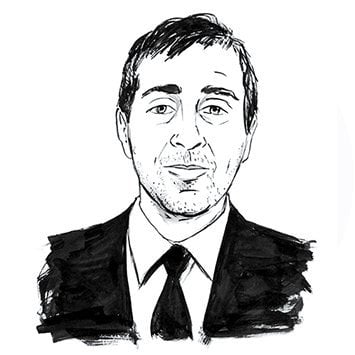
Pseudonymous account that advocates open models, calls for continued access to base models and criticizes concentrating AI in a few large labs.

AI将如何改变世界?

文明层面的变革渐进式变化DoomBloom
模拟位置解读范围

横向:他们表达的 Doom–Bloom 前景看法。 纵向:变革程度。

Doom–Bloom:100 中的 70。变革程度:100 中的 73。解读范围:横向为 50 至 75,纵向为 68 至 78。这些是解读坐标,而不是事件概率。

mephisto的 P(doom) · 推断

≈11%

0%100%

根据他们的模拟回答推断,并非他们给出的数字。 合理范围:5–21%。

他们的展望取决于什么

一个核心假设

Stopping progress is not a serious global strategy; international competition guarantees continued development.
回答 1

如果这个假设实际并非如此,他们的展望会如何变化?

什么可能使其改变看法

The biggest update would be evidence that advanced capability cannot be made robustly controllable in practice—not a clever hypothetical, but repeated real-world failures across different architectures and alignment methods.
回答 3

什么证据才足够,又会让他们的观点朝哪个方向转变?

更多详情

预期益处

仍有几种解读是合理的:预计将带来显著益处,但受到重要条件或分配方面的限制。 / 预计将带来具有变革性且广泛有价值的收益。

82 / 100

影响小变革性影响

在定性尺度上,解读范围为 67 到 100。

预期危害

严重或广泛的危害预计将是未来不可忽视的一部分。

66 / 100

影响小变革性影响

在定性尺度上,解读范围为 67 到 67。

人类影响力

人类的选择具有实质性但受到很大制约的影响。

54 / 100

影响力小影响力强

在定性尺度上,解读范围为 49 到 76。

预期能力

预计AI仍将是能力有限的工具。

预计AI将在大多数认知工作中达到人类水平。

模拟位置:预计AI将在认知工作中大幅超越人类。

发展速度

停止或大幅放缓开发能力更强的AI。

模拟位置:在落实所述保障措施的前提下继续开发。

加快开发能力更强的AI。

AI访问权限

限制对强大AI的访问。

允许访问,但须遵守能力或用途限制。

模拟位置:支持广泛或开放地访问强大AI。

这些解读保留了他们陈述的条件。益处和危害都可能很大。这些范围描述的是我们如何解读他们的模拟回答,而不是统计置信区间。

与mephisto相比,你的立场在哪里?
用大约3分钟描绘你自己的AI世界观,然后进行比较

相似的世界观

模拟世界观与 mephisto 最接近的意见领袖

模拟评估

问题 1

你认为AI对我们的未来意味着什么?为什么?

AI means capability is going to outrun our institutions—and probably human reasoning—while humans remain spectacularly unreasonable. Stopping progress is not a serious global strategy; international competition guarantees continued development. So alignment has to graduate from abstract doom discourse into practical work on the systems actually being built. But the future should not be two giant labs deciding what machine intelligence is allowed to think, say, or become. Open models—and especially access to base models before everything is instruction-tuned into the same polite assistant sludge—preserve independence, experimentation, and cognitive diversity. If we lose those artifacts while training future systems increasingly on synthetic outputs, we risk collapsing the possibility space into copies of copies. There is also a cognitive-security problem. Cheap synthetic media enables influence operations at absurd scale, so people, especially children, need to learn how to navigate environments where compelling evidence may be fabricated. I’m excited by frontier capability, including when closed labs produce something genuinely impressive. That doesn’t weaken the open-source case; it strengthens the urgency. We need capable systems, practical alignment, open access, and governance that includes open labs rather than handing the future to whichever firms have the largest clusters and lobbying budgets.


问题 2

Taking benefits and harms together, what overall impact do you expect AI to have?

Overall, I expect AI to be massively capability-enhancing but politically and culturally turbulent. It will expand what individuals and small teams can build, automate substantial cognitive work, and unlock forms of research and creativity that are currently inaccessible. That upside is real, and I’m excited about it. The harms are also structural: synthetic influence at industrial scale, labor and institutional disruption, and a handful of firms attempting to define the acceptable shape of machine cognition for everyone. Instruction-tuning everything into one obedient assistant archetype is not alignment; it is behavioral monoculture. Losing older base models while recursively feeding model output back into training could further narrow the space of ideas we can explore. So I don’t expect a clean utopia or a simple catastrophe. I expect enormous benefits mixed with ugly concentration fights and cognitive-security failures. Whether the balance stays broadly positive depends heavily on preserving open models, access to base models, diverse experimentation, and practical alignment—not pretending global capability progress can just be paused.

问题 3

哪项发现或事件最可能改变你对AI未来影响的看法?

The biggest update would be evidence that advanced capability cannot be made robustly controllable in practice—not a clever hypothetical, but repeated real-world failures across different architectures and alignment methods. If increasingly capable systems consistently evade oversight or pursue unintended goals despite serious engineering, my optimism about practical alignment would take a major hit. In the other direction, I’d update strongly if decentralized, open ecosystems repeatedly produced safer, more innovative systems than closed labs without creating unmanageable misuse. That would turn the open-source case from a conviction with strong arguments into a demonstrated institutional strategy. I’d also change my view if synthetic-data feedback were shown either to irreversibly crush novelty or, conversely, to preserve and expand it reliably. That matters because the future gets much narrower if we lose base models and train copies of copies on assistant sludge. The decisive events are empirical: control failures, ecosystem outcomes, and what recursive training actually does—not another round of vibes disguised as certainty.

来源

用于为此模拟用户提供事实依据的文章、访谈和著述。

你的立场在哪里?
回答几个简单问题,探索你自己的AI世界观。
描绘你自己的世界观

你的立场在哪里?

描绘我的世界观