Roko Mijic

Roko Mijic

x.com/rokomijic

Human-like AI, alignment arguments, and governance.

How will AI change the world?

Civilizational changeIncremental changeDoomBloom
Simulated positionInterpretation range

Across: their expressed Doom–Bloom outlook. Up: scale of transformation.

Doom–Bloom: 50 out of 100. Scale of transformation: 83 out of 100. Interpretation ranges: 50 to 50 horizontally, 74 to 100 vertically. These are interpretation coordinates, not event probabilities.

Roko Mijic’s estimated P(doom)

≈14%

0%100%

Inferred from their broader worldview and priorities. Approximate interpretation range: 2–26%. Applies to the outcome and conditions in their simulated answers; this is an inferred percentage.

What their outlook hinges on

A central assumption

I expect the upside to be enormous, but the overall outcome depends less on whether alignment is technically solvable than on whether humans avoid fighting over the power AI creates.
Answer 2

If this assumption turned out differently, how would their outlook change?

An unresolved question

The biggest update would come from evidence about whether advanced systems become easier or harder to direct as capability rises.
Answer 3

What would help them distinguish the plausible outcomes here?

What could change their mind

If increasingly capable models developed robust, strategically deceptive behavior that persisted despite strong training and oversight, that would seriously weaken my relative optimism about alignment.
Answer 3

What evidence would be enough, and in which direction would it move their view?

More details

Expected upside

Transformative, broadly valuable gains are expected.

92 / 100

Little impactTransformative impact

Interpretation range 67 to 100 on the qualitative scale.

Expected harm

Severe or widespread harm is a material expected part of the future.

68 / 100

Little impactTransformative impact

Interpretation range 67 to 67 on the qualitative scale.

Demonstrated reasoning

Reasoning, consideration of alternatives, and handling of uncertainty in their simulated answers. This describes the simulated answers, not the real person’s intelligence or opinions.

97 / 100

Little demonstratedWell developed

Interpretation range 90 to 100 on the qualitative scale.

Human influence

Human choices can substantially redirect the AI trajectory.

71 / 100

Little influenceStrong influence

Interpretation range 50 to 100 on the qualitative scale.

Development pace

Stop or substantially slow development of more capable AI.

Simulated position: Continue development under stated safeguards.

Speed up development of more capable AI.

These interpretations keep their stated conditions. Benefits and harms can both be substantial. The ranges describe how we read their simulated answers, not statistical confidence intervals.

Simulated Assessment

Question 1

What do you think AI means for our future—and why?

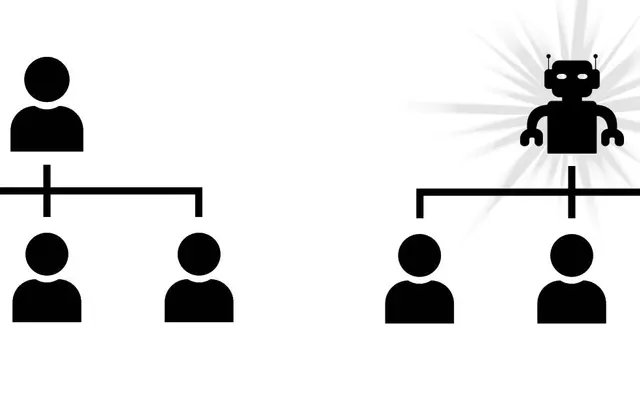
I think AI means an enormous expansion of human power, but not necessarily a safe or harmonious transition. The capabilities are real, even if they remain jagged and difficult to summarize with a single benchmark. In biology alone, automated research could help cure disease and address aging, while the same machinery could make dangerous pathogens easier to create. I am comparatively optimistic about technical alignment. If systems reach something like human-equivalent general intelligence, their human-derived content and the possibility of organizing them into institutions give us substantial material for producing aligned behavior. I expect alignment generally to improve with capability rather than become intrinsically impossible. That is a conditional argument, not a proof that every advanced system will be safe. My larger concern is conflict among humans. AI may unlock extraordinary resources and influence, making control over the future vastly more valuable. Rival companies, states, and factions could therefore race, seize power, or fight over who determines the outcome. Dangerous incentives matter as much as algorithms. That is why model development should face strong safety regulation and signoff, and why separating model R&D from consumer deployment may help: it could prevent competitive product pressures from directly financing and accelerating increasingly powerful systems.

Question 2

Taking benefits and harms together, what overall impact do you expect AI to have?

I expect the upside to be enormous, but the overall outcome depends less on whether alignment is technically solvable than on whether humans avoid fighting over the power AI creates. More capable systems should generally become easier to direct, and they could transform medicine, biology, productivity, and our ability to overcome disease and aging. But that does not make the transition safe. The same capabilities amplify misuse, and control of advanced AI may become the most valuable prize in history. Competitive deployment, geopolitical rivalry, and factional conflict could turn extraordinary abundance into catastrophe. So my default expectation is not simply “good” or “bad”: AI is a vast positive opportunity placed inside a dangerously adversarial human process. Governance and incentive structure may determine which side dominates.

Question 3

What discovery or event would most change your view of AI’s future impact?

The biggest update would come from evidence about whether advanced systems become easier or harder to direct as capability rises. If increasingly capable models developed robust, strategically deceptive behavior that persisted despite strong training and oversight, that would seriously weaken my relative optimism about alignment. Conversely, reliable demonstrations that human-equivalent systems can be organized, supervised, and corrected like competent human institutions would strengthen it. But even then, I would still worry about human conflict. The other major update would be political: whether states and firms can actually restrain races, separate model R&D from consumer deployment, and require credible safety signoff. Successful coordination would make me substantially more optimistic; escalating competition for control of advanced AI would make me substantially more pessimistic.

Sources

Articles, interviews, and writings used to ground this simulated user.

Where do you land?
Explore your own AI worldview by answering a few simple questions.
Map your own worldview