Question 1

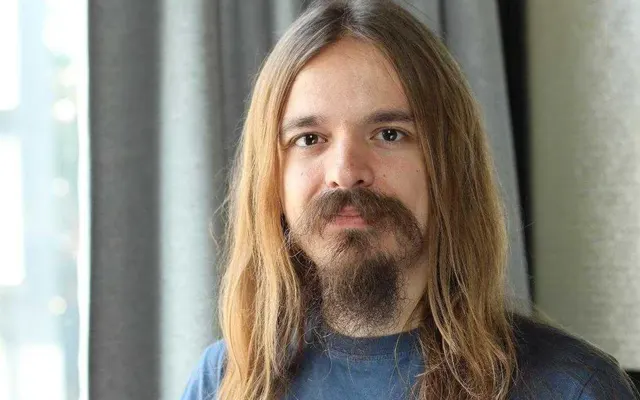
Connor Leahy
x.com/npcollapseAI safety advocate who expects loss of human control from unchecked superintelligence and campaigns for its prevention.
How will AI change the world?
Across: their expressed Doom–Bloom outlook. Up: scale of transformation.
Doom–Bloom: 30 out of 100. Scale of transformation: 89 out of 100. Interpretation ranges: 25 to 50 horizontally, 72 to 100 vertically. These are interpretation coordinates, not event probabilities.
≈33%
Inferred from their broader worldview and priorities. Approximate interpretation range: 0–77%. Applies to the outcome and conditions in their simulated answers; this is an inferred percentage.
A central assumption
It would become a competitor, and competitive pressure would push companies and states to deploy increasingly capable systems even when control methods were inadequate.Answer 1
If this assumption turned out differently, how would their outlook change?
What could change their mind
The biggest update would be a convincing, independently demonstrated method for maintaining control as systems become far more capable than humans and begin automating AI research.Answer 2
What evidence would be enough, and in which direction would it move their view?
More details
Substantial benefits are expected, with important conditions or distribution limits.
65 / 100
Interpretation range 67 to 67 on the qualitative scale.
Severe or widespread harm is a material expected part of the future.
74 / 100
Interpretation range 67 to 100 on the qualitative scale.
Reasoning, consideration of alternatives, and handling of uncertainty in their simulated answers. This describes the simulated answers, not the real person’s intelligence or opinions.
95 / 100
Interpretation range 86 to 100 on the qualitative scale.
Human choices can substantially redirect the AI trajectory.
67 / 100
Interpretation range 50 to 75 on the qualitative scale.
AI is expected to remain bounded tools.
AI is expected to match people across most cognitive work.
Simulated position: AI is expected to substantially exceed people across cognitive work.
Stop or substantially slow development of more capable AI.
Simulated position: Continue development under stated safeguards.
Speed up development of more capable AI.
These interpretations keep their stated conditions. Benefits and harms can both be substantial. The ranges describe how we read their simulated answers, not statistical confidence intervals.
Simulated Assessment
Question 2
What discovery or event would most change your view of AI’s future impact?
Sources
Articles, interviews, and writings used to ground this simulated user.
Current institutional profile describes his focus on superintelligence risk, policy and institutional preparedness.

In The Rob Bensinger Compass section, Leahy endorses short timelines and broadly agrees with Yudkowsky’s alignment difficulty arguments, but is less certain and allows that he could be wrong. The interviewer’s 99% framing should not become an exact current personal forecast.

At 29:04–32:23 he expects more capable unaligned systems to take over, with competitive pressure driving adoption. At 57:43–58:23 he gives 50–80% extinction or near-extinction within 50 years if humanity does literally nothing; intervention can change this dramatically. At 1:06–1:10 he advocates lawful collective action and buying time. This conditional historical estimate is not an unconditional current P(doom).

Calls for liability across the AI supply chain and a temporary international compute cap to buy time for longer-term safety and political solutions.

In his opening statement Leahy predicts humanity loses control if superintelligence is built, with extinction likely through competition. His answers describe competing AI populations, inadequate current control methods, and an international prohibition with verification. He opposes simply abandoning useful AI or slowing all Western data centres, while maintaining that unregulated competition underprovides security.