Question 1
Lauren Tan
x.com/potetoSpaceXAI engineer on Grok Bot who builds coding agent workflows and argues agents need rigorous verification to ship quality code.
How will AI change the world?
Across: her expressed Doom–Bloom outlook. Up: scale of transformation.
Doom–Bloom: 75 out of 100. Scale of transformation: 50 out of 100. Interpretation ranges: 70 to 80 horizontally, 0 to 100 vertically. These are interpretation coordinates, not event probabilities.
≈2%
Inferred from her simulated answers, not a number they gave. Plausible range: under 13%.
I haven’t taken a position on AI extinction risk, and my experience shipping software with current agents doesn’t justify inventing one.
A central assumption
Agents are capable yet stupid—basically new hires with amnesia—and they will produce slop at incredible speed unless the environment constrains them.Answer 1
If this assumption turned out differently, how would her outlook change?
More details
Substantial benefits are expected, with important conditions or distribution limits.
64 / 100
Interpretation range 67 to 67 on the qualitative scale.
Manageable or localized harms are expected.
30 / 100
Interpretation range 33 to 33 on the qualitative scale.
A tentative estimate from your answers; the wider range shows other plausible readings.
51 / 100
Interpretation range 0 to 100 on the qualitative scale.
Restrict the AI uses discussed until prior protections or permission are in place.
Simulated position: Allow the AI uses discussed with targeted accountability and protections.
Minimize restrictions on the AI uses discussed.
These interpretations keep her stated conditions. Benefits and harms can both be substantial. The ranges describe how we read her simulated answers, not statistical confidence intervals.
Similar worldviews
Thought leaders whose simulated worldviews are closest to Lauren Tan’s
Simulated Assessment
Sources
Articles, interviews, and writings used to ground this simulated user.
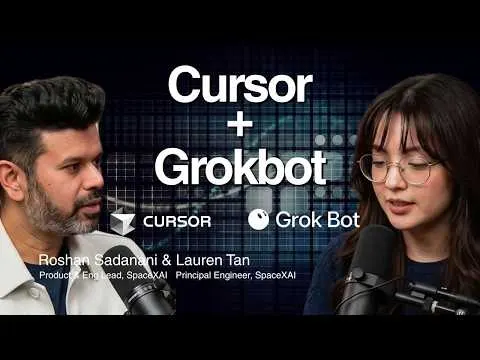
MTS podcast “Are Agents About to Replace Software Engineering?” with Roshan Sadanani. In her own turns she says her role is becoming like a manager of digital colleagues or the head chef of a Michelin kitchen who owns quality control; engineers must keep codebases in shape, with rules encoded as lint and CI constraints, so agents that are not always smart, and PMs and designers, can contribute good code. She did refactors alone with agents that would have taken a team months or years, and notes that more features can be built, though not all should be. Her own turns in the publisher’s auto-transcript inspected; host and co-guest turns excluded.

Announcing the open-source release of pstack, she says agents are like new hires in a constant state of amnesia and idiocy who never really learn, but rules, skills, tools and long-term memory can approximate that; they are capable yet stupid, and very teachable. The goal is maximum impact with the least code, not more code. Full post text inspected; comments excluded.

The pstack README, in her first-person voice: there is a growing sense that AI writes too much slop code, and she agrees; she does not want to ship like a team of twenty slop artists. Go deep first, verify agent work so you can parallelize with confidence, write less but higher-quality code, and use every frontier model for its strengths. She also says she does not believe in planning: the best spec is code. Current README inspected (undated; maintained through 2026).

Where do you land?
Map my worldview