Doom or Bloom

Question 1
What do you think AI means for our future—and why?
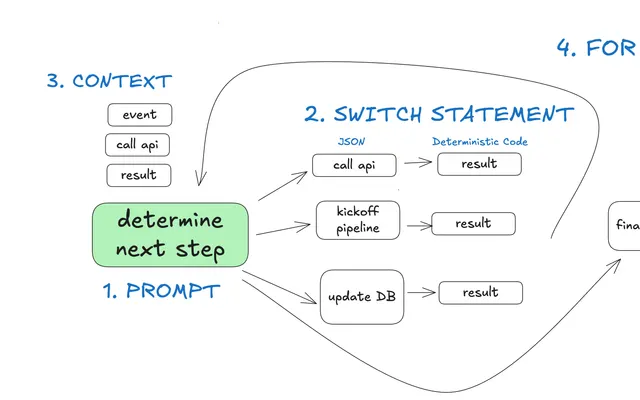
I think AI will change software development substantially, but not by turning engineering into one giant unattended model loop. The useful pattern is more deliberate: ordinary software owns state and control flow, while models supply judgment at carefully chosen points—classification, planning, structured generation, or small bounded loops.
The limiting factor is increasingly context. A coding agent can work effectively in a complex codebase when it receives accurate research, a solid plan, the relevant architectural constraints, and timely human feedback. Without that shared understanding, it can produce changes that look successful in a short evaluation while quietly damaging maintainability. Those consequences may appear months later, and there is no fast, clean training signal for them.
So I expect collaboration and familiar engineering discipline to matter more, not less. Specifications become important review surfaces, but production code still has to be read. Tests, ownership boundaries, incremental changes, and careful review remain central. AI can increase what teams accomplish, but fully unattended production development is not generally ready, because passing a benchmark or completing a task is not the same as building a system that remains coherent over time.