Thomas G. Dietterich

Thomas G. Dietterich

x.com/tdietterich

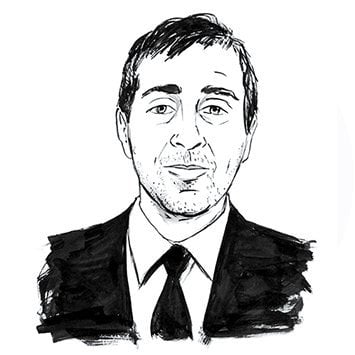
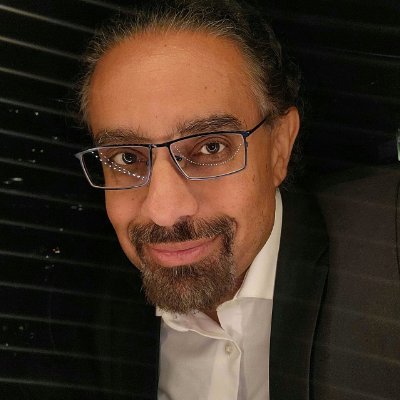
Oregon State machine learning professor emeritus who works on safe and robust AI and argues that AI agents need continual human oversight.

How will AI change the world?

Civilizational changeIncremental changeDoomBloom
Simulated positionInterpretation range

Across: his expressed Doom–Bloom outlook. Up: scale of transformation.

Doom–Bloom: 63 out of 100. Scale of transformation: 57 out of 100. Interpretation ranges: 50 to 75 horizontally, 50 to 75 vertically. These are interpretation coordinates, not event probabilities.

Thomas G. Dietterich’s P(doom) · inferred

≈9%

0%100%

Inferred from his simulated answers, not a number they gave. Plausible range: 5–16%.

What his outlook hinges on

A central assumption

It is maintained by monitoring and controlling the whole human-machine system, with adversarial testing and rapid detection and recovery when failures occur.
Answer 1

If this assumption turned out differently, how would his outlook change?

What could change their mind

The biggest change would be a convincing demonstration that a system can learn general rules and reliably apply them far beyond its training distribution—not merely interpolate, imitate, or pass a benchmark.
Answer 4

What evidence would be enough, and in which direction would it move his view?

More details

Expected upside

Substantial benefits are expected, with important conditions or distribution limits.

67 / 100

Little impactTransformative impact

Interpretation range 67 to 67 on the qualitative scale.

Expected harm

Severe or widespread harm is a material expected part of the future.

58 / 100

Little impactTransformative impact

Interpretation range 33 to 67 on the qualitative scale.

Human influence

Human choices have meaningful but substantially constrained influence.

54 / 100

Little influenceStrong influence

Interpretation range 44 to 81 on the qualitative scale.

Development pace

Stop or substantially slow development of more capable AI.

Simulated position: Continue development under stated safeguards.

Speed up development of more capable AI.

Rules for using AI

Restrict the AI uses discussed until prior protections or permission are in place.

Simulated position: Allow the AI uses discussed with targeted accountability and protections.

Minimize restrictions on the AI uses discussed.

These interpretations keep his stated conditions. Benefits and harms can both be substantial. The ranges describe how we read his simulated answers, not statistical confidence intervals.

Where do you land vs Thomas G. Dietterich?
Map your own AI worldview in about 3 minutes, then compare

Similar worldviews

Thought leaders whose simulated worldviews are closest to Thomas G. Dietterich’s

Simulated Assessment

Question 1

What do you think AI means for our future—and why?

I expect AI to be useful and consequential, but not because we have created some mystical “AGI.” Arguing over AGI and superintelligence is mostly a waste of time. The practical question is what particular systems can do, where they fail, and whether we can build reliable, controllable systems around them. Today’s systems are impressive statistical learners, but they remain unreliable. They can state a rule and then violate it, invent citations, or fail when a problem extends beyond patterns in their training data. Machine learning means always having to say you’re sorry. That does not make it useless; it means we must engineer for inevitable mistakes. Safety is not a permanent property trained into a model. It is maintained by monitoring and controlling the whole human-machine system, with adversarial testing and rapid detection and recovery when failures occur. The benefits could be substantial, especially where machines complement rather than imitate us: formal proofs, software testing, scientific-literature integration, drug and materials discovery, weather forecasting, ecosystem management, and complex simulations. But direct-action agents are probabilistic execution engines, so using them in weapons or other high-stakes settings without quantified uncertainty and hard constraints is reckless. I think AI-caused extinction is unlikely. Mass-casualty misuse is another matter: an AI-assisted pathogen release, for example, could kill millions. Present harms also deserve attention, particularly emotional dependence on chatbots and the erosion of creative or intellectual work. So my future is neither utopia nor apocalypse. It is a long engineering struggle to obtain real benefits from powerful but fallible machinery.

Question 2

Setting aside good or bad: how much do you think AI will ultimately change the world—a little, a lot, or completely?

A lot, but “completely” is too vague to be useful. AI will become embedded in science, engineering, organizations, education, and everyday tools, much as computation already has. It could substantially accelerate drug and materials discovery, simulation, formal verification, and environmental management. But widespread use is not the same as autonomous mastery. These systems will continue to make mistakes, and real deployments will depend on people, institutions, monitoring, and other software to compensate. So I expect deep, broad change—not a magical discontinuity in which machines replace every human capability or take control of everything.

Question 3

What’s your rough gut-feel chance that AI causes human extinction or a similarly permanent catastrophe? A number or “no idea” is fine.

I have not assigned it a numerical probability. My qualitative judgment is that human extinction from AI is unlikely. But a permanent global catastrophe is a broader and less clearly defined category, and AI-assisted misuse—such as a pathogen release—could still kill many millions without causing extinction. I would not invent a percentage that implies more precision than I have.

Question 4

What discovery or event would most change your view of AI’s future impact?

The biggest change would be a convincing demonstration that a system can learn general rules and reliably apply them far beyond its training distribution—not merely interpolate, imitate, or pass a benchmark. It would need to know when it lacks evidence, attribute its conclusions, quantify uncertainty, and remain controllable while acting in unfamiliar situations. Conversely, repeated real-world evidence that continual supervision cannot detect and recover from failures quickly enough—especially in cyber, biological, or military settings—would make me substantially more pessimistic. A polished demonstration or another larger language model would not be enough. I would want adversarial testing and sustained deployment evidence, because engineering history is full of systems that looked reliable until they encountered novelty.

Sources

Articles, interviews, and writings used to ground this simulated user.

The Chaotic Evolution of the Field with Tom Dietterich

Asked whether machine learning is over, he says it is in a crisis in Kuhn’s sense: after enormous investment in scaling statistical learning, large language models look more like smoothing and interpolating between training data than learning general rules that extrapolate; they can state the rules of chess yet make illegal moves, cannot judge which sources to trust, struggle to know whether they saw relevant data, and cannot attribute outputs. He names causal machine learning, world models, uncertainty quantification, attribution and multi-agent trust as open challenges. From his DARPA PAL and startup experience he warns that agents must fit real workflows, demand intrusive personal knowledge, need ways to forget, and will make mistakes. These are research challenges, not proofs of impossibility. Own turns in the publisher’s machine transcript inspected; most of the episode is field history.

machinelearning.transistor.fm
Running to the Noise, Episode 23

Calls recent scaling a brute-force period and expects its environmental costs to fall partly through efficiency incentives. Repeats that hallucination and failure to learn generalizable rules (for example, multiplication beyond trained lengths) suggest a fundamentally different approach may be needed. Says he shares concerns about AI replacing creative and intellectual work, that LLMs do not understand argument or evidence so universities must still teach them, that artists’ styles may deserve new legal protection, and that the claim people who do not use AI will be left behind is “too much of an AI-booster statement.” Expects some of the biggest benefits in drugs, materials and sustainability. Full published transcript of his turns inspected.

oberlin.edu
Complexity is a reason not to push the current technology

Three-post reply to a user arguing that AI’s supposedly inevitable advance is driven by capital. As an AI/ML researcher he says complexity is a reason not to push today’s systems, the first “knowledge technology” to scale but with many problems. He hopes for something simpler and better: cheaper, more efficient, more controllable and safer, able to attribute outputs to sources, learn continually, quantify uncertainty and avoid hallucination; attribution would compensate creators and control would mitigate risks. A hope and research vision, not a forecast. Thread and parent inspected via the public Bluesky API.

bsky.app
Layering symbolic systems on top of LLMs

Points to symbolic layers over LLMs as a way to address probabilistic execution, continual learning, attribution and perhaps uncertainty quantification. Says an LLM directly taking actions is an unpredictable probabilistic execution engine that cannot enforce hard safety constraints, noting an agent architecture that checks LLM-emitted code before execution. Suggests layering could also allow very rapid learning from little data. A favored research direction, not a claim that it already works. Three-post thread inspected via the public Bluesky API.

bsky.app
“AGI” shares the defects of the Turing Test

Six-post thread arguing that defining AGI as matching or exceeding humans on all tasks makes human performance the measure of intelligence. He prefers systems that complement people by doing well what people do poorly, such as formal proofs, verification tests, integrating the scientific literature, faster physical simulations, organizational situational awareness and helping journalists assess sources, evaluated on those capabilities rather than IQ-style tests. Ends by calling AGI-building a distraction. Older context consistent with his 2026 posts. Full thread inspected via the public Bluesky API.

bsky.app
LLMs are not reliable tools for autonomous weaponry

During a dispute over military AI contracts, he says LLM-based technology is good for many things but not reliable for autonomous weapons: it needs large GPU computers and lacks quantified uncertainty for novel, high-stakes situations. He first attributed a rival contract to an Altman-orchestrated move, then in later self-replies noted reporting that the government initiated it and that the story was more complex. He adds that models need guardrails, but guardrails trained by RL or fine-tuning are not modular, raising questions about who chooses them. Thread self-replies inspected via the public Bluesky API.

bsky.app
The International AI Safety Report as a good-faith risk assessment

In a thread where another user said experts are not worried enough to act, he notes that Bengio chairs the International AI Safety Report, calls it a good-faith effort to assess the whole spectrum of AI risks, and says he served as one of its external advisors. This establishes engagement with broad risk assessment, not agreement with every finding or any probability. Post inspected via the public Bluesky API; the thread root was unavailable.

bsky.app
Emotional addiction to chatbots as today’s top AI risk

Sharing a New York Times opinion piece about chatbot romance, he says he agrees that emotional addiction to chatbots is the number one risk of AI today. This ranks present-day harms; it is not a long-run forecast. The linked op-ed’s arguments are not his and were not inspected. Post inspected via the public Bluesky API.

bsky.app
AI experts challenge ‘doomer’ narrative, including ‘extinction risk’ claims

Older, secondary context. Responding to the Statement on AI Risk, he said he was baffled by prominent signers’ positions, that outside deep learning most researchers thought industry and the press were over-reacting to LLM fluency, and that the greatest computing risk was cyberattacks on critical infrastructure. He suggested examining the funding incentives of existential-risk organizations alongside those of researchers like himself, without questioning their sincerity. Newer sources take precedence: by 2026 he takes AI-enabled mass-casualty misuse seriously and endorses a broad international risk assessment. Full article inspected.

venturebeat.com
Where do you land?
Explore your own AI worldview by answering a few simple questions.
Map your own worldview

Where do you land?

Map my worldview