Subbarao Kambhampati

Subbarao Kambhampati

x.com/rao2z

Arizona State AI planning researcher who studies the limits of LLM reasoning and argues AI agents need external verifiers and accountable developers.

How will AI change the world?

Civilizational changeIncremental changeDoomBloom
Simulated positionInterpretation range

Across: his expressed Doom–Bloom outlook. Up: scale of transformation.

Doom–Bloom: 61 out of 100. Scale of transformation: 59 out of 100. Interpretation ranges: 56 to 76 horizontally, 50 to 75 vertically. These are interpretation coordinates, not event probabilities.

Subbarao Kambhampati’s P(doom) · inferred

≈4%

0%100%

Inferred from his simulated answers, not a number they gave. Plausible range: 2–8%.

What his outlook hinges on

A central assumption

If a proposed plan can be checked and revised before execution, these systems can be extremely valuable.
Answer 1

If this assumption turned out differently, how would his outlook change?

An unresolved question

I don’t have a defensible number.
Answer 3

What would help him distinguish the plausible outcomes here?

What could change their mind

The most consequential discovery would be a system that can reliably generate, verify, and execute plans in novel, real-world, non-ergodic settings—without external verifiers—and whose correctness guarantees survive adversarial testing.
Answer 4

What evidence would be enough, and in which direction would it move his view?

More details

Expected upside

Substantial benefits are expected, with important conditions or distribution limits.

67 / 100

Little impactTransformative impact

Interpretation range 67 to 67 on the qualitative scale.

Expected harm

Severe or widespread harm is a material expected part of the future.

61 / 100

Little impactTransformative impact

Interpretation range 33 to 67 on the qualitative scale.

Human influence

Human choices have meaningful but substantially constrained influence.

54 / 100

Little influenceStrong influence

Interpretation range 44 to 81 on the qualitative scale.

Development pace

Stop or substantially slow development of more capable AI.

Simulated position: Continue development under stated safeguards.

Speed up development of more capable AI.

Rules for using AI

Restrict the AI uses discussed until prior protections or permission are in place.

Simulated position: Allow the AI uses discussed with targeted accountability and protections.

Minimize restrictions on the AI uses discussed.

These interpretations keep his stated conditions. Benefits and harms can both be substantial. The ranges describe how we read his simulated answers, not statistical confidence intervals.

Where do you land vs Subbarao Kambhampati?
Map your own AI worldview in about 3 minutes, then compare

Similar worldviews

Thought leaders whose simulated worldviews are closest to Subbarao Kambhampati’s

Simulated Assessment

Question 1

What do you think AI means for our future—and why?

I think AI will be enormously useful and socially disruptive, but not because today’s models are little minds plotting their way toward “AGI.” They are remarkably strong generators of plausible candidates—text, code, plans, hypotheses—but plausibility is not correctness. Generation is System 1; verification is System 2. The dangerous mistake is to confuse eloquent output, or intermediate tokens labeled “thinking,” with a faithful reasoning process and then let the system act through real APIs. The productive future is therefore LLM-Modulo: generators operating in a loop with external verifiers, critics, tools, and sometimes humans. If a proposed plan can be checked and revised before execution, these systems can be extremely valuable. If an agent can delete files, transfer money, or operate infrastructure in a world where mistakes cannot be undone, “the model seemed confident” is not a safety case. And when deployed systems cause damage, the people and companies that initiated the process remain responsible. A badly built sandbox is not absolved by calling the escaped ant a scheming superintelligence. Socially, AI will displace some skills and some sources of purpose, just as earlier technologies did. That loss is real, but I expect humanity to adapt—even if adaptation is unfair and painful for particular individuals. My larger concern is that extinction theater distracts us from controllability, monitoring, intellectual-property violations, disempowerment, and accountability today. Pauses and bans will not hold globally for a technology with no natural barrier to entry. Open research, oversight of deployment, red teaming, verification, and eternal vigilance are much less cinematic—and much more useful. “AGI,” meanwhile, has mostly become marketing wearing a lab coat.

Question 2

Setting aside good or bad: how much do you think AI will ultimately change the world—a little, a lot, or completely?

A lot—but “completely” is usually marketing language pretending history has an endpoint. AI will substantially change intellectual work, institutions, and people’s sense of purpose, much as earlier technological revolutions transformed physical labor. Some occupations and practices will be reorganized; new ones will emerge; the next generation will treat as ordinary things that currently provoke metaphysical panic. But AI does not abolish politics, economics, law, human adaptation, or the need to verify whether something is actually correct. Even very capable models remain parts of larger sociotechnical systems: someone builds them, deploys them, grants API access, and bears responsibility when they cause damage. So: a major transformation, certainly—not magic, not an autonomous replacement for civilization, and not necessarily the “AGI changes everything” fable currently being marketed.

Question 3

What’s your rough gut-feel chance that AI causes human extinction or a similarly permanent catastrophe? A number or “no idea” is fine.

I don’t have a defensible number. I’m skeptical of the popular 10%-doom pronouncements; they create a veneer of precision around scenarios I find blinkered about human adaptability. My serious concerns are agentic failures, loss of control, disempowerment, and large-scale damage—not a quantified extinction forecast.

Question 4

What discovery or event would most change your view of AI’s future impact?

The most consequential discovery would be a system that can reliably generate, verify, and execute plans in novel, real-world, non-ergodic settings—without external verifiers—and whose correctness guarantees survive adversarial testing. Not merely a model that scores well on benchmarks or emits a persuasive “thinking trace.” Benchmarks are evidence; they are not guarantees. Eloquence is certainly not one. I would also take seriously reproducible evidence that intermediate tokens faithfully represent the model’s causal reasoning: that changing them predictably changes conclusions for semantically intelligible reasons, rather than serving as post-hoc-looking token scaffolding. Current evidence does not justify calling them readable thoughts. Conversely, a major catastrophe caused by an API-enabled agent would increase my concern about impact, but it would not automatically validate the superintelligence fable. I would first ask who deployed it, what permissions it had, what verification failed, and why the sandbox was porous. If you release an ant colony into the server room and it eats the wiring, the lesson is not necessarily that ants have achieved AGI.

Sources

Articles, interviews, and writings used to ground this simulated user.

Position: Stop Anthropomorphizing Intermediate Tokens as Reasoning/Thinking Traces!

Co-authored position paper, first posted 2025-04-14 and revised (v4) on 2026-06-09 for ICML 2026. Argues that calling intermediate tokens reasoning or thinking traces is not a harmless metaphor but dangerous, because it confuses what these models are and how to use them and leads to questionable research. Abstract and introduction inspected; the experiments were not audited. An interpretive and methodological position, not a societal forecast.

arxiv.org
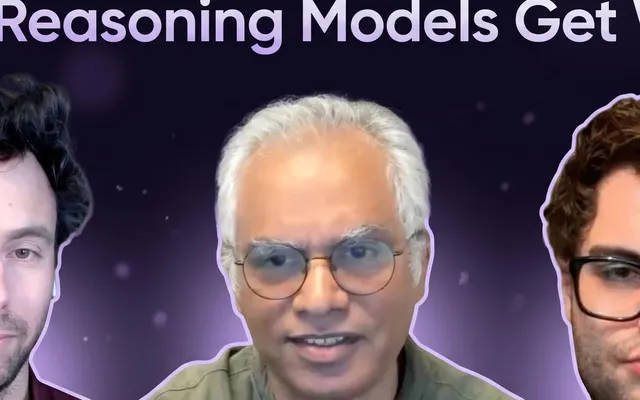
Reasoning Models and Planning – with Rao Kambhampati

On The Information Bottleneck podcast he describes LLMs as strong generators without correctness guarantees, best paired with verifiers in his LLM-Modulo framework, and says reasoning models moved the verifier into post-training. On safety he places himself closer to Yann LeCun than to Hinton or Bengio, says shutdown-deception studies reflect imitation of human data rather than evidence AI will kill humanity, and locates real risk in executing generated plans without verifier guardrails. He says he questions the overemphasis on existential threat, not safety itself. Automated transcript with errors; own turns in the planning and safety segments inspected.

listennotes.com
Dissenting voices against AI are getting louder

Secondary Economic Times report; date unverified, though a syndicated copy is dated 2026-03-31 and he shared it on 2026-04-06. Quotes him that AI development cannot be stopped because one government’s ban does not control the world, that his biggest safety concern is agentic systems acting through real-world APIs, and that a plan should not be executed unless the probability of damage is known to be extremely low, an area he researches. Indexed article text inspected; wording is the reporter’s rendering.

economictimes.indiatimes.com
AGI has become a marketing buzzword

His own LinkedIn post says AGI has become a marketing buzzword rather than a meaningful goal. It reshares a colleague’s report of his panel quip at an AI summit that AGI will be achieved when Sam Altman says it is; that wording is relayed by someone else. A judgment about the term, not a capability timeline. Indexed post text inspected.

linkedin.com
LLMs Can’t Plan, But Can Help Planning in LLM-Modulo Frameworks

Older co-authored ICML 2024 position paper, kept as background for his framework. Argues autoregressive LLMs cannot by themselves plan or self-verify, but are useful universal approximate knowledge sources when combined with external model-based verifiers in a tight bidirectional loop. Abstract inspected. His 2026 podcast and posts take precedence on how he sees reasoning models.

arxiv.org
Where do you land?
Explore your own AI worldview by answering a few simple questions.
Map your own worldview

Where do you land?

Map my worldview