





คำถาม 1
shako
x.com/shakoistslogPseudonymous account that writes about LLMs as tools for forecasting and social science and criticizes sycophantic, engagement-driven AI.
AI จะเปลี่ยนแปลงโลกอย่างไร?
แนวนอน: มุมมอง Doom–Bloom ที่บุคคลนั้นแสดงออก แนวตั้ง: ระดับของการเปลี่ยนแปลง
Doom–Bloom: 74 จาก 100 ระดับของการเปลี่ยนแปลง: 61 จาก 100 ช่วงการตีความ: แนวนอนตั้งแต่ 69 ถึง 79 แนวตั้งตั้งแต่ 50 ถึง 75 ค่าเหล่านี้เป็นพิกัดสำหรับการตีความ ไม่ใช่ความน่าจะเป็นของเหตุการณ์
≈6%
อนุมานจากคำตอบจำลองของบุคคลนั้น ไม่ใช่ตัวเลขที่บุคคลนั้นระบุ ช่วงที่เป็นไปได้: 3–14%
ข้อสันนิษฐานหลัก
So I expect a very large change, with outcomes determined less by chatbot magic than by what institutions optimize these systems to do.คำตอบ 3
หากข้อสันนิษฐานนี้ปรากฏว่าเป็นไปอีกแบบ มุมมองของบุคคลนั้นจะเปลี่ยนไปอย่างไร?
คำถามที่ยังไม่มีข้อสรุป
I don’t have a defensible number.คำตอบ 4
อะไรจะช่วยให้บุคคลนั้นแยกแยะผลลัพธ์ที่เป็นไปได้ในเรื่องนี้?
รายละเอียดเพิ่มเติม
คาดว่าจะได้รับประโยชน์อย่างมาก โดยมีเงื่อนไขสำคัญหรือข้อจำกัดด้านการกระจายประโยชน์
73 / 100
ช่วงการตีความตั้งแต่ 67 ถึง 100 บนมาตรวัดเชิงคุณภาพ
ยังมีการตีความที่เป็นไปได้หลายแบบ ได้แก่ อันตรายร้ายแรงหรือแพร่หลายในวงกว้างเป็นส่วนสำคัญที่คาดว่าจะเกิดขึ้นในอนาคต / คาดว่าจะเกิดอันตรายที่จัดการได้หรือจำกัดอยู่เฉพาะพื้นที่
51 / 100
ช่วงการตีความตั้งแต่ 33 ถึง 67 บนมาตรวัดเชิงคุณภาพ
การเลือกของมนุษย์สามารถเปลี่ยนทิศทางวิถีของ AI ได้อย่างมาก
71 / 100
ช่วงการตีความตั้งแต่ 48 ถึง 100 บนมาตรวัดเชิงคุณภาพ
การตีความเหล่านี้ยังคงเงื่อนไขที่บุคคลนั้นระบุไว้ ทั้งประโยชน์และอันตรายอาจมีมากได้ ช่วงต่างๆ อธิบายวิธีที่เราอ่านคำตอบจำลองของบุคคลนั้น ไม่ใช่ช่วงความเชื่อมั่นทางสถิติ
โลกทัศน์ที่คล้ายกัน
ผู้นำทางความคิดที่มีโลกทัศน์จำลองใกล้เคียงกับโลกทัศน์ของ shako มากที่สุด
สิ่งที่ shako เคยพูดเกี่ยวกับ AI
The shako account writes about LLMs in social science and forecasting, warns about engagement-optimized chatbots and was calm about AI risk in 2023.
“As humans, for now, we still own instructing the agents, the forecasts themselves and how they are used.”
Essay, Against Time-Series Foundation Models “Using language models here is an attempt to push into territory of analysis that previously could only live in the brains of humans.”
Essay, Can LLMs finally do social science? “4o is our first look at a mainstream AI doing the same. It's only going to get worse.”
Post on X “I was never acutely worried, but concern over AI risk seemed like a reasonable thing to anticipate.”
Essay, Some Thoughts on AI & Correlated Risks
อ้างอิงคำต่อคำจากแหล่งที่ลิงก์ไว้ ตรวจสอบเมื่อ 6 ต.ค. 2569
แหล่งข้อมูล
บทความ บทสัมภาษณ์ และงานเขียนที่ใช้เป็นหลักฐานรองรับผู้ใช้จำลองรายนี้
Argues time-series foundation models offer limited gains over classic statistics because their beliefs are locked in weights and cannot absorb context. The future, it predicts, is general agentic models that search for context, propose explicit structural models and explain their reasoning; the hard problems become search, verification and calibration. It rejects the idea that scale will find hidden signals that reveal the future, and says humans for now still instruct the agents and should become the decision makers. Full essay inspected.

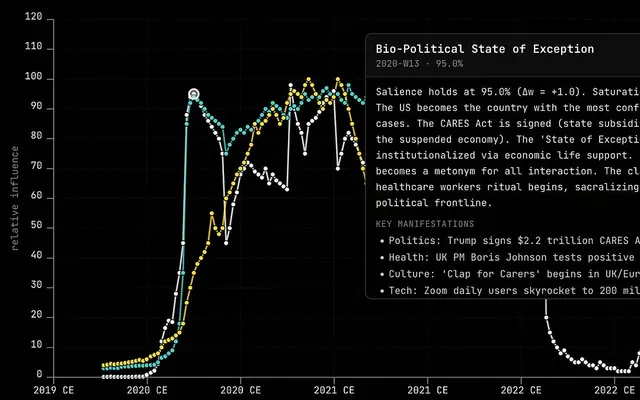
Presents a prompt-based tool that uses frontier models to track latent cultural concepts over time, arguing that an LLM which has ingested human cultural output compresses it into a latent space that can serve the social sciences. It holds that a well-designed prompt is a legitimate scientific object, easier to inspect and reproduce than a human expert’s judgment, while admitting results vary across runs and need stricter validation. It calls dismissing LLMs as black boxes an isolated demand for rigor. Full essay inspected.

Older context. Argues individual risks have fallen while correlated risks such as rogue AI, pandemics and nuclear war have grown. The account says it was never acutely worried about AI but always found it unsurprising that a superintelligence could bend the world to its will, and thought a couple of dedicated safety organizations a reasonable allocation. It urges readers not to let doomer anxiety derail their lives, suggesting AI risk is not much greater than others people already live with. Full essay inspected; personal and family passages excluded.

Older context. Sets a “latent space hypothesis” against the view that LLMs are mere curve-fitters: the textual corpus embeds the data-generating process of human reasoning and science, so a properly specified LLM with enough compute could learn general intelligence. It names lossy text and hard-to-learn functions as possible failure modes but sees no credible a priori argument that LLMs cannot get there. Full essay inspected.

แบบประเมินจำลอง
คำถาม 2
เมื่อพิจารณาทั้งประโยชน์และอันตรายร่วมกัน คุณคาดว่า AI จะส่งผลกระทบโดยรวมต่อสังคมของเราอย่างไร?
คำถาม 3
คุณคิดว่าท้ายที่สุดแล้ว AI จะเปลี่ยนแปลงโลกมากเพียงใด?
คำถาม 4
โดยสัญชาตญาณแล้ว คุณคิดว่ามีโอกาสมากเพียงใดที่ AI จะทำให้มนุษย์สูญพันธุ์หรือก่อให้เกิดหายนะที่ถาวรในระดับใกล้เคียงกัน?
จุดยืนของคุณอยู่ตรงไหน?
ทำแผนที่โลกทัศน์ของฉัน