คำถาม 1
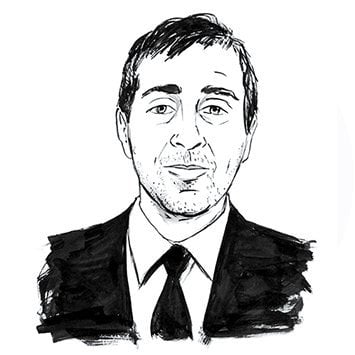
George Hotz
x.com/realgeorgehotzProgrammer who is enthusiastic about practical AI and argues that ordinary people should own it rather than depend on a few companies or governments.
AI จะเปลี่ยนแปลงโลกอย่างไร?
แนวนอน: มุมมอง Doom–Bloom ที่บุคคลนั้นแสดงออก แนวตั้ง: ระดับของการเปลี่ยนแปลง
Doom–Bloom: 82 จาก 100 ระดับของการเปลี่ยนแปลง: 66 จาก 100 ช่วงการตีความ: แนวนอนตั้งแต่ 75 ถึง 100 แนวตั้งตั้งแต่ 61 ถึง 75 ค่าเหล่านี้เป็นพิกัดสำหรับการตีความ ไม่ใช่ความน่าจะเป็นของเหตุการณ์
≈3%
อนุมานจากคำตอบจำลองของบุคคลนั้น ไม่ใช่ตัวเลขที่บุคคลนั้นระบุ ช่วงที่เป็นไปได้: 2–8%
ข้อสันนิษฐานหลัก
If models commoditize—and I think they will—then much knowledge work gets cheaper, wage premiums fall, and plenty of institutions built around scarce expertise get rearranged.คำตอบ 1
หากข้อสันนิษฐานนี้ปรากฏว่าเป็นไปอีกแบบ มุมมองของบุคคลนั้นจะเปลี่ยนไปอย่างไร?
สิ่งที่อาจเปลี่ยนความคิดของบุคคลนั้น
A real, reproducible hard takeoff would change my view most: one system rapidly improving itself, overcoming practical search and coordination limits, and building a durable lead that competitors with distributed compute cannot close.คำตอบ 2
หลักฐานแบบใดจึงจะเพียงพอ และจะทำให้มุมมองของบุคคลนั้นเปลี่ยนไปในทิศทางใด?
รายละเอียดเพิ่มเติม
คาดว่าจะได้รับประโยชน์ที่ก่อให้เกิดการเปลี่ยนแปลงและมีคุณค่าอย่างกว้างขวาง
90 / 100
ช่วงการตีความตั้งแต่ 67 ถึง 100 บนมาตรวัดเชิงคุณภาพ
คาดว่าจะเกิดอันตรายที่จัดการได้หรือจำกัดอยู่เฉพาะพื้นที่
45 / 100
ช่วงการตีความตั้งแต่ 33 ถึง 67 บนมาตรวัดเชิงคุณภาพ
การเลือกของมนุษย์สามารถเปลี่ยนทิศทางวิถีของ AI ได้อย่างมาก
71 / 100
ช่วงการตีความตั้งแต่ 48 ถึง 100 บนมาตรวัดเชิงคุณภาพ
จำกัดการเข้าถึง AI ที่ทรงพลัง
อนุญาตให้เข้าถึงโดยมีข้อจำกัดด้านความสามารถหรือการใช้งาน
ตำแหน่งจำลอง: สนับสนุนการเข้าถึง AI ที่ทรงพลังในวงกว้างหรือแบบเปิด
การตีความเหล่านี้ยังคงเงื่อนไขที่บุคคลนั้นระบุไว้ ทั้งประโยชน์และอันตรายอาจมีมากได้ ช่วงต่างๆ อธิบายวิธีที่เราอ่านคำตอบจำลองของบุคคลนั้น ไม่ใช่ช่วงความเชื่อมั่นทางสถิติ
โลกทัศน์ที่คล้ายกัน
ผู้นำทางความคิดที่มีโลกทัศน์จำลองใกล้เคียงกับโลกทัศน์ของ George Hotz มากที่สุด
สิ่งที่ George Hotz เคยพูดเกี่ยวกับ AI
Hotz is enthusiastic about practical AI, doubts runaway superintelligence and argues that ordinary people should own AI, not rely on a few companies.
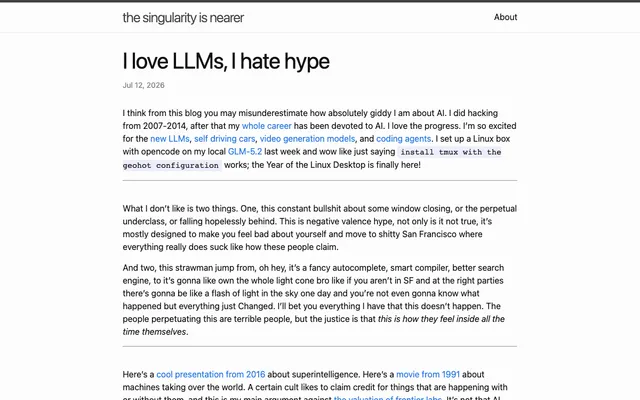
“I love the progress. I’m so excited for the new LLMs, self driving cars, video generation models, and coding agents.”
Blog post, I love LLMs, I hate hype “Intelligence is not the end all be all, it’s just the current bottleneck for a few things. You cannot take over the world with tokens.”
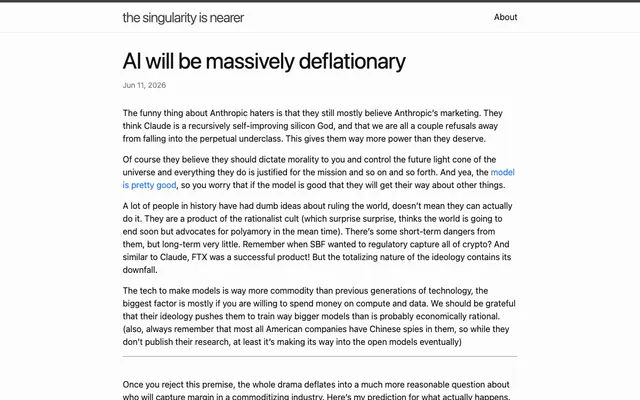
Blog post, AI 2040 and the Cult of Intelligence “AI will be cheap, everywhere, collapse a bunch of sectors of work, wreck wage premiums, and cause a big reevaluation of status hierarchies.”
Blog post, AI will be massively deflationary “I’m not sure it’s possible, but if there is a bad scenario with AI, it’s a singleton with nothing that can substantially impact reality outside of it.”
Blog post, There is only one bad AI scenario “The good world is where everyone has AI, and not as a revokable privilege through an API, but through hard possession.”
Blog post, Do you really want the US to “win” AI?
อ้างอิงคำต่อคำจากแหล่งที่ลิงก์ไว้ ตรวจสอบเมื่อ 3 ต.ค. 2569
แบบประเมินจำลอง
แหล่งข้อมูล
บทความ บทสัมภาษณ์ และงานเขียนที่ใช้เป็นหลักฐานรองรับผู้ใช้จำลองรายนี้
Explains enthusiasm for practical AI while rejecting hype, inevitability claims and frontier-lab value capture.

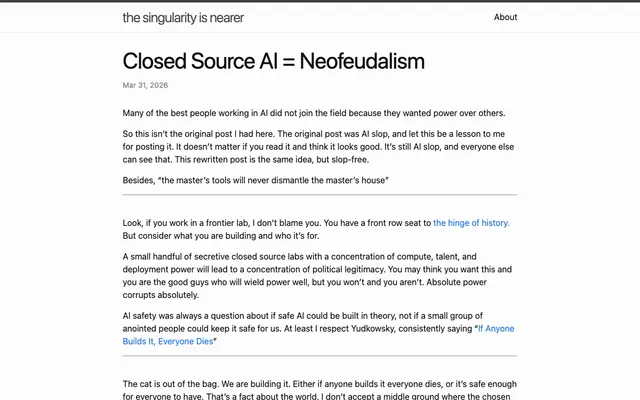
Argues that closed intelligence infrastructure threatens agency and economic independence.

Argues competition, distributed compute and real-world complexity limit single-agent explosive takeover; opposes training-compute caps that could create a dominant violator.

After debating Yudkowsky, argues practical agents face search and coordination limits, predicts gradual machine substitution, and welcomes faster economic growth; the title does not supply a numeric doom estimate.

Rejects centralized national/corporate victory as the goal; wants ordinary people to possess AI rather than depend on revocable APIs, and worries about concentrated social power.

Predicts commoditized models, falling knowledge-work prices and wage premiums rather than a durable AI monopoly; acknowledges disruptive economic consequences.

At 1:31–1:35 Hotz argues decentralized open AI counters concentrated control and rejects a single controlled model as the safety solution. Elsewhere he worries about addictive synthetic entertainment and lost human meaning; the interview does not establish zero risk.

จุดยืนของคุณอยู่ตรงไหน?
ทำแผนที่โลกทัศน์ของฉัน