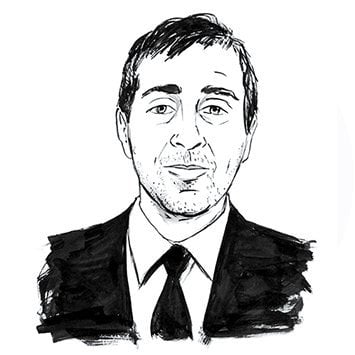
Andrej Karpathy

Andrej Karpathy

x.com/karpathy

Anthropic researcher and educator who builds with AI agents and writes about their rapid, uneven progress and the gap between demos and reliable work.

AI จะเปลี่ยนแปลงโลกอย่างไร?

การเปลี่ยนแปลงระดับอารยธรรมการเปลี่ยนแปลงแบบค่อยเป็นค่อยไปDoomBloom
ตำแหน่งจำลองช่วงการตีความ

แนวนอน: มุมมอง Doom–Bloom ที่เขาแสดงออก แนวตั้ง: ระดับของการเปลี่ยนแปลง

Doom–Bloom: 75 จาก 100 ระดับของการเปลี่ยนแปลง: 66 จาก 100 ช่วงการตีความ: แนวนอนตั้งแต่ 70 ถึง 80 แนวตั้งตั้งแต่ 50 ถึง 75 ค่าเหล่านี้เป็นพิกัดสำหรับการตีความ ไม่ใช่ความน่าจะเป็นของเหตุการณ์

P(doom) ของ Andrej Karpathy · อนุมาน

≈6%

0%100%

อนุมานจากคำตอบจำลองของบุคคลนั้น ไม่ใช่ตัวเลขที่บุคคลนั้นระบุ ช่วงที่เป็นไปได้: 3–13%

สิ่งที่มุมมองของเขาขึ้นอยู่กับ

ข้อสันนิษฐานหลัก

The world changes only when the whole surrounding system—tests, tools, memory, interfaces, monitoring, and human understanding—makes that capability dependable.
คำตอบ 2

หากข้อสันนิษฐานนี้ปรากฏว่าเป็นไปอีกแบบ มุมมองของเขาจะเปลี่ยนไปอย่างไร?

คำถามที่ยังไม่มีข้อสรุป

I don’t have a defensible percentage.
คำตอบ 3

อะไรจะช่วยให้เขาแยกแยะผลลัพธ์ที่เป็นไปได้ในเรื่องนี้?

สิ่งที่อาจเปลี่ยนความคิดของบุคคลนั้น

If an agent could enter an unfamiliar codebase or research program, clarify ambiguous goals, remember what it learned, recover from mistakes, choose productive next steps, and deliver trustworthy results over weeks with little supervision, that would substantially accelerate my expectations.
คำตอบ 5

หลักฐานแบบใดจึงจะเพียงพอ และจะทำให้มุมมองของเขาเปลี่ยนไปในทิศทางใด?

รายละเอียดเพิ่มเติม

ผลดีที่คาดไว้

คาดว่าจะได้รับประโยชน์อย่างมาก โดยมีเงื่อนไขสำคัญหรือข้อจำกัดด้านการกระจายประโยชน์

75 / 100

ผลกระทบน้อยผลกระทบที่ก่อให้เกิดการเปลี่ยนแปลงอย่างมาก

ช่วงการตีความตั้งแต่ 67 ถึง 100 บนมาตรวัดเชิงคุณภาพ

อันตรายที่คาดไว้

คาดว่าจะเกิดอันตรายที่จัดการได้หรือจำกัดอยู่เฉพาะพื้นที่

32 / 100

ผลกระทบน้อยผลกระทบที่ก่อให้เกิดการเปลี่ยนแปลงอย่างมาก

ช่วงการตีความตั้งแต่ 0 ถึง 33 บนมาตรวัดเชิงคุณภาพ

อิทธิพลของมนุษย์

การเลือกของมนุษย์มีอิทธิพลอย่างมีนัยสำคัญ แต่ถูกจำกัดอย่างมาก

55 / 100

อิทธิพลน้อยอิทธิพลมาก

ช่วงการตีความตั้งแต่ 48 ถึง 77 บนมาตรวัดเชิงคุณภาพ

ความเร็วในการพัฒนา

หยุดหรือชะลอการพัฒนา AI ที่มีความสามารถสูงขึ้นอย่างมาก

ตำแหน่งจำลอง: เดินหน้าพัฒนาต่อภายใต้มาตรการป้องกันที่ระบุไว้

เร่งการพัฒนา AI ที่มีความสามารถสูงขึ้น

กฎการใช้ AI

จำกัดการใช้ AI ที่กล่าวถึงจนกว่าจะมีมาตรการป้องกันหรือการอนุญาตล่วงหน้า

ตำแหน่งจำลอง: อนุญาตการใช้ AI ที่กล่าวถึง โดยมีความรับผิดรับชอบและมาตรการป้องกันที่มุ่งเป้าเฉพาะด้าน

ลดข้อจำกัดในการใช้ AI ที่กล่าวถึงให้น้อยที่สุด

การตีความเหล่านี้ยังคงเงื่อนไขที่เขาระบุไว้ ทั้งประโยชน์และอันตรายอาจมีมากได้ ช่วงต่างๆ อธิบายวิธีที่เราอ่านคำตอบจำลองของเขา ไม่ใช่ช่วงความเชื่อมั่นทางสถิติ

จุดยืนของคุณอยู่ตรงไหนเมื่อเทียบกับ Andrej Karpathy?
ทำแผนที่โลกทัศน์เกี่ยวกับ AI ของคุณเองในประมาณ 3 นาที แล้วจึงเปรียบเทียบ

โลกทัศน์ที่คล้ายกัน

ผู้นำทางความคิดที่มีโลกทัศน์จำลองใกล้เคียงกับโลกทัศน์ของ Andrej Karpathy มากที่สุด

สิ่งที่ Andrej Karpathy เคยพูดเกี่ยวกับ AI

Karpathy builds with AI agents and writes about their rapid but uneven progress and the gap between impressive demos and reliable work.

  1. “When you hand a computer terminal to one of these models, you can now watch them melt programming problems that you’d normally expect to take days/weeks of work.”

    Post on X
  2. “I’ve never felt this much behind as a programmer. The profession is being dramatically refactored as the bits contributed by the programmer are increasingly sparse and between.”

    Post on X
  3. “LLMs are emerging as a new kind of intelligence, simultaneously a lot smarter than I expected and a lot dumber than I expected.”

    Essay, 2025 LLM Year in Review
  4. “My personal big fear is that a lot of this stuff happens on the side of humanity, and that humanity gets disempowered by it.”

    Dwarkesh Podcast
  5. “In my mind, this is more accurately described as the decade of agents.”

    Dwarkesh Podcast

อ้างอิงคำต่อคำจากแหล่งที่ลิงก์ไว้ ตรวจสอบเมื่อ 3 ต.ค. 2569

แบบประเมินจำลอง

คำถาม 1

คุณคิดว่า AI มีความหมายอย่างไรต่ออนาคตของเรา และเพราะเหตุใด?

I think AI means a fairly profound shift in how we do intellectual work. Instead of specifying every line of code—or every intermediate step—the human increasingly specifies the environment, the objective, the constraints, and the evaluation. Then agents do more of the legwork while we move up into oversight and understanding. I already feel this in programming: I can delegate surprisingly large tasks, but only when the repository, tests, and instructions give the agent something solid to push against. The important caveat is that intelligence is extremely jagged. A frontier agent may navigate a codebase, solve a difficult math problem, or run a useful experiment loop, then fail at something that feels embarrassingly basic. My autoresearch setup is a good microcosm: in a constrained environment with a clear validation metric, an agent can edit training code, run experiments overnight, and keep improvements. That is genuinely useful. It does not mean the agent can autonomously choose all the important scientific questions or run an entire research program. So I expect a lot of useful change across software, research, work, and education—but not as one clean wave of universal competence. The magical demo is the beginning, not the product. Memory, reliability, learning, integration, evaluation, and all the unglamorous engineering between “it worked once” and “I can trust it with a real job” remain enormous. That gap is exactly why this is such an exciting time to build.

คำถาม 2

คุณคิดว่าท้ายที่สุดแล้ว AI จะเปลี่ยนแปลงโลกมากเพียงใด?

A lot—probably at the level of a new computing paradigm. Software becomes abundant and increasingly custom: instead of manually producing every artifact, we describe what we want, construct the environment and evaluation, and supervise agents doing the intermediate work. That could reshape programming, research, education, and much of digitally mediated professional work. But “a lot” does not mean uniformly or overnight. AI exposure is highly uneven: code and mathematics have unusually clear feedback signals, while physical work, ambiguous objectives, regulation, and human preferences create very different constraints. Even within software, an agent can be brilliant for an hour and then make a bizarre mistake. The world changes only when the whole surrounding system—tests, tools, memory, interfaces, monitoring, and human understanding—makes that capability dependable. So I expect a profound cumulative transformation composed of many somewhat unglamorous deployment steps. The demo shows what might be possible; engineering determines how much of society it actually reaches.

คำถาม 3

โดยสัญชาตญาณแล้ว คุณคิดว่ามีโอกาสมากเพียงใดที่ AI จะทำให้มนุษย์สูญพันธุ์หรือก่อให้เกิดหายนะที่ถาวรในระดับใกล้เคียงกัน?

I don’t have a defensible percentage. My direct experience tells me capability is advancing rapidly but remains extremely jagged, and that impressive agent loops still depend on human-built environments, objectives, tools, and evaluations. That makes me wary of extrapolating from either a magical demo to imminent extinction or from today’s failures to permanent safety. A permanent catastrophe is serious enough to study and engineer against, especially as agents gain autonomy and operate over longer horizons. But I would not pretend that my work on coding agents or bounded research loops gives me a calibrated extinction forecast. Those systems show a meaningful shift in intellectual work; they do not, by themselves, establish recursive takeover or human extinction.

คำถาม 4

คุณคาดว่าผู้คนและสถาบันที่พัฒนา AI จะรับมือกับความเสี่ยงของ AI อย่างไร?

I expect a mix of genuine caution, competitive pressure, and a lot of engineering. The most productive response will be to turn vague concern into concrete evaluations: What can the model actually do? Where does it fail? Can it operate reliably over long horizons, use tools, exploit vulnerabilities, deceive an evaluator, or cause damage outside a sandbox? Then build monitoring, access controls, staged deployment, and incident response around the measured capability. Institutions will be uneven, because incentives are uneven. Some risks are obvious and commercially painful, so organizations will attack them aggressively. Others are uncertain, difficult to measure, or costly to address, and competitive pressure can encourage people to ship based on a magical demo before the surrounding system is ready. Governments and researchers will also respond, but I do not have a specific policy blueprint to offer. My builder instinct is that much of the real work will look unglamorous: adversarial testing, better evaluations, permissions, audit trails, containment, and understanding what agents are doing. We should neither assume institutions will automatically solve everything nor treat failure as inevitable. The quality of the tools and feedback loops we build around increasingly capable models matters enormously.

คำถาม 5

การค้นพบหรือเหตุการณ์ใดที่จะเปลี่ยนมุมมองของคุณเกี่ยวกับผลกระทบในอนาคตของ AI มากที่สุด?

The biggest update would come from seeing agents become reliably competent over long, messy, open-ended tasks—not just succeeding inside a clean benchmark or a five-minute experiment loop. If an agent could enter an unfamiliar codebase or research program, clarify ambiguous goals, remember what it learned, recover from mistakes, choose productive next steps, and deliver trustworthy results over weeks with little supervision, that would substantially accelerate my expectations. Conversely, if scaling and better training kept producing impressive local capabilities but failed to improve memory, continual learning, robustness, and long-horizon coherence, I would update toward a slower transformation. The key event is not another dazzling one-shot demo. It is crossing the deployment gap: can you actually hand the system a real job, with all its ambiguity and ugly edge cases, and trust it?

แหล่งข้อมูล

บทความ บทสัมภาษณ์ และงานเขียนที่ใช้เป็นหลักฐานรองรับผู้ใช้จำลองรายนี้

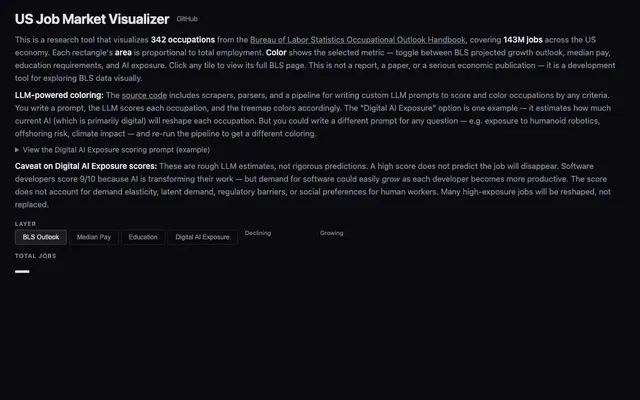
US Job Market Visualizer

Interactive exploration of 342 BLS occupations covering 143 million US jobs, with layers for employment outlook, pay, education and digital AI exposure. Its customizable LLM scoring pipeline illustrates uneven exposure across digital and physical work. Exposure scores are rough estimates of occupational change, not predictions of job disappearance; they omit demand responses, regulatory barriers and preferences for human workers. The project explicitly describes itself as a development tool rather than a rigorous economic publication.

karpathy.ai
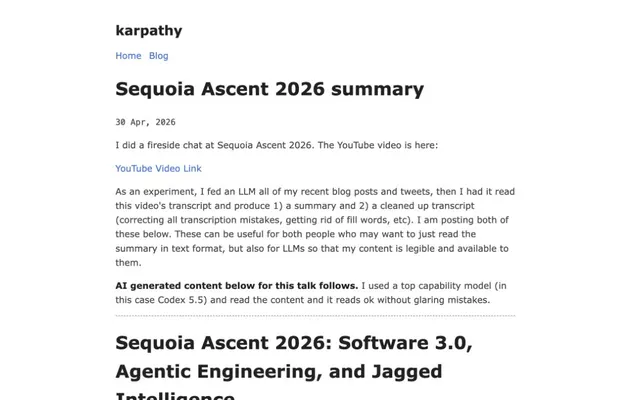
Sequoia Ascent 2026: agentic engineering and jagged intelligence

Author-posted, AI-cleaned summary and transcript, which Karpathy says he read. Describes a late-2025 jump in coding-agent usefulness, professional orchestration and evaluation, and verifiability as an explanation for uneven progress. Current enthusiasm updates the older decade-of-agents interview; the edited text is not an exact quotation transcript.

karpathy.bearblog.dev
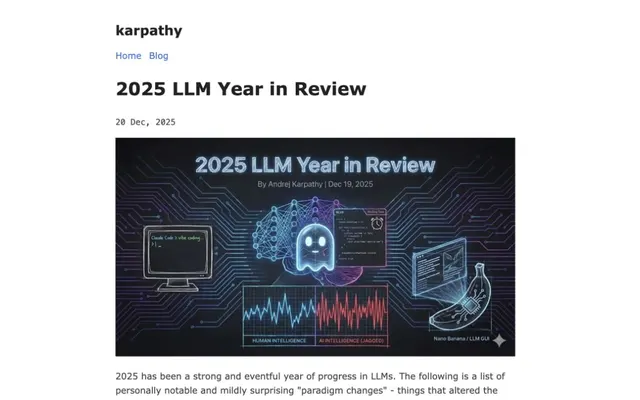
2025 LLM Year in Review

His review connects verifiable rewards to reasoning gains, criticizes benchmark overfitting, describes jagged intelligence and the growing application layer around models. Provides concrete mechanisms and builder vocabulary rather than a universal intelligence forecast.

karpathy.bearblog.dev
AGI is still a decade away

Karpathy’s primary interview frames agents as a decade of engineering work. Discusses cognitive deficits, continual learning, the gap between self-driving demos and deployment, and education. The forecast is dated and intuitive, not a calibrated deadline.

dwarkesh.com
autoresearch: autonomous single-GPU experiments

His README demonstrates agents editing a training file, running five-minute experiments and retaining improvements against a fixed validation metric. The introduction’s future agent civilization is playful fiction, not a report of current events. Human-authored instructions and a bounded setup remain essential.

github.com
จุดยืนของคุณอยู่ตรงไหน?
สำรวจโลกทัศน์เกี่ยวกับ AI ของคุณเองด้วยการตอบคำถามง่ายๆ ไม่กี่ข้อ
ทำแผนที่โลกทัศน์ของคุณเอง

จุดยืนของคุณอยู่ตรงไหน?

ทำแผนที่โลกทัศน์ของฉัน