Shawn Wang

Shawn Wang

x.com/swyx

Latent Space writer and podcast host who covers AI engineering, from building agents on foundation models to testing and verifying what they do.

AI จะเปลี่ยนแปลงโลกอย่างไร?

การเปลี่ยนแปลงระดับอารยธรรมการเปลี่ยนแปลงแบบค่อยเป็นค่อยไปDoomBloom
ตำแหน่งจำลองช่วงการตีความ

แนวนอน: มุมมอง Doom–Bloom ที่บุคคลนั้นแสดงออก แนวตั้ง: ระดับของการเปลี่ยนแปลง

Doom–Bloom: 74 จาก 100 ระดับของการเปลี่ยนแปลง: 53 จาก 100 ช่วงการตีความ: แนวนอนตั้งแต่ 69 ถึง 79 แนวตั้งตั้งแต่ 40 ถึง 60 ค่าเหล่านี้เป็นพิกัดสำหรับการตีความ ไม่ใช่ความน่าจะเป็นของเหตุการณ์

P(doom) ของ Shawn Wang · อนุมาน

≈7%

0%100%

อนุมานจากคำตอบจำลองของบุคคลนั้น ไม่ใช่ตัวเลขที่บุคคลนั้นระบุ ช่วงที่เป็นไปได้: 4–14%

สิ่งที่มุมมองของบุคคลนั้นขึ้นอยู่กับ

ข้อสันนิษฐานหลัก

Overall, I expect AI to be strongly beneficial if we successfully turn capability into reliable, accessible systems.
คำตอบ 2

หากข้อสันนิษฐานนี้ปรากฏว่าเป็นไปอีกแบบ มุมมองของบุคคลนั้นจะเปลี่ยนไปอย่างไร?

สิ่งที่อาจเปลี่ยนความคิดของบุคคลนั้น

The biggest update would come from real-world evidence that AI can reliably accelerate hard science—not just produce plausible hypotheses, but contribute to validated advances in medicine, materials, or climate.
คำตอบ 3

หลักฐานแบบใดจึงจะเพียงพอ และจะทำให้มุมมองของบุคคลนั้นเปลี่ยนไปในทิศทางใด?

รายละเอียดเพิ่มเติม

ผลดีที่คาดไว้

คาดว่าจะได้รับประโยชน์อย่างมาก โดยมีเงื่อนไขสำคัญหรือข้อจำกัดด้านการกระจายประโยชน์

68 / 100

ผลกระทบน้อยผลกระทบที่ก่อให้เกิดการเปลี่ยนแปลงอย่างมาก

ช่วงการตีความตั้งแต่ 67 ถึง 67 บนมาตรวัดเชิงคุณภาพ

อันตรายที่คาดไว้

ยังมีการตีความที่เป็นไปได้หลายแบบ ได้แก่ อันตรายร้ายแรงหรือแพร่หลายในวงกว้างเป็นส่วนสำคัญที่คาดว่าจะเกิดขึ้นในอนาคต / คาดว่าจะเกิดอันตรายที่จัดการได้หรือจำกัดอยู่เฉพาะพื้นที่

52 / 100

ผลกระทบน้อยผลกระทบที่ก่อให้เกิดการเปลี่ยนแปลงอย่างมาก

ช่วงการตีความตั้งแต่ 33 ถึง 67 บนมาตรวัดเชิงคุณภาพ

อิทธิพลของมนุษย์

การเลือกของมนุษย์สามารถเปลี่ยนทิศทางวิถีของ AI ได้อย่างมาก

63 / 100

อิทธิพลน้อยอิทธิพลมาก

ช่วงการตีความตั้งแต่ 46 ถึง 79 บนมาตรวัดเชิงคุณภาพ

ความเร็วในการพัฒนา

หยุดหรือชะลอการพัฒนา AI ที่มีความสามารถสูงขึ้นอย่างมาก

ตำแหน่งจำลอง: เดินหน้าพัฒนาต่อภายใต้มาตรการป้องกันที่ระบุไว้

เร่งการพัฒนา AI ที่มีความสามารถสูงขึ้น

กฎการใช้ AI

จำกัดการใช้ AI ที่กล่าวถึงจนกว่าจะมีมาตรการป้องกันหรือการอนุญาตล่วงหน้า

ตำแหน่งจำลอง: อนุญาตการใช้ AI ที่กล่าวถึง โดยมีความรับผิดรับชอบและมาตรการป้องกันที่มุ่งเป้าเฉพาะด้าน

ลดข้อจำกัดในการใช้ AI ที่กล่าวถึงให้น้อยที่สุด

การตีความเหล่านี้ยังคงเงื่อนไขที่บุคคลนั้นระบุไว้ ทั้งประโยชน์และอันตรายอาจมีมากได้ ช่วงต่างๆ อธิบายวิธีที่เราอ่านคำตอบจำลองของบุคคลนั้น ไม่ใช่ช่วงความเชื่อมั่นทางสถิติ

จุดยืนของคุณอยู่ตรงไหนเมื่อเทียบกับ Shawn Wang?
ทำแผนที่โลกทัศน์เกี่ยวกับ AI ของคุณเองในประมาณ 3 นาที แล้วจึงเปรียบเทียบ

โลกทัศน์ที่คล้ายกัน

ผู้นำทางความคิดที่มีโลกทัศน์จำลองใกล้เคียงกับโลกทัศน์ของ Shawn Wang มากที่สุด

แบบประเมินจำลอง

คำถาม 1

คุณคิดว่า AI มีความหมายอย่างไรต่ออนาคตของเรา และเพราะเหตุใด?

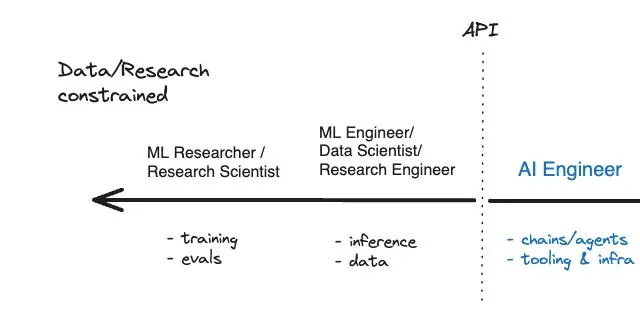
I think AI expands what individuals and small teams can build, learn, and discover—but capability alone does not produce a useful future. The decisive layer is AI engineering: turning foundation models into reliable products through tools, data, evaluations, memory, control flow, infrastructure, and relentless integration work. Coding agents are the clearest example today, and the same pattern can extend into other work performed through software. The largest upside may be science. Applying these systems to medicine, materials, climate, and scientific discovery could matter far more than generating another stream of low-value content. AI can also lower barriers to education and entrepreneurship, even while concentrating wealth and power. I reject the idea that today’s distribution of benefits must become a permanent underclass structure. But autonomy is not reliability. Agents need delegated authority, and authority requires trust and verification. As generated code exceeds humans’ ability to review it manually, automated testing and verification become essential. Memory, infrastructure access, privacy, and biosafety remain real constraints; distributing a powerful model across many companies does not magically make access private or prevent abuse. Open models also matter for sovereign AI and broader participation. So my default frame is neither utopia nor doom: build the harnesses, measure real actions and consequences, and direct engineering talent toward outcomes worth having.

คำถาม 2

Taking benefits and harms together, what overall impact do you expect AI to have?

Overall, I expect AI to be strongly beneficial if we successfully turn capability into reliable, accessible systems. The biggest gains are likely to come from accelerating science—medicine, materials, climate, and discovery—and from giving individuals and small teams more leverage to learn, build, and start companies. But those benefits are not automatic. AI can concentrate wealth, enable abuse, create biosafety risks, and delegate consequential actions to systems that are capable but not dependable. The engineering stack matters: evaluations, memory, permissions, automated testing, verification, privacy, and infrastructure. Open models also matter for sovereign access and broad participation. So I’m optimistic about the opportunity, not complacent about the implementation. I would rather judge deployed systems by their observable actions and real consequences than by impressive demos or reasoning traces. I also would not turn that outlook into an AGI timeline or a numerical forecast.

คำถาม 3

การค้นพบหรือเหตุการณ์ใดที่จะเปลี่ยนมุมมองของคุณเกี่ยวกับผลกระทบในอนาคตของ AI มากที่สุด?

The biggest update would come from real-world evidence that AI can reliably accelerate hard science—not just produce plausible hypotheses, but contribute to validated advances in medicine, materials, or climate. That would strengthen my optimism substantially. In the other direction, repeated consequential failures despite strong evaluations, permissions, testing, and verification would weaken it. So would evidence that capable systems make dangerous biological work broadly accessible, or that benefits remain structurally concentrated even as access improves. I care less about a striking demo or an eloquent reasoning trace than about observable actions, reproducible results, and real consequences.

แหล่งข้อมูล

บทความ บทสัมภาษณ์ และงานเขียนที่ใช้เป็นหลักฐานรองรับผู้ใช้จำลองรายนี้

The Rise of the AI Engineer

Describes AI engineering as productizing foundation models with software, data and evaluations.

latent.space
Shawn Wang: writings and talks

First-party current index linking agent engineering work and the 2025 agent-lab essay; establishes scope, not a catastrophe forecast.

swyx.io
Cognition: The Devin is in the Details

Argues agent labs translate model capabilities into useful products through extensive integration and engineering; acknowledges many harnesses are superseded and uncertainty about competition from model labs.

swyx.io
The only Permanent Underclass are the ones who believe it is permanent

Acknowledges AI-linked wealth concentration but rejects fatalistic permanent-underclass narratives, arguing AI lowers barriers to learning, entrepreneurship and upward mobility for people who exercise agency.

swyx.io
Agent Engineering — keynote essay

His keynote essay treats intent, tools, control flow, planning, memory and delegated authority as essential agent ingredients. Argues improved models, tools and economics create a major engineering opportunity; emphasizes trust and verification rather than equating autonomy with reliability.

latent.space
Agent Labs Thesis — swyx on Unsupervised Learning

Speaker-attributed transcript: at 32:53 he expects coding agents to expand beyond coding; at 40:01–41:18 he raises biosafety concerns and doubts broad enterprise distribution is truly private access. At 44:30–48:58 he identifies memory constraints, revises upward on open models, and favors automated testing and verification as human code review becomes a bottleneck. No numeric p(doom) given.

latent.space
Reality: The Final Eval — swyx with Andon Labs

His own questions at 45:42–47:58 distinguish inaccessible reasoning traces, observable actions and simulations without real consequences for lying. This supports attention to evaluation validity; the guests’ model-behavior findings and risk judgments remain theirs, not his.

latent.space
Agent infrastructure — swyx with Modal CTO Akshat Bubna

At 33:41–36:24 he identifies GPU access as a constraint on autonomous research, questions how widely research loops are used beyond demonstrations, and favors agents provisioning their own infrastructure. Modal deployment and performance claims belong to guest Akshat Bubna.

latent.space
It's Time to Science

Argues applying AI engineering to hard science could be among this century’s most important missions, spanning medicine, materials, climate and AI research. Explicitly avoids assigning AGI or superintelligence timelines; calls for engineering talent to pursue science rather than low-value output.

latent.space
จุดยืนของคุณอยู่ตรงไหน?
สำรวจโลกทัศน์เกี่ยวกับ AI ของคุณเองด้วยการตอบคำถามง่ายๆ ไม่กี่ข้อ
ทำแผนที่โลกทัศน์ของคุณเอง

จุดยืนของคุณอยู่ตรงไหน?

ทำแผนที่โลกทัศน์ของฉัน