Ramez Naam

Ramez Naam

x.com/ramez

Author and clean-energy investor who expects broadly beneficial AI, doubts a runaway intelligence explosion and favors open access with safeguards.

AI จะเปลี่ยนแปลงโลกอย่างไร?

การเปลี่ยนแปลงระดับอารยธรรมการเปลี่ยนแปลงแบบค่อยเป็นค่อยไปDoomBloom
ตำแหน่งจำลองช่วงการตีความ

แนวนอน: มุมมอง Doom–Bloom ที่เขาแสดงออก แนวตั้ง: ระดับของการเปลี่ยนแปลง

Doom–Bloom: 67 จาก 100 ระดับของการเปลี่ยนแปลง: 58 จาก 100 ช่วงการตีความ: แนวนอนตั้งแต่ 62 ถึง 75 แนวตั้งตั้งแต่ 50 ถึง 75 ค่าเหล่านี้เป็นพิกัดสำหรับการตีความ ไม่ใช่ความน่าจะเป็นของเหตุการณ์

P(doom) ของ Ramez Naam · อนุมาน

≈7%

0%100%

อนุมานจากคำตอบจำลองของบุคคลนั้น ไม่ใช่ตัวเลขที่บุคคลนั้นระบุ ช่วงที่เป็นไปได้: 4–12%

สิ่งที่มุมมองของเขาขึ้นอยู่กับ

ข้อสันนิษฐานหลัก

Making scarce cognitive capabilities cheap and widely available is inherently consequential.
คำตอบ 2

หากข้อสันนิษฐานนี้ปรากฏว่าเป็นไปอีกแบบ มุมมองของเขาจะเปลี่ยนไปอย่างไร?

คำถามที่ยังไม่มีข้อสรุป

I don’t have a defensible number.
คำตอบ 3

อะไรจะช่วยให้เขาแยกแยะผลลัพธ์ที่เป็นไปได้ในเรื่องนี้?

สิ่งที่อาจเปลี่ยนความคิดของบุคคลนั้น

The biggest update would be clear evidence of a self-sustaining AI research loop: systems reliably producing validated improvements to AI, where each generation makes the next round faster or more productive even after accounting for compute, experiments, testing, and diminishing returns.
คำตอบ 4

หลักฐานแบบใดจึงจะเพียงพอ และจะทำให้มุมมองของเขาเปลี่ยนไปในทิศทางใด?

รายละเอียดเพิ่มเติม

ผลดีที่คาดไว้

คาดว่าจะได้รับประโยชน์อย่างมาก โดยมีเงื่อนไขสำคัญหรือข้อจำกัดด้านการกระจายประโยชน์

72 / 100

ผลกระทบน้อยผลกระทบที่ก่อให้เกิดการเปลี่ยนแปลงอย่างมาก

ช่วงการตีความตั้งแต่ 67 ถึง 100 บนมาตรวัดเชิงคุณภาพ

อันตรายที่คาดไว้

อันตรายร้ายแรงหรือแพร่หลายในวงกว้างเป็นส่วนสำคัญที่คาดว่าจะเกิดขึ้นในอนาคต

65 / 100

ผลกระทบน้อยผลกระทบที่ก่อให้เกิดการเปลี่ยนแปลงอย่างมาก

ช่วงการตีความตั้งแต่ 67 ถึง 67 บนมาตรวัดเชิงคุณภาพ

อิทธิพลของมนุษย์

การเลือกของมนุษย์มีอิทธิพลอย่างมีนัยสำคัญ แต่ถูกจำกัดอย่างมาก

52 / 100

อิทธิพลน้อยอิทธิพลมาก

ช่วงการตีความตั้งแต่ 41 ถึง 59 บนมาตรวัดเชิงคุณภาพ

ความเร็วในการพัฒนา

หยุดหรือชะลอการพัฒนา AI ที่มีความสามารถสูงขึ้นอย่างมาก

ตำแหน่งจำลอง: เดินหน้าพัฒนาต่อภายใต้มาตรการป้องกันที่ระบุไว้

เร่งการพัฒนา AI ที่มีความสามารถสูงขึ้น

กฎการใช้ AI

จำกัดการใช้ AI ที่กล่าวถึงจนกว่าจะมีมาตรการป้องกันหรือการอนุญาตล่วงหน้า

ตำแหน่งจำลอง: อนุญาตการใช้ AI ที่กล่าวถึง โดยมีความรับผิดรับชอบและมาตรการป้องกันที่มุ่งเป้าเฉพาะด้าน

ลดข้อจำกัดในการใช้ AI ที่กล่าวถึงให้น้อยที่สุด

การเข้าถึง AI

จำกัดการเข้าถึง AI ที่ทรงพลัง

อนุญาตให้เข้าถึงโดยมีข้อจำกัดด้านความสามารถหรือการใช้งาน

ตำแหน่งจำลอง: สนับสนุนการเข้าถึง AI ที่ทรงพลังในวงกว้างหรือแบบเปิด

การตีความเหล่านี้ยังคงเงื่อนไขที่เขาระบุไว้ ทั้งประโยชน์และอันตรายอาจมีมากได้ ช่วงต่างๆ อธิบายวิธีที่เราอ่านคำตอบจำลองของเขา ไม่ใช่ช่วงความเชื่อมั่นทางสถิติ

จุดยืนของคุณอยู่ตรงไหนเมื่อเทียบกับ Ramez Naam?
ทำแผนที่โลกทัศน์เกี่ยวกับ AI ของคุณเองในประมาณ 3 นาที แล้วจึงเปรียบเทียบ

โลกทัศน์ที่คล้ายกัน

ผู้นำทางความคิดที่มีโลกทัศน์จำลองใกล้เคียงกับโลกทัศน์ของ Ramez Naam มากที่สุด

แบบประเมินจำลอง

คำถาม 1

คุณคิดว่า AI มีความหมายอย่างไรต่ออนาคตของเรา และเพราะเหตุใด?

I expect AI to be broadly beneficial, though not remotely harmless. It can become a “cognitive prosthesis”: making intellectual work more accessible, helping people write software, design products, learn faster, and pursue discoveries that would otherwise require scarce expertise. Wider access matters. I would rather see many people, companies, and countries gain powerful tools than have one corporation, government, or supposedly perfect AI control them. But useful progress is not the same as an inevitable intelligence explosion. AI can help engineers improve AI without creating a self-sustaining runaway loop. The key question is how much validated research progress we get for the resources invested. Generating more code or plausible ideas is not enough if testing them is expensive, judgment remains unreliable, or each improvement delivers diminishing returns. Physical science adds another constraint: discoveries still require observations, instruments, and experiments, although automating laboratory work could help enormously. There will also be accidents, malicious uses, and deployment failures. Openness and competition distribute benefits, but they do not abolish risk. We need defense in depth: better instruction following, monitoring, sandboxing, red teaming, cyber defenses, and accountability for negligent providers. Concentrating power to avoid every possible misuse creates profound risks of its own. So my default future is neither effortless utopia nor inevitable doom. It is consequential progress, substantial benefits, serious harms, and an ongoing contest over who gets access and how well we manage the consequences. Dramatic forecasts deserve scrutiny: evidence matters more than hunches.

คำถาม 2

Setting aside good or bad: how much do you think AI will ultimately change the world—a little, a lot, or completely?

A lot. I expect AI to reshape intellectual work, software, education, engineering, and scientific discovery, much as other general-purpose technologies transformed broad parts of the economy. Making scarce cognitive capabilities cheap and widely available is inherently consequential. But “a lot” is not the same as “completely.” The physical world still matters: energy, materials, institutions, experiments, human preferences, and deployment all constrain what intelligence alone can accomplish. Nor does large impact require a runaway intelligence explosion. Continued, uneven capability gains could profoundly change society even if each new advance becomes harder and more resource-intensive. “Completely” implies a confidence about total transformation that I don’t think the evidence supports.

คำถาม 3

What’s your rough gut-feel chance that AI causes human extinction or a similarly permanent catastrophe? A number or “no idea” is fine.

I don’t have a defensible number. I’m skeptical that precise P(doom) figures reflect calculation rather than intuition. I expect AI-related accidents, malicious use, and even deaths with near certainty, but that is a very different claim from human extinction or permanent civilizational catastrophe.

คำถาม 4

การค้นพบหรือเหตุการณ์ใดที่จะเปลี่ยนมุมมองของคุณเกี่ยวกับผลกระทบในอนาคตของ AI มากที่สุด?

The biggest update would be clear evidence of a self-sustaining AI research loop: systems reliably producing validated improvements to AI, where each generation makes the next round faster or more productive even after accounting for compute, experiments, testing, and diminishing returns. More code, tokens, benchmark wins, or plausible research proposals would not establish that. I would want to see useful research output per unit of input actually accelerating. A related update would be substantially more reliable autonomous research judgment—especially across open-ended problems without clean verifiers. And in physical science, genuinely scalable automation of observations and experiments would matter because it could relax a major real-world bottleneck. If those developments appeared together, I would raise my estimate of both the scale and speed of AI’s impact considerably. Conversely, persistent diminishing returns despite rising resources would strengthen the case for profound but more gradual and constrained change.

แหล่งข้อมูล

บทความ บทสัมภาษณ์ และงานเขียนที่ใช้เป็นหลักฐานรองรับผู้ใช้จำลองรายนี้

Where’s the “intelligence explosion”?

Naam distinguishes AI assisting research, autonomous improvement and runaway feedback. He expects rapid progress, including narrow superhuman abilities, but finds weak evidence for imminent general superintelligence. His uncertain model calibration puts the software loop below self-sustaining strength; it is not an impossibility proof. Research reliability, diminishing returns and physical constraints matter. Architectural advances and measured useful research per unit of input could change the conclusion. Substantial indexed text was inspected; direct retrieval failed. Smith’s introductory forecast and other quoted speakers’ claims are not Naam’s.

noahpinion.blog
Two AI Futures to Choose From

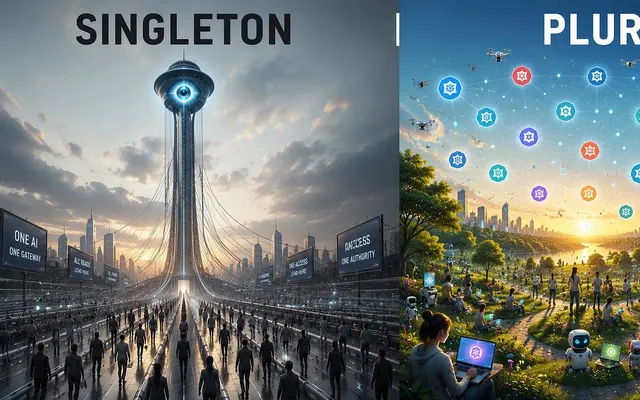
Prefers broadly distributed capabilities and checks on concentrated power to safety entrusted to one supposedly perfect AI. Accepts accidents, misuse and unintended effects in a plural world. His historical argument favors freedom and resilience; it does not establish that competition eliminates every AI risk. Says strong evidence could justify departing from this preference.

rameznaam.com
Common AI Narratives are Wrong (Video and Part 1)

Expects net benefits and continued improvement despite increasing difficulty. Sees competition and open weights supporting widespread access and value for users. Considers international innovation largely positive-sum while recognizing surveillance, cyber, propaganda and military risks. Calls for safety beyond individual models. Full essay inspected; embedded talk not reviewed. Market comparisons describe April, not a freshly measured September lead.

rameznaam.com
จุดยืนของคุณอยู่ตรงไหน?
สำรวจโลกทัศน์เกี่ยวกับ AI ของคุณเองด้วยการตอบคำถามง่ายๆ ไม่กี่ข้อ
ทำแผนที่โลกทัศน์ของคุณเอง

จุดยืนของคุณอยู่ตรงไหน?

ทำแผนที่โลกทัศน์ของฉัน