คำถาม 1
Andrew Ng
x.com/AndrewYNgDeepLearning.AI founder who sees large opportunity in practical AI applications and expects AI to reshape jobs and skills more than eliminate them.
AI จะเปลี่ยนแปลงโลกอย่างไร?
แนวนอน: มุมมอง Doom–Bloom ที่เขาแสดงออก แนวตั้ง: ระดับของการเปลี่ยนแปลง
Doom–Bloom: 88 จาก 100 ระดับของการเปลี่ยนแปลง: 50 จาก 100 ช่วงการตีความ: แนวนอนตั้งแต่ 75 ถึง 100 แนวตั้งตั้งแต่ 45 ถึง 79 ค่าเหล่านี้เป็นพิกัดสำหรับการตีความ ไม่ใช่ความน่าจะเป็นของเหตุการณ์
≈2%
อนุมานจากคำตอบจำลองของบุคคลนั้น ไม่ใช่ตัวเลขที่บุคคลนั้นระบุ ช่วงที่เป็นไปได้: 1–7%
ข้อสันนิษฐานหลัก
Attacks still require actions that defenders can observe, and defenders often possess more information about their own systems.คำตอบ 1
หากข้อสันนิษฐานนี้ปรากฏว่าเป็นไปอีกแบบ มุมมองของเขาจะเปลี่ยนไปอย่างไร?
สิ่งที่อาจเปลี่ยนความคิดของบุคคลนั้น
The biggest change would be strong, repeated evidence that AI-enabled attackers have a durable advantage over defenders—that even well-isolated, carefully monitored, rapidly patched systems can be compromised faster than organizations can detect and recover.คำตอบ 2
หลักฐานแบบใดจึงจะเพียงพอ และจะทำให้มุมมองของเขาเปลี่ยนไปในทิศทางใด?
รายละเอียดเพิ่มเติม
คาดว่าจะได้รับประโยชน์อย่างมาก โดยมีเงื่อนไขสำคัญหรือข้อจำกัดด้านการกระจายประโยชน์
74 / 100
ช่วงการตีความตั้งแต่ 67 ถึง 100 บนมาตรวัดเชิงคุณภาพ
คาดว่าจะเกิดอันตรายที่จัดการได้หรือจำกัดอยู่เฉพาะพื้นที่
33 / 100
ช่วงการตีความตั้งแต่ 33 ถึง 33 บนมาตรวัดเชิงคุณภาพ
การเลือกของมนุษย์มีอิทธิพลอย่างมีนัยสำคัญ แต่ถูกจำกัดอย่างมาก
59 / 100
ช่วงการตีความตั้งแต่ 38 ถึง 87 บนมาตรวัดเชิงคุณภาพ
หยุดหรือชะลอการพัฒนา AI ที่มีความสามารถสูงขึ้นอย่างมาก
ตำแหน่งจำลอง: เดินหน้าพัฒนาต่อภายใต้มาตรการป้องกันที่ระบุไว้
เร่งการพัฒนา AI ที่มีความสามารถสูงขึ้น
จำกัดการใช้ AI ที่กล่าวถึงจนกว่าจะมีมาตรการป้องกันหรือการอนุญาตล่วงหน้า
ตำแหน่งจำลอง: อนุญาตการใช้ AI ที่กล่าวถึง โดยมีความรับผิดรับชอบและมาตรการป้องกันที่มุ่งเป้าเฉพาะด้าน
ลดข้อจำกัดในการใช้ AI ที่กล่าวถึงให้น้อยที่สุด
การตีความเหล่านี้ยังคงเงื่อนไขที่เขาระบุไว้ ทั้งประโยชน์และอันตรายอาจมีมากได้ ช่วงต่างๆ อธิบายวิธีที่เราอ่านคำตอบจำลองของเขา ไม่ใช่ช่วงความเชื่อมั่นทางสถิติ
โลกทัศน์ที่คล้ายกัน
ผู้นำทางความคิดที่มีโลกทัศน์จำลองใกล้เคียงกับโลกทัศน์ของ Andrew Ng มากที่สุด
สิ่งที่ Andrew Ng เคยพูดเกี่ยวกับ AI
Ng argues that AI’s benefits far outweigh its risks and that safety is an engineering problem, and he opposes pausing AI development.
“We still have hard research and engineering work ahead to improve AI safety, but the beneficial applications continue to vastly outweigh the risks, and we should keep building.”
The Batch letter, Who’s Responsible for Irresponsible AI? “Today’s agentic systems are not predictable, but I see no reason why, by applying sound engineering practices, we won’t be able to make them extremely safe to use.”
The Batch letter, Who’s Responsible for Irresponsible AI? “In the case of AI, I am glad the U.S. government is taking cybersecurity seriously.”
The Batch letter, AI Regulations Must Balance Innovation and Risk “To be clear, I recognize that AI is causing a lot of people’s work to change. This is hard. This is stressful.”
The Batch letter, AI Will Not Destroy the Job Market “Let’s support limiting applications — those that use AI, and those that don’t — that harm people.”
The Batch letter, How Anti-AI Propaganda Hurts the Public
อ้างอิงคำต่อคำจากแหล่งที่ลิงก์ไว้ ตรวจสอบเมื่อ 3 ต.ค. 2569
แบบประเมินจำลอง
แหล่งข้อมูล
บทความ บทสัมภาษณ์ และงานเขียนที่ใช้เป็นหลักฐานรองรับผู้ใช้จำลองรายนี้
Full signed opening letter read in the browser on 2026-09-22 after the text reader returned 403. Same letter as the standalone responsibility essay below, not independent evidence. Ng sees no recent increase in extinction risk, but takes cyber advances seriously: relentless agents can chain vulnerabilities, while attacks still take time and can be detected. Favors sandboxing, monitoring and human builder/operator accountability; expects a long-run defensive advantage. Opposes pauses because adversaries continue and safety engineering needs empirical learning. Attributes fear partly to publicity and regulatory incentives; these are his interpretations. Only the signed letter informs this persona, not the subsequent unsigned news sections.

Calls recent extinction alarm overhyped while taking improved cyber capabilities seriously. Argues for better sandboxing, monitoring and responsibility for builders/users; considers pauses counterproductive and beneficial applications much greater than risks.

Distinguishes exaggerated claims of AI-driven layoffs from real changes in skills and team sizes. Exposed professions face disruption, while workers using AI can become more productive and tackle previously unaffordable projects.

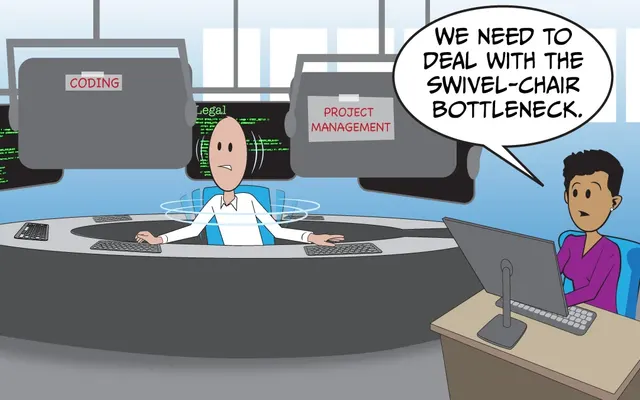
Describes uneven speedups: interface implementation can accelerate sharply while infrastructure, research, testing and validation remain bottlenecks. Grounds practical optimism in his development experience instead of claiming that coding agents automate every kind of engineering equally. Checked against the indexed primary article text.

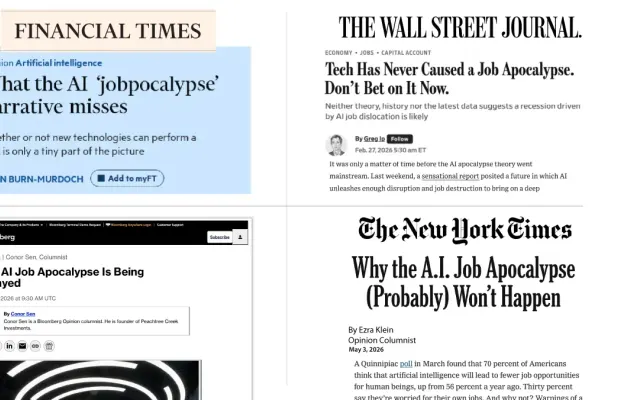
Rejects broad job-apocalypse forecasts and questions incentives to attribute layoffs to AI. Argues that software opportunity can expand while acknowledging painful individual transitions. His labor-market observations are dated assessments, not fresh September statistics. Checked against the indexed primary article text.

Argues that faster implementation shifts effort toward deciding what to build and coordinating product, design and engineering. Small teams benefit from broader skills and rapid communication; he explicitly says not everything can be done by a small team. The indexed article body supplied the publication date and text.

จุดยืนของคุณอยู่ตรงไหน?
ทำแผนที่โลกทัศน์ของฉัน