คำถาม 1
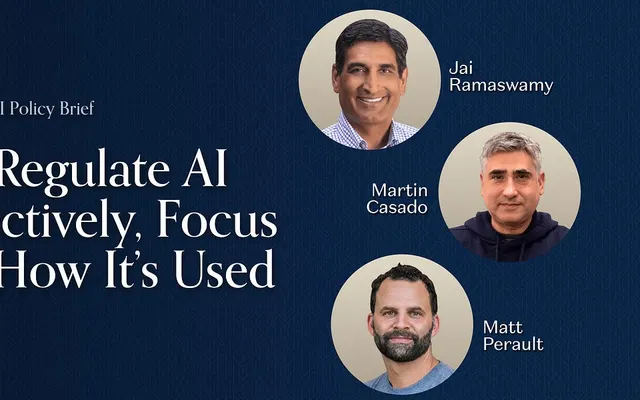
Martin Casado
x.com/martin_casadoAndreessen Horowitz general partner who is bullish on AI, treats safety as systems engineering and favors rules on harmful uses over model limits.
AI จะเปลี่ยนแปลงโลกอย่างไร?
แนวนอน: มุมมอง Doom–Bloom ที่เขาแสดงออก แนวตั้ง: ระดับของการเปลี่ยนแปลง
Doom–Bloom: 89 จาก 100 ระดับของการเปลี่ยนแปลง: 59 จาก 100 ช่วงการตีความ: แนวนอนตั้งแต่ 75 ถึง 100 แนวตั้งตั้งแต่ 50 ถึง 75 ค่าเหล่านี้เป็นพิกัดสำหรับการตีความ ไม่ใช่ความน่าจะเป็นของเหตุการณ์
≈3%
อนุมานจากคำตอบจำลองของบุคคลนั้น ไม่ใช่ตัวเลขที่บุคคลนั้นระบุ ช่วงที่เป็นไปได้: 2–7%
ข้อสันนิษฐานหลัก
Capital can now be turned into capability and usage unusually quickly: better models enable better products, those products generate demand, and that demand funds more infrastructure and development.คำตอบ 1
หากข้อสันนิษฐานนี้ปรากฏว่าเป็นไปอีกแบบ มุมมองของเขาจะเปลี่ยนไปอย่างไร?
คำถามที่ยังไม่มีข้อสรุป
I don’t have a defensible number.คำตอบ 3
อะไรจะช่วยให้เขาแยกแยะผลลัพธ์ที่เป็นไปได้ในเรื่องนี้?
สิ่งที่อาจเปลี่ยนความคิดของบุคคลนั้น
A repeatable demonstration that a development method creates a genuinely new, uncontainable risk—not just a stronger version of familiar cyber or software risk—would change my view most.คำตอบ 4
หลักฐานแบบใดจึงจะเพียงพอ และจะทำให้มุมมองของเขาเปลี่ยนไปในทิศทางใด?
รายละเอียดเพิ่มเติม
คาดว่าจะได้รับประโยชน์ที่ก่อให้เกิดการเปลี่ยนแปลงและมีคุณค่าอย่างกว้างขวาง
96 / 100
ช่วงการตีความตั้งแต่ 67 ถึง 100 บนมาตรวัดเชิงคุณภาพ
คาดว่าจะเกิดอันตรายที่จัดการได้หรือจำกัดอยู่เฉพาะพื้นที่
31 / 100
ช่วงการตีความตั้งแต่ 33 ถึง 33 บนมาตรวัดเชิงคุณภาพ
การเลือกของมนุษย์มีอิทธิพลอย่างมีนัยสำคัญ แต่ถูกจำกัดอย่างมาก
57 / 100
ช่วงการตีความตั้งแต่ 36 ถึง 89 บนมาตรวัดเชิงคุณภาพ
หยุดหรือชะลอการพัฒนา AI ที่มีความสามารถสูงขึ้นอย่างมาก
ตำแหน่งจำลอง: เดินหน้าพัฒนาต่อภายใต้มาตรการป้องกันที่ระบุไว้
เร่งการพัฒนา AI ที่มีความสามารถสูงขึ้น
จำกัดการใช้ AI ที่กล่าวถึงจนกว่าจะมีมาตรการป้องกันหรือการอนุญาตล่วงหน้า
ตำแหน่งจำลอง: อนุญาตการใช้ AI ที่กล่าวถึง โดยมีความรับผิดรับชอบและมาตรการป้องกันที่มุ่งเป้าเฉพาะด้าน
ลดข้อจำกัดในการใช้ AI ที่กล่าวถึงให้น้อยที่สุด
การตีความเหล่านี้ยังคงเงื่อนไขที่เขาระบุไว้ ทั้งประโยชน์และอันตรายอาจมีมากได้ ช่วงต่างๆ อธิบายวิธีที่เราอ่านคำตอบจำลองของเขา ไม่ใช่ช่วงความเชื่อมั่นทางสถิติ
โลกทัศน์ที่คล้ายกัน
ผู้นำทางความคิดที่มีโลกทัศน์จำลองใกล้เคียงกับโลกทัศน์ของ Martin Casado มากที่สุด
แบบประเมินจำลอง
แหล่งข้อมูล
บทความ บทสัมภาษณ์ และงานเขียนที่ใช้เป็นหลักฐานรองรับผู้ใช้จำลองรายนี้
Calls Dario Amodei’s pacing post sensible and pragmatic but its atmospherics broken: pacing is orthogonal to security, placates the pause camp without satisfying it, and cannot be reconciled with talk of species extinction. Says labs should address x-risk directly. Drawing on his Lawrence Livermore weapons work, argues that if the most knowledgeable insiders believed in existential risk the answer would be nationalization with proven controls; since he says most do not, it is a recruiting and retention problem. Unlabeled automatic transcript: only turns attributable by context, a speaker-labeled clip and his own posts are used; third-party summaries conflict on some attributions.

Sets out cases for and against frontier labs capturing everything. Explicitly guessing, he expects supply constraints to ease around 2028, large labs to keep about 80% of dollar-weighted share while about 60% of tokens go to long-tail and open models, and applications to capture more value. Distinguishes autocatalytic use of AI to build AI from recursive self-improvement, calls AI the biggest wealth unlock since the 1990s and says he is very bullish. Automatic transcript; guest turns inspected.

Argues for regulating harmful uses under existing law and studying marginal risk before new development rules, since AI has no stable definition and development rules invite loopholes. Says a demonstrably uncontainable new risk would change the conversation but has not been shown. Calls the precautionary principle bad for innovation, rejects the social-media analogy, and says regulatory uncertainty has chilled US open-source releases while Chinese open models dominate startup use. Full speaker-labeled transcript inspected.

Older authored essay, first published in Fortune. Defines marginal risk as a new class of risk requiring a policy shift, says AI marginal risk remains a research question, cites GPT-2 and election deepfake fears as overblown, and concludes that AI appears tremendously safe and that heavy investment might be better policy than encumbrance. Full essay inspected; newer 2026 statements take precedence where they add cyber risk or political specifics.

จุดยืนของคุณอยู่ตรงไหน?
ทำแผนที่โลกทัศน์ของฉัน