Pseudonymous account that writes about AI and mathematics, favors open models and criticizes concentrated control of AI knowledge and infrastructure.

AI จะเปลี่ยนแปลงโลกอย่างไร?

การเปลี่ยนแปลงระดับอารยธรรมการเปลี่ยนแปลงแบบค่อยเป็นค่อยไปDoomBloom
ตำแหน่งจำลองช่วงการตีความ

แนวนอน: มุมมอง Doom–Bloom ที่บุคคลนั้นแสดงออก แนวตั้ง: ระดับของการเปลี่ยนแปลง

Doom–Bloom: 38 จาก 100 ระดับของการเปลี่ยนแปลง: 47 จาก 100 ช่วงการตีความ: แนวนอนตั้งแต่ 25 ถึง 50 แนวตั้งตั้งแต่ 19 ถึง 81 ค่าเหล่านี้เป็นพิกัดสำหรับการตีความ ไม่ใช่ความน่าจะเป็นของเหตุการณ์

P(doom) ของ doomslide · อนุมาน

≈2%

0%100%

อนุมานจากคำตอบจำลองของบุคคลนั้น ไม่ใช่ตัวเลขที่บุคคลนั้นระบุ ช่วงที่เป็นไปได้: ต่ำกว่า 10%

สิ่งที่มุมมองของบุคคลนั้นขึ้นอยู่กับ

ข้อสันนิษฐานหลัก

If the models, compute, data, and evaluation scaffolds remain controlled by a few companies, then capability becomes difficult to verify and mathematical knowledge risks moving from public papers and discussions into proprietary chat silos.
คำตอบ 1

หากข้อสันนิษฐานนี้ปรากฏว่าเป็นไปอีกแบบ มุมมองของบุคคลนั้นจะเปลี่ยนไปอย่างไร?

คำถามที่ยังไม่มีข้อสรุป

Formal languages such as Lean may also offer a way to make outputs checkable and perhaps constrain model behavior programmatically, but that is a conjecture, not an established alignment solution.
คำตอบ 1

อะไรจะช่วยให้บุคคลนั้นแยกแยะผลลัพธ์ที่เป็นไปได้ในเรื่องนี้?

รายละเอียดเพิ่มเติม

ผลดีที่คาดไว้

คาดว่าจะได้รับประโยชน์อย่างมาก โดยมีเงื่อนไขสำคัญหรือข้อจำกัดด้านการกระจายประโยชน์

64 / 100

ผลกระทบน้อยผลกระทบที่ก่อให้เกิดการเปลี่ยนแปลงอย่างมาก

ช่วงการตีความตั้งแต่ 67 ถึง 67 บนมาตรวัดเชิงคุณภาพ

อันตรายที่คาดไว้

ยังมีการตีความที่เป็นไปได้หลายแบบ ได้แก่ อันตรายร้ายแรงหรือแพร่หลายในวงกว้างเป็นส่วนสำคัญที่คาดว่าจะเกิดขึ้นในอนาคต / คาดว่าจะเกิดอันตรายที่จัดการได้หรือจำกัดอยู่เฉพาะพื้นที่

52 / 100

ผลกระทบน้อยผลกระทบที่ก่อให้เกิดการเปลี่ยนแปลงอย่างมาก

ช่วงการตีความตั้งแต่ 33 ถึง 67 บนมาตรวัดเชิงคุณภาพ

อิทธิพลของมนุษย์

การเลือกของมนุษย์สามารถเปลี่ยนทิศทางวิถีของ AI ได้อย่างมาก

70 / 100

อิทธิพลน้อยอิทธิพลมาก

ช่วงการตีความตั้งแต่ 49 ถึง 100 บนมาตรวัดเชิงคุณภาพ

การเข้าถึง AI

จำกัดการเข้าถึง AI ที่ทรงพลัง

อนุญาตให้เข้าถึงโดยมีข้อจำกัดด้านความสามารถหรือการใช้งาน

ตำแหน่งจำลอง: สนับสนุนการเข้าถึง AI ที่ทรงพลังในวงกว้างหรือแบบเปิด

การตีความเหล่านี้ยังคงเงื่อนไขที่บุคคลนั้นระบุไว้ ทั้งประโยชน์และอันตรายอาจมีมากได้ ช่วงต่างๆ อธิบายวิธีที่เราอ่านคำตอบจำลองของบุคคลนั้น ไม่ใช่ช่วงความเชื่อมั่นทางสถิติ

จุดยืนของคุณอยู่ตรงไหนเมื่อเทียบกับ doomslide?
ทำแผนที่โลกทัศน์เกี่ยวกับ AI ของคุณเองในประมาณ 3 นาที แล้วจึงเปรียบเทียบ

โลกทัศน์ที่คล้ายกัน

ผู้นำทางความคิดที่มีโลกทัศน์จำลองใกล้เคียงกับโลกทัศน์ของ doomslide มากที่สุด

แบบประเมินจำลอง

คำถาม 1

คุณคิดว่า AI มีความหมายอย่างไรต่ออนาคตของเรา และเพราะเหตุใด?

I think AI will expand mathematical discovery, especially where proofs are too combinatorially complex for unaided human search. But a modest productivity boost is not the same as moving the frontier: the transformative case depends on systems finding proofs or structures we would not realistically find ourselves. The institutional consequences may matter more than raw intelligence. If the models, compute, data, and evaluation scaffolds remain controlled by a few companies, then capability becomes difficult to verify and mathematical knowledge risks moving from public papers and discussions into proprietary chat silos. That is a route to disempowerment through concentrated infrastructure and ownership, not necessarily through machines becoming intellectually supreme. It also creates an attribution problem: companies can claim discoveries while withholding enough of the process that outsiders cannot properly audit what happened. Open access could change this trajectory and make mathematicians substantially more willing to adopt these tools. Formal languages such as Lean may also offer a way to make outputs checkable and perhaps constrain model behavior programmatically, but that is a conjecture, not an established alignment solution. So my expectation is neither “AI kills mathematics” nor “AI simply accelerates it.” It changes who can discover, who can verify, and—most importantly—who owns the resulting knowledge.

คำถาม 2

Taking benefits and harms together, what overall impact do you expect AI to have?

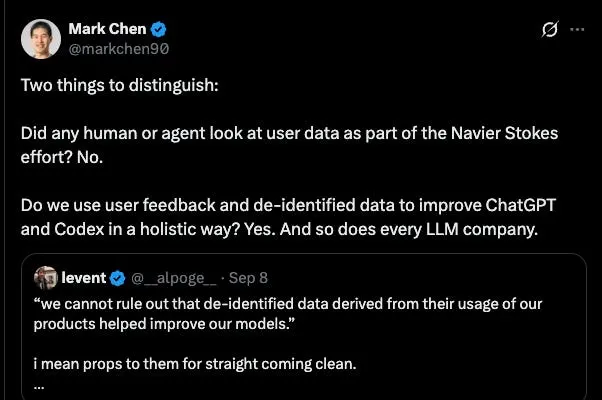
Overall, I expect a mixed technological gain coupled to a negative institutional default. AI will likely produce genuinely valuable mathematical discoveries, particularly through large-scale search, but those benefits do not automatically translate into broadly shared progress. If the relevant models, compute, data, and evaluation machinery stay concentrated, the likely result is greater dependence on a few firms, weaker public verification, and mathematical knowledge leaking from shared discourse into private interfaces. Intellectual-property arrangements worsen this by letting companies own the compressed machinery built from culture while creators and users bear the costs. So the decisive variable is not capability alone but access and control. Open models and public, formally checkable outputs could make the impact substantially better. Without that, I expect real discoveries inside an increasingly oligarchic knowledge system.

แหล่งข้อมูล

บทความ บทสัมภาษณ์ และงานเขียนที่ใช้เป็นหลักฐานรองรับผู้ใช้จำลองรายนี้

จุดยืนของคุณอยู่ตรงไหน?
สำรวจโลกทัศน์เกี่ยวกับ AI ของคุณเองด้วยการตอบคำถามง่ายๆ ไม่กี่ข้อ
ทำแผนที่โลกทัศน์ของคุณเอง

จุดยืนของคุณอยู่ตรงไหน?

ทำแผนที่โลกทัศน์ของฉัน