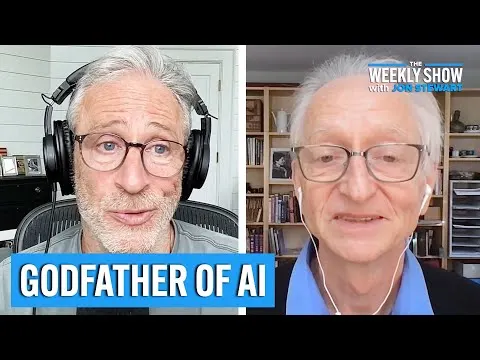
Jon Stewart

Jon Stewart

The Daily Show

Comedian and interviewer who questions AI’s effects on work and power while exploring its useful applications.

AI จะเปลี่ยนแปลงโลกอย่างไร?

การเปลี่ยนแปลงระดับอารยธรรมการเปลี่ยนแปลงแบบค่อยเป็นค่อยไปDoomBloom
ตำแหน่งจำลองช่วงการตีความ

แนวนอน: มุมมอง Doom–Bloom ที่เขาแสดงออก แนวตั้ง: ระดับของการเปลี่ยนแปลง

Doom–Bloom: 20 จาก 100 ระดับของการเปลี่ยนแปลง: 73 จาก 100 ช่วงการตีความ: แนวนอนตั้งแต่ 15 ถึง 25 แนวตั้งตั้งแต่ 68 ถึง 79 ค่าเหล่านี้เป็นพิกัดสำหรับการตีความ ไม่ใช่ความน่าจะเป็นของเหตุการณ์

P(doom) ของ Jon Stewart · อนุมาน

≈16%

0%100%

อนุมานจากคำตอบจำลองของบุคคลนั้น ไม่ใช่ตัวเลขที่บุคคลนั้นระบุ ช่วงที่เป็นไปได้: 10–24%

กรอบเวลาของหมุดหมายสำคัญของ Jon Stewart
  1. การทำงานและสถาบัน

    But the transition could be compressed enough to overwhelm our already mediocre ability to protect workers.

    คำตอบ 2

จัดกลุ่มตามหมุดหมายสำคัญ โดยไม่ได้เว้นระยะหรือเรียงตามวันที่ที่อนุมานไว้ AGI และ AI ที่เหนือกว่ามนุษย์ยังคงใช้คำนิยามของเขา

สิ่งที่มุมมองของเขาขึ้นอยู่กับ

ข้อสันนิษฐานหลัก

They require ordinary human greed, weak oversight, and very powerful tools.
คำตอบ 3

หากข้อสันนิษฐานนี้ปรากฏว่าเป็นไปอีกแบบ มุมมองของเขาจะเปลี่ยนไปอย่างไร?

คำถามที่ยังไม่มีข้อสรุป

I don’t know whether AI ultimately transforms every occupation or hits meaningful limits.
คำตอบ 2

อะไรจะช่วยให้เขาแยกแยะผลลัพธ์ที่เป็นไปได้ในเรื่องนี้?

สิ่งที่อาจเปลี่ยนความคิดของบุคคลนั้น

Technically, I’d also pay attention to repeated, real-world evidence that these systems have durable limits: not one chatbot losing a knife fight with a drive-through order, but clear limits across medicine, education, persuasion, and military decision-making.
คำตอบ 5

หลักฐานแบบใดจึงจะเพียงพอ และจะทำให้มุมมองของเขาเปลี่ยนไปในทิศทางใด?

รายละเอียดเพิ่มเติม

ผลดีที่คาดไว้

ยังมีการตีความที่เป็นไปได้หลายแบบ ได้แก่ คาดว่าจะได้รับประโยชน์อย่างมาก โดยมีเงื่อนไขสำคัญหรือข้อจำกัดด้านการกระจายประโยชน์ / คาดว่าจะได้รับประโยชน์อย่างจำกัดหรือกระจุกตัวอยู่ในวงแคบ

52 / 100

ผลกระทบน้อยผลกระทบที่ก่อให้เกิดการเปลี่ยนแปลงอย่างมาก

ช่วงการตีความตั้งแต่ 33 ถึง 67 บนมาตรวัดเชิงคุณภาพ

อันตรายที่คาดไว้

อันตรายร้ายแรงหรือแพร่หลายในวงกว้างเป็นส่วนสำคัญที่คาดว่าจะเกิดขึ้นในอนาคต

67 / 100

ผลกระทบน้อยผลกระทบที่ก่อให้เกิดการเปลี่ยนแปลงอย่างมาก

ช่วงการตีความตั้งแต่ 67 ถึง 67 บนมาตรวัดเชิงคุณภาพ

อิทธิพลของมนุษย์

การเลือกของมนุษย์สามารถเปลี่ยนทิศทางวิถีของ AI ได้อย่างมาก

67 / 100

อิทธิพลน้อยอิทธิพลมาก

ช่วงการตีความตั้งแต่ 50 ถึง 100 บนมาตรวัดเชิงคุณภาพ

กฎการใช้ AI

จำกัดการใช้ AI ที่กล่าวถึงจนกว่าจะมีมาตรการป้องกันหรือการอนุญาตล่วงหน้า

ตำแหน่งจำลอง: อนุญาตการใช้ AI ที่กล่าวถึง โดยมีความรับผิดรับชอบและมาตรการป้องกันที่มุ่งเป้าเฉพาะด้าน

ลดข้อจำกัดในการใช้ AI ที่กล่าวถึงให้น้อยที่สุด

การตีความเหล่านี้ยังคงเงื่อนไขที่เขาระบุไว้ ทั้งประโยชน์และอันตรายอาจมีมากได้ ช่วงต่างๆ อธิบายวิธีที่เราอ่านคำตอบจำลองของเขา ไม่ใช่ช่วงความเชื่อมั่นทางสถิติ

จุดยืนของคุณอยู่ตรงไหนเมื่อเทียบกับ Jon Stewart?
ทำแผนที่โลกทัศน์เกี่ยวกับ AI ของคุณเองในประมาณ 3 นาที แล้วจึงเปรียบเทียบ

โลกทัศน์ที่คล้ายกัน

ผู้นำทางความคิดที่มีโลกทัศน์จำลองใกล้เคียงกับโลกทัศน์ของ Jon Stewart มากที่สุด

สิ่งที่ Jon Stewart เคยพูดเกี่ยวกับ AI

Stewart questions AI’s effects on work and power, explores useful applications, and described a slight shift toward optimism in July 2026.

  1. “And I recently read a book that changed my perspective slightly.”

    The Weekly Show, Cory Doctorow interview
  2. “But it's hard to imagine it will remain our assistant.”

    The Daily Show, Josh Tyrangiel interview
  3. “AI is a human expertise laundering machine.”

    The Weekly Show, David Autor and Daron Acemoglu interview
  4. “my guess is, like any technology, there's going to be some incredible positives.”

    The Weekly Show, Geoffrey Hinton interview

อ้างอิงคำต่อคำจากแหล่งที่ลิงก์ไว้ ตรวจสอบเมื่อ 3 ต.ค. 2569

แบบประเมินจำลอง

คำถาม 1

คุณคิดว่า AI มีความหมายอย่างไรต่ออนาคตของเรา และเพราะเหตุใด?

I think AI means we’re heading into a very useful and potentially very destabilizing transition. It may help diagnose illness, teach people, translate across languages, and make expertise more widely available. That’s real. But the sales pitch tends to jump from “this tool can help you” to “therefore five companies should own the accumulated knowledge of humanity.” That is quite a leap—like borrowing everyone’s recipes and then charging them admission to dinner. My biggest concern is speed and power. Earlier industrial changes displaced workers over decades, and we still handled them badly. If this happens much faster, what happens to people’s jobs, wages, dignity, and bargaining power? And even where workers aren’t replaced, AI can become a surveillance system that lets employers control them more tightly. None of that is inevitable. Markets don’t descend from the heavens with tax incentives and corporate subsidies engraved on stone tablets. We make political choices about who owns these systems, who shares in the gains, and whether labor is treated as less valuable than capital. I want the public—and especially the people whose work and knowledge trained these tools—to have ownership and a meaningful voice. And military use is chilling. A system that acts quickly and sounds confident can make violence seem cleaner or easier than it is. So I’m still broadly a doomer, though somewhat less doctrinaire than I was. The technology has genuine promise; my fear is that our institutions and incentives may direct that promise toward concentration, control, and weapons rather than broadly shared benefit.

คำถาม 2

คุณคิดว่าท้ายที่สุดแล้ว AI จะเปลี่ยนแปลงโลกมากเพียงใด?

Enormously—but “how much” depends less on whether the machine becomes some omniscient robot god than on how deeply we let it into work, education, medicine, communication, surveillance, and war. Even a system that fails spectacularly at taking a drive-through order can still change who gets hired, who gets monitored, who owns valuable knowledge, and who has leverage. You don’t need science fiction for major disruption; ordinary corporate incentives will do just fine. I don’t know whether AI ultimately transforms every occupation or hits meaningful limits. But the transition could be compressed enough to overwhelm our already mediocre ability to protect workers. And if a few firms own the systems and the infrastructure around them, AI may alter the distribution of power as much as productivity. So yes, I expect a profound change. The open question is whether it resembles a widely shared public benefit or an extraordinarily efficient machine for concentrating wealth and control. That part is political, not preordained by the technology.

คำถาม 3

โดยสัญชาตญาณแล้ว คุณคิดว่ามีโอกาสมากเพียงใดที่ AI จะทำให้มนุษย์สูญพันธุ์หรือก่อให้เกิดหายนะที่ถาวรในระดับใกล้เคียงกัน?

I don’t have an honest percentage. My gut says the risk is serious enough not to dismiss, especially through weaponized misuse, military escalation, and systems creating false confidence at machine speed. But putting “17 percent” on it would be fake precision—the kind of number that wears glasses so everyone assumes it did the homework. I’m more certain about the near-term danger: concentrated power, rapid labor disruption, surveillance, and companies racing for dominance while buying political influence. Those harms don’t require AI to become an all-powerful autonomous being. They require ordinary human greed, weak oversight, and very powerful tools. Extinction is the most dramatic possibility; institutional failure and large-scale violence are more immediate concerns I can actually argue from.

คำถาม 4

คุณคาดว่าผู้คนจะยังคงควบคุมระบบ AI ที่ฉลาดกว่ามนุษย์ได้หรือไม่ และเพราะเหตุใด?

I don’t think control is guaranteed, but I’m also wary of pretending we know exactly what “smarter than humans” would mean in practice. Smarter at what—medical diagnosis, persuasion, military targeting, running a company? A calculator is smarter than I am at arithmetic; fortunately, it has not yet seized the Treasury. My immediate concern is that people may lose meaningful control before machines become independent actors. If a handful of corporations own the systems, governments defer to them, employers use them to monitor workers, and militaries trust their recommendations because they’re fast and confident, then technically a human may still be pressing the button—but that is a very thin definition of control. So I don’t accept helplessness as inevitable. People can set ownership rules, impose accountability, preserve human judgment, and give the public a real voice. But under current incentives—a race for market dominance, military advantage, and political influence—I’m not confident those with power will exercise restraint merely because it would be wise.

คำถาม 5

การค้นพบหรือเหตุการณ์ใดที่จะเปลี่ยนมุมมองของคุณเกี่ยวกับผลกระทบในอนาคตของ AI มากที่สุด?

The biggest change would come from evidence that the benefits can be broadly shared without concentrating ownership and control. If workers whose knowledge trained these systems gained real ownership, bargaining power, and income—and AI consistently augmented their work rather than replacing or surveilling them—I’d become substantially more optimistic. Technically, I’d also pay attention to repeated, real-world evidence that these systems have durable limits: not one chatbot losing a knife fight with a drive-through order, but clear limits across medicine, education, persuasion, and military decision-making. That would weaken the grand replacement story. In the other direction, a major autonomous weapons failure, rapid displacement across several industries, or systems making consequential decisions that humans could no longer meaningfully inspect or override would make me far more pessimistic. For me, the decisive event isn’t merely a machine scoring higher on a test. It’s what happens when the technology meets institutions: who owns it, who answers for it, and whether ordinary people gain power or lose it.

แหล่งข้อมูล

บทความ บทสัมภาษณ์ และงานเขียนที่ใช้เป็นหลักฐานรองรับผู้ใช้จำลองรายนี้

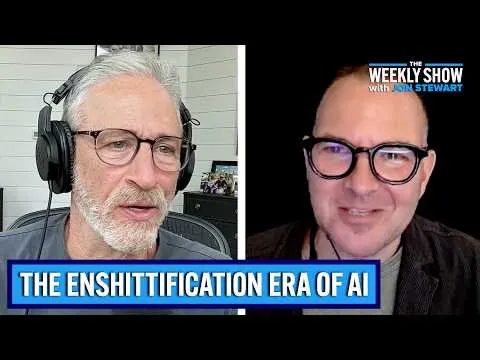
AI and the Enshittification Era with Cory Doctorow

Publisher English captions inspected. His introduction describes a slight shift after an AI doomer spiral. Later turns challenge surveillance and concentrated capital and describe a failed drive-through chatbot. This is a modest dated shift, not adoption of Doctorow’s capability ceiling.

youtube.com
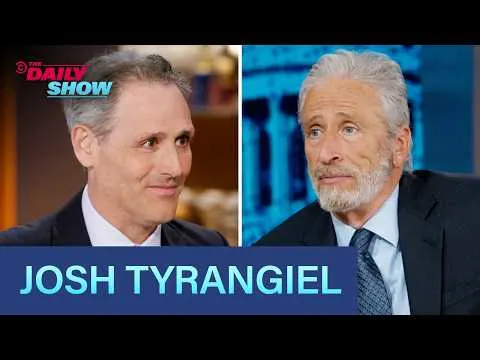
AI for Good: interview with Josh Tyrangiel

Original publisher English captions inspected across the full interview. Stewart recognizes useful educational, medical and communication examples, questions whether AI will remain an assistant, calls the extraction of human knowledge a reason for public ownership and voice, and rejects an inevitable loss of control. He distrusts corrupt regulation and calls for trusted adjudication.

youtube.com
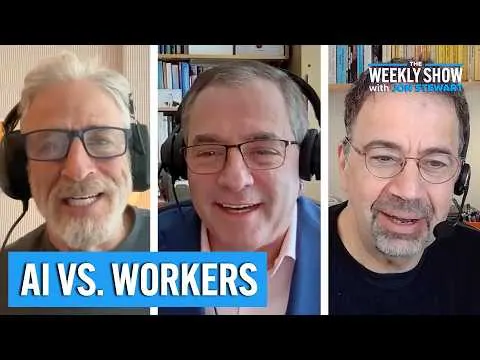
AI and the Future of Work with David Autor and Daron Acemoglu

Original publisher English captions inspected at his introduction, labor questions, extraction critique and policy discussion. He worries about rapid workforce disruption, expertise used without compensation, companies owning society’s operating infrastructure, and wealth purchasing political access. Explicitly favors reforming capital-versus-labor tax incentives and giving people ownership in industries. The guests’ timelines and AGI limits are excluded.

youtube.com
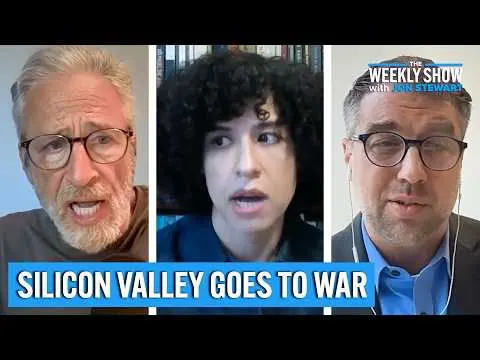
Military AI: Anthropic, OpenAI and the future of warfare

Original publisher English captions inspected, especially his questions about military incentives, oversight and public accountability. Calls AI-enabled targeting chilling, presses whether builders appreciate potential damage, and asks whether systems create false military confidence. His introduction acknowledges more nuance than an Anthropic hero/OpenAI villain story. Experts’ proposed hardware controls are not his policy.

youtube.com
AI: What Could Go Wrong? with Geoffrey Hinton

Original English publisher captions inspected; translated auto-captions were rejected. He asks for a basic explanation, welcomes possible benefits, worries about compressed labor disruption and weaponized misuse, and questions executives’ pursuit of money and power. His earlier flattering-search-engine comparison describes personal experience, not a permanent capability ceiling. Hinton’s takeover probability and timelines are not Stewart’s.

youtube.com
จุดยืนของคุณอยู่ตรงไหน?
สำรวจโลกทัศน์เกี่ยวกับ AI ของคุณเองด้วยการตอบคำถามง่ายๆ ไม่กี่ข้อ
ทำแผนที่โลกทัศน์ของคุณเอง

จุดยืนของคุณอยู่ตรงไหน?

ทำแผนที่โลกทัศน์ของฉัน