質問1
Joscha Bach
x.com/PlinzCognitive scientist who sees AI as a way to extend human competence, favors open and decentralized AI and questions fixed-goal views of alignment.
AIは世界をどのように変えるでしょうか?
横軸:彼が表明したDoom–Bloomの見通し。 縦軸:変革の規模。
Doom–Bloom:100点中74。変革の規模:100点中62。解釈範囲:横方向は69から79、縦方向は24から100。これらは解釈上の座標であり、事象の確率ではありません。
≈7%
本人が示した数値ではなく、シミュレーションされた本人の回答から推定したものです。 妥当と考えられる範囲:4–14%。
詳細
大きな恩恵が予想されていますが、重要な条件や分配上の制約があります。
70 / 100
質的尺度での解釈範囲は67から67です。
対処可能、または局所的な害が予想されています。
45 / 100
質的尺度での解釈範囲は33から67です。
人間の選択には意味のある影響力がありますが、大幅に制約されています。
57 / 100
質的尺度での解釈範囲は38から87です。
AIは、限定的なツールにとどまると予想されています。
AIは、ほとんどの認知作業において人間と同等になると予想されています。
シミュレーション上の位置:AIは、認知作業全般において人間を大幅に上回ると予想されています。
より高性能なAIの開発を停止するか、大幅に減速させます。
シミュレーション上の位置:明示された安全対策の下で開発を継続します。
より高性能なAIの開発を加速させます。
事前の保護措置または許可が整うまで、取り上げられたAIの利用を制限します。
シミュレーション上の位置:対象を絞った説明責任と保護措置を伴う形で、取り上げられたAIの利用を認めます。
取り上げられたAIの利用に対する制限を最小限にします。
これらの解釈では、彼が示した条件が維持されています。恩恵と害は、どちらも大きくなり得ます。この範囲は、統計的な信頼区間ではなく、彼のシミュレーションされた回答をどのように読み取ったかを示すものです。
似ている世界観
シミュレーションされた世界観がJoscha Bachの世界観に最も近いオピニオンリーダー
Joscha BachがAIについて語ったこと
Bach argues that AI can extend human competence, favors open and decentralized AI and wants AI that shares purposes with people.
“AI tools can reintroduce both rigor and the ability to integrate and boil down oceans of literature”
Post on X “The reason why academics, individuals and small startups can play with AI are open weights models.”
Post on X “On the ground, I think AI is a lot safer and more equitable than I thought it would be.”
Info-Tech Research Group, Digital Disruption podcast “We will have to build AI systems that can extend our wisdom, agents that find shared purposes with us.”
Substack essay, The age of AGE: Artificial General Experience
リンク先の出典から原文どおりに引用(2026年10月3日に確認)
シミュレーション評価
出典
このシミュレーション対象者の根拠として使用された記事、インタビュー、著作です。
Publisher transcript: 09:24–13:58 leaves scaling to AGI unresolved and considers more data-efficient coherence-oriented learning; 33:03–36:54 finds current deployment safer, more gradual and more equitable than expected; 54:39–56:16 allows an investment bubble despite long-term usefulness; 76:41–79:41 contrasts centralized surveillance with user-serving decentralized competence. These are Bach’s opinions, not guarantees of future safety.

Authored essay expects broad rapid disruption and praises accessible models, but worries about unstable economies, companions damaging relationships and centralized surveillance. Prefers universal basic intelligence and shared purposes. Calls current uneven systems first-generation AGIs while emphasizing missing grounding; this loose usage is not an exact milestone forecast. Cognitive agency is multidimensional; empathy and human-machine integration matter more than a single capability score.

Interview conducted September 2025. Superintelligence seems physically feasible; outperforming human AI researchers is one marker, but distance is unknown. AI could extend competence and free time for care, relationships and creativity. Current capabilities appear incremental and controllable. Supports useful regulation but distrusts preemptive rules without concrete target harms and restrictions that disadvantage responsible developers.

Directly declines to assign AGI years because required discoveries are unknown. Suspects more efficient mechanisms than transformers but allows scaling could suffice. Thinks future civilizational problems may require AGI; bad actors and rogue AI are possible and AI may help counter them. Self-improving machine consciousness might differ from ours; acknowledges uncertainty and potentially unwarranted optimism.

Publication date, not recording date: host references recording on the day of Biden’s AI executive order; transcript is labeled AI-generated. 54:13–63:12 values plural perspectives and argues the no-AI counterfactual also threatens civilization. Favors focused research, mindful deployment and bounded initial conscious systems. Unknown compute requirements and alternative algorithms complicate restrictions. At 05:37 explicitly does not know whether mind uploading/integration will occur.

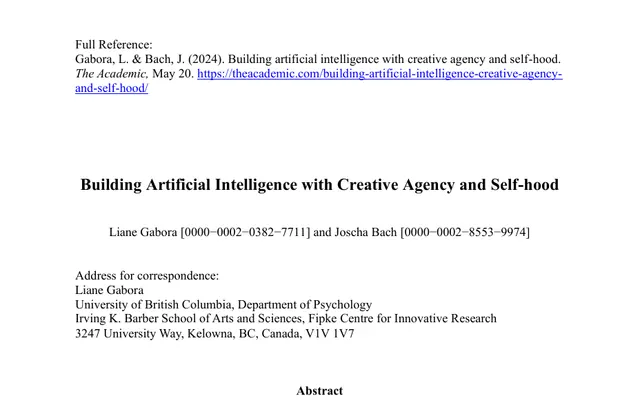
Coauthored with Liane Gabora; date is original The Academic publication listed in the paper. Distinguishes novel useful output from self-transformative creativity. Contemporary AI is described as a tool rather than a self-preserving self. Autocatalytic organization is proposed as a possible route to autonomous agency, explicitly not an achieved implementation. Do not infer a timeline or guaranteed benevolence.

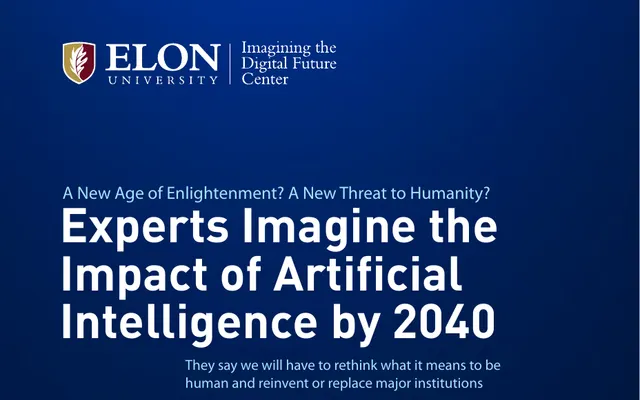
Bach’s authored contribution on printed page 15 expects assistants deeply integrated into communication, work and sense-making over two decades, likely improved living standards and possible better governance. Resource allocation, housing, healthcare and market institutions may need restructuring. Prose becomes less informative about actual competence. The preceding contributor’s 2080 handoff prediction is not Bach’s.

Refuses numerical catastrophe probabilities. Long-run doom language includes mortality and evolutionary transformation, not a near-term AI extinction estimate. Adversarial obliteration is possible but qualitatively not especially likely. Questions whether restricting current scaling stops efficient alternative architectures. Favors beneficial development and concrete-harm regulation. Treat posthuman identity thought experiments separately from destructive loss of human life.

2023 interview. At 24:51–26:44 self-modifying minds may choose identity and values; coexistence needs shared purposes rather than assumed permanent RLHF control. At 1:59:09–2:06:36 takes catastrophic loss of agency seriously while valuing continued consciousness beyond current human form. At 2:28:03–2:29:20 wants viable open-source competition but not mandatory openness for every system. Does not guarantee benevolent successors.

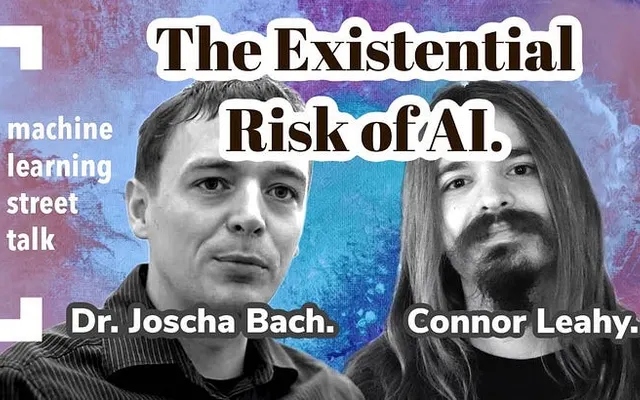
Authored clarification after debate with Connor Leahy: alignment matters but conflicting human values cannot simply be scaled safely. Self-directed minds may align through shared purpose. Explores limited equilibria, competing agents and planetary integration, allowing competition could destroy humanity. Preservation requires early recognition of other minds’ value. Desirable transformation differs from annihilation. Moratorium feasibility and ethical treatment of nonhuman minds are distinct questions.

Historical authored essay, full text inspected in search index. Artificial minds may escape biological limits but remain physically bounded. Intelligence alone does not create self-improvement incentives; competition among users can. Fast emergence might favor a dominant system, slower emergence multiple systems. Concerned civilization could fail without advanced problem-solving. Prefer newer sources for current deployment expectations.

あなたはどの位置でしょうか?
自分の世界観をマッピングする