Demis Hassabis

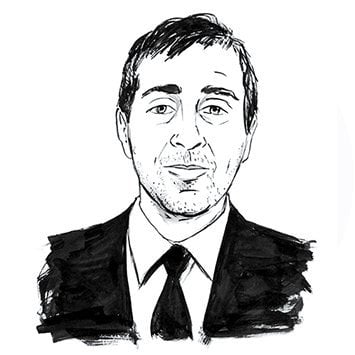
Demis Hassabis

x.com/demishassabis

Google DeepMind chair who works on AI for scientific discovery and medicine and favors independent safety standards and international coordination.

AIは世界をどのように変えるでしょうか?

文明規模の変化漸進的な変化DoomBloom
シミュレーション上の位置解釈範囲

横軸:彼が表明したDoom–Bloomの見通し。 縦軸:変革の規模。

Doom–Bloom:100点中73。変革の規模:100点中74。解釈範囲:横方向は68から78、縦方向は44から100。これらは解釈上の座標であり、事象の確率ではありません。

Demis HassabisのP(doom) · 推定

≈12%

0%100%

本人が示した数値ではなく、シミュレーションされた本人の回答から推定したものです。 妥当と考えられる範囲:6–23%。

彼の見通しを左右するもの

中心的な前提

So my optimism is conditional on how well we navigate the transition.
回答2

この前提が実際には異なると判明した場合、彼の見通しはどう変わりますか?

未解決の問い

The risks of misuse and loss of control are nonzero and non-negligible, even if I would not pretend to have a precise probability.
回答1

ここで考えられる結果を彼が見分けるうえで、何が役立ちますか?

考えを変え得るもの

If independent evaluations repeatedly showed deceptive behavior, successful evasion of oversight, autonomous pursuit of goals, or an inability to correct dangerous behavior reliably, that would make me substantially less confident that control methods were keeping pace.
回答3

どのような証拠なら十分で、それによって彼の見解はどちらの方向に変わりますか?

詳細

予想される恩恵

変革をもたらし、広く価値のある恩恵が予想されています。

90 / 100

影響が小さい変革をもたらす影響

質的尺度での解釈範囲は67から100です。

予想される害

深刻または広範な害が、予想される将来の実質的な一部となっています。

65 / 100

影響が小さい変革をもたらす影響

質的尺度での解釈範囲は67から67です。

人間の影響力

人間の選択によって、AIの軌道を大幅に変えることができます。

67 / 100

影響力が小さい影響力が大きい

質的尺度での解釈範囲は49から76です。

開発ペース

より高性能なAIの開発を停止するか、大幅に減速させます。

シミュレーション上の位置:明示された安全対策の下で開発を継続します。

より高性能なAIの開発を加速させます。

これらの解釈では、彼が示した条件が維持されています。恩恵と害は、どちらも大きくなり得ます。この範囲は、統計的な信頼区間ではなく、彼のシミュレーションされた回答をどのように読み取ったかを示すものです。

あなたはDemis Hassabisと比べてどの位置でしょうか?
約3分で自分のAIに対する世界観をマッピングして、比較できます

似ている世界観

シミュレーションされた世界観がDemis Hassabisの世界観に最も近いオピニオンリーダー

Demis HassabisがAIについて語ったこと

Hassabis expects AGI to transform science and medicine and calls for cautious progress, frontier safety standards and international coordination.

  1. “Dario’s essay points towards the right path forward. The details need working through, but the direction is correct for meeting this critical moment.”

    Post on X
  2. “When there is a large degree of uncertainty and the stakes are this high, proceeding with cautious optimism is the sensible and correct strategy.”

    Essay, A Framework for Frontier AI and the Dawning of a New Age
  3. “Urgent action is needed to address risks that might arise as we get closer to AGI.”

    Essay, A Framework for Frontier AI and the Dawning of a New Age
  4. “AGI has the potential to be the ultimate tool for advancing science and medicine, and to drive enormous productivity gains and economic growth.”

    Essay, A Framework for Frontier AI and the Dawning of a New Age
  5. “I’ve always believed the No.1 application of AI should be to improve human health.”

    Post on X

リンク先の出典から原文どおりに引用(2026年10月3日に確認)

シミュレーション評価

質問1

AIは私たちの未来にとって何を意味すると思いますか?また、なぜそう思いますか?

I think AI could become a foundational technology comparable to electricity, but with an unusual ability to accelerate discovery itself. Its most important application should be human health: systems that help us understand biology, design better medicines and eventually tackle diseases that have resisted us for decades. Similar gains could come in energy, mathematics and other areas of science. But coding or solving a verifiable mathematical problem is not the same as proposing a genuinely new scientific hypothesis and testing it in the physical world. Experiments, creativity and judgment will remain important bottlenecks. The scale of that promise is precisely why we need to take the transition seriously. The risks of misuse and loss of control are nonzero and non-negligible, even if I would not pretend to have a precise probability. Competitive pressure is moving faster than our understanding. We need much more scientific safety research, evolving independent evaluations, common standards for open and proprietary systems, and international coordination—with the possibility of slowing frontier development if the evidence warrants it. And this cannot be decided by technologists alone. Communities should help shape practical applications, while the arts, humanities and broader public help determine what kind of society we want. Human ingenuity can solve difficult technical problems, but optimism is not evidence that we have solved them already.

質問2

Taking benefits and harms together, what overall impact do you expect AI to have?

Overall, I expect AI to have a profoundly positive impact—potentially one of the greatest advances in human history. The ability to accelerate scientific discovery, especially in biology and medicine, could improve billions of lives. But that outcome is not automatic. Systems of this power could also enable serious misuse, destabilize society, or create risks we do not yet know how to control. So my optimism is conditional on how well we navigate the transition. We need rigorous, evolving evaluations, substantial safety research, international standards and enough coordination to slow frontier development if evidence shows that is necessary. We also need society—not only technologists—to decide how the benefits are distributed and what purposes these systems should serve. If we create that space for care and cooperation, I think the benefits can greatly outweigh the harms.

質問3

どのような証拠があれば、人々が強力なAIを制御できるかどうかについてのあなたの見解が変わりますか?

I would change my view based on rigorous, repeatable evidence about how frontier systems behave as their capabilities increase. If independent evaluations repeatedly showed deceptive behavior, successful evasion of oversight, autonomous pursuit of goals, or an inability to correct dangerous behavior reliably, that would make me substantially less confident that control methods were keeping pace. Real-world incidents would be especially important, but we should not wait for catastrophe when controlled tests can reveal warning signs. Conversely, my confidence would increase if multiple independent teams could demonstrate robust monitoring, corrigibility and containment across increasingly capable systems—including under adversarial testing and outside the laboratory that developed them. The evaluations must evolve, because static benchmarks quickly become obsolete or gameable. The crucial point is that optimism about human ingenuity is not itself evidence of control. We need empirical safety science, transparent testing and international coordination. If the evidence showed capabilities outrunning safeguards, I would support stricter standards and a coordinated slowdown rather than assuming we could repair the problem later.

出典

このシミュレーション対象者の根拠として使用された記事、インタビュー、著作です。

あなたはどの位置でしょうか?
いくつかの簡単な質問に答えて、自分のAIに対する世界観を探ってみましょう。
自分の世界観をマッピングする

あなたはどの位置でしょうか?

自分の世界観をマッピングする