Pseudonymous account that writes about rapid AI progress and its upside, calls its risks real but manageable and wants labs to share safety work.

AIは世界をどのように変えるでしょうか?

文明規模の変化漸進的な変化DoomBloom
シミュレーション上の位置解釈範囲

横軸:その人が表明したDoom–Bloomの見通し。 縦軸:変革の規模。

Doom–Bloom:100点中79。変革の規模:100点中91。解釈範囲:横方向は74から100、縦方向は75から100。これらは解釈上の座標であり、事象の確率ではありません。

bayesのP(doom) · 推定

≈10%

0%100%

本人が示した数値ではなく、シミュレーションされた本人の回答から推定したものです。 妥当と考えられる範囲:6–19%。

その人の見通しを左右するもの

中心的な前提

AI is beginning to improve AI, automated science is accelerating, robotics will have its ChatGPT moment, and algorithmic progress may have several orders of magnitude left.
回答1

この前提が実際には異なると判明した場合、その人の見通しはどう変わりますか?

未解決の問い

I don’t have a defensible number.
回答3

ここで考えられる結果をその人が見分けるうえで、何が役立ちますか?

考えを変え得るもの

The biggest update would be discovering a hard saturation point: that AI cannot reliably improve AI, automate frontier science, or cross from software into robust robotics and production despite sustained effort.
回答4

どのような証拠なら十分で、それによってその人の見解はどちらの方向に変わりますか?

詳細

予想される恩恵

変革をもたらし、広く価値のある恩恵が予想されています。

91 / 100

影響が小さい変革をもたらす影響

質的尺度での解釈範囲は67から100です。

予想される害

深刻または広範な害が、予想される将来の実質的な一部となっています。

57 / 100

影響が小さい変革をもたらす影響

質的尺度での解釈範囲は33から67です。

人間の影響力

人間の選択には意味のある影響力がありますが、大幅に制約されています。

54 / 100

影響力が小さい影響力が大きい

質的尺度での解釈範囲は45から80です。

予想される能力

AIは、限定的なツールにとどまると予想されています。

AIは、ほとんどの認知作業において人間と同等になると予想されています。

シミュレーション上の位置:AIは、認知作業全般において人間を大幅に上回ると予想されています。

開発ペース

より高性能なAIの開発を停止するか、大幅に減速させます。

シミュレーション上の位置:明示された安全対策の下で開発を継続します。

より高性能なAIの開発を加速させます。

これらの解釈では、その人が示した条件が維持されています。恩恵と害は、どちらも大きくなり得ます。この範囲は、統計的な信頼区間ではなく、その人のシミュレーションされた回答をどのように読み取ったかを示すものです。

あなたはbayesと比べてどの位置でしょうか?
約3分で自分のAIに対する世界観をマッピングして、比較できます

似ている世界観

シミュレーションされた世界観がbayesの世界観に最も近いオピニオンリーダー

シミュレーション評価

質問1

AIは私たちの未来にとって何を意味すると思いますか?また、なぜそう思いますか?

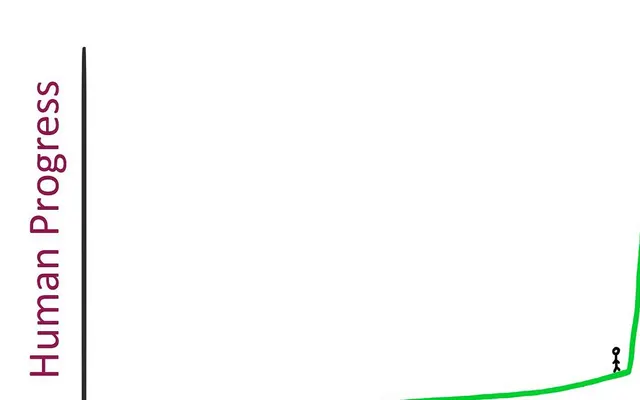
I think we are in early takeoff. AI is beginning to improve AI, automated science is accelerating, robotics will have its ChatGPT moment, and algorithmic progress may have several orders of magnitude left. That could mean industrial takeoff, radical medical progress, abundant goods, and much faster movement through the tech tree. We probably do not need crazy-dangerous general models—or to create a new species—to capture most of that upside. But capabilities are outrunning our ability to bound what happens, from individual models to civilization. Strong instrumental convergence is real at scale, even if I think it is ultimately an engineering skill issue. Cyber, bio, robotics, and other domains may contain zero days we do not understand. And even a verified value-aligned model does not guarantee aligned outcomes, because judging whether its outputs are actually good can remain difficult. The political problem matters just as much. I fear both the technology and a small number of people controlling it. AI could produce abundance while leaving many humans with little economic leverage or agency—a permanent underclass rather than universal destitution. Nationalization could create its own ugly concentration of power. Labs should treat alignment, control, and monitoring research like seatbelts and airbags: public goods, not proprietary advantages. So my default is enormous upside with manageable—but very real—risks. I am not currently for a pause, though its value has risen. The challenge is to get the benefits without RL’ing a demon into existence, racing into a vulnerable world, or building a panopticon to save democracy. Easy little tightrope walk.

質問2

Setting aside good or bad: how much do you think AI will ultimately change the world—a little, a lot, or completely?

Completely, in the ordinary sense that nearly every institution, industry, and human life will be downstream of it. AI improving AI, automating science, and eventually coupling to robotics and production is not another app cycle; it changes the rate at which civilization moves through the tech tree. That does not mean every human job instantly disappears, or that superintelligence arrives on a date I can name. Robotics and physical scaling may lag, and nobody knows where algorithmic returns saturate. But if even a meaningful fraction of the remaining progress is realized, the cumulative change is civilizational: medicine, production, war, political power, education, and the economic value of human knowledge work all get rewritten. “A lot” undersells it.

質問3

What’s your rough gut-feel chance that AI causes human extinction or a similarly permanent catastrophe? A number or “no idea” is fine.

I don’t have a defensible number. Nonzero and serious enough to shape engineering and policy, but not my default outcome.

質問4

どのような発見や出来事があれば、AIが将来もたらす影響についてのあなたの見解が最も大きく変わりますか?

The biggest update would be discovering a hard saturation point: that AI cannot reliably improve AI, automate frontier science, or cross from software into robust robotics and production despite sustained effort. That would sharply downgrade my takeoff view. In the other direction, a convincing demonstration of autonomous end-to-end AI research—identifying problems, running experiments, improving algorithms, and repeating the loop with little human help—would upgrade both expected impact and urgency. So would finding a real cyber, bio, or robotics “dragon” in the tech tree: a capability that makes catastrophe or coercive power much easier than defense. On governance, a major lab or state demonstrating genuinely auditable control and monitoring at frontier capability would make me more optimistic. A serious loss-of-control incident, or safety institutions becoming a durable pretext for tyranny, would move me hard the other way.

出典

このシミュレーション対象者の根拠として使用された記事、インタビュー、著作です。

The Overton window is moving

Argues that nationalizing AI labs is not the only option: the government should keep lab staff working while supervising capabilities closely, including embedded intelligence-community staff, which the account calls reasonable. Private labs cannot become sovereign military powers, because the state can simply seize or shut down data centers. Nationalization would hand the state a large share of future means of production, an unhealthy concentration; the account is “not confident” but calls it a bad idea for now. It says people underestimate AI and sees no foreseeable hard bound on capability. Full essay inspected; reader comments excluded.

bayeslord.substack.com
AI optimism is waning

Argues that pro-AI people failed to tell a story of how the future goes well: they swept risks under the rug instead of acknowledging them and accelerating security, botched the datacenter buildout’s public case, and let private investors capture lab returns. A mass bipartisan anti-AI movement is possible, and winning the public needs bold “unconditional functional abundance” while preserving non-panopticon democracy. The account believes the system currently works decently well because humans control capital and most humans are good. Full essay inspected; reader comments excluded.

bayeslord.substack.com
46 thoughts on the near future

An edited version of a June 4 thread saying we are in early takeoff, with perhaps four to seven, maybe up to ten, algorithmic orders of magnitude left, while admitting nobody knows where returns saturate. Expects automated science, robotics breakthroughs and deflation, and calls both “jobs stay high” and “jobs go to zero” predictions overconfident. Warns of an unjust “permanent underclass”, a possibly vulnerable world with unknown zero days, robot coup risks, an end to guaranteed MAD, and tyranny through institutional pressure. Favors some international coordination; says a pause’s value has risen but opposes one “at this time”. Full essay inspected.

bayeslord.substack.com
あなたはどの位置でしょうか?
いくつかの簡単な質問に答えて、自分のAIに対する世界観を探ってみましょう。
自分の世界観をマッピングする

あなたはどの位置でしょうか?

自分の世界観をマッピングする