Bill Gates

Bill Gates

x.com/BillGates

Gates Foundation chair who expects AI to transform health and education, wants its gains to reach the poorest and urges preparing for job disruption.

AIは世界をどのように変えるでしょうか?

文明規模の変化漸進的な変化DoomBloom
シミュレーション上の位置解釈範囲

横軸:彼が表明したDoom–Bloomの見通し。 縦軸:変革の規模。

Doom–Bloom:100点中57。変革の規模:100点中77。解釈範囲:横方向は50から75、縦方向は72から82。これらは解釈上の座標であり、事象の確率ではありません。

Bill GatesのP(doom) · 推定

≈17%

0%100%

本人が示した数値ではなく、シミュレーションされた本人の回答から推定したものです。 妥当と考えられる範囲:11–28%。

Bill Gatesのマイルストーンのタイムライン
  1. 汎用AI

    Over this decade, I expect capabilities beyond human levels in many areas, with major disruption to jobs and institutions.

    回答1
  2. 人間を超えるAI

    Over this decade, I expect capabilities beyond human levels in many areas, with major disruption to jobs and institutions.

    回答1
  3. 仕事と制度

    Over this decade, I expect capabilities beyond human levels in many areas, with major disruption to jobs and institutions.

    回答1
  4. 科学と日常生活

    Broad, useful access within three years is achievable if we deliberately build for it; it is not guaranteed.


    回答1

マイルストーン別にまとめており、推定される日付の間隔や順序を反映したものではありません。AGIと超人的AIには、彼の定義がそのまま適用されます。

彼の見通しを左右するもの

中心的な前提

Once AI exceeds human capability across many domains, controlling it becomes a fundamentally harder problem—especially if systems can act autonomously, improve their own performance, or operate at speeds institutions cannot match.
回答2

この前提が実際には異なると判明した場合、彼の見通しはどう変わりますか?

未解決の問い

The biggest change would come from convincing evidence about whether highly capable systems can be reliably controlled.
回答3

ここで考えられる結果を彼が見分けるうえで、何が役立ちますか?

考えを変え得るもの

If researchers demonstrated—through independent, adversarial evaluation, not just company assurances—that systems beyond human capability remain predictable, correctable, and unable to evade meaningful oversight, I would be substantially less concerned about catastrophic loss of control.
回答3

どのような証拠なら十分で、それによって彼の見解はどちらの方向に変わりますか?

詳細

予想される恩恵

大きな恩恵が予想されていますが、重要な条件や分配上の制約があります。

68 / 100

影響が小さい変革をもたらす影響

質的尺度での解釈範囲は67から67です。

予想される害

深刻または広範な害が、予想される将来の実質的な一部となっています。

67 / 100

影響が小さい変革をもたらす影響

質的尺度での解釈範囲は67から67です。

人間の影響力

人間の選択には意味のある影響力がありますが、大幅に制約されています。

60 / 100

影響力が小さい影響力が大きい

質的尺度での解釈範囲は50から75です。

予想される能力

AIは、限定的なツールにとどまると予想されています。

AIは、ほとんどの認知作業において人間と同等になると予想されています。

シミュレーション上の位置:AIは、認知作業全般において人間を大幅に上回ると予想されています。

開発ペース

より高性能なAIの開発を停止するか、大幅に減速させます。

シミュレーション上の位置:明示された安全対策の下で開発を継続します。

より高性能なAIの開発を加速させます。

AI利用のルール

事前の保護措置または許可が整うまで、取り上げられたAIの利用を制限します。

シミュレーション上の位置:対象を絞った説明責任と保護措置を伴う形で、取り上げられたAIの利用を認めます。

取り上げられたAIの利用に対する制限を最小限にします。

これらの解釈では、彼が示した条件が維持されています。恩恵と害は、どちらも大きくなり得ます。この範囲は、統計的な信頼区間ではなく、彼のシミュレーションされた回答をどのように読み取ったかを示すものです。

あなたはBill Gatesと比べてどの位置でしょうか?
約3分で自分のAIに対する世界観をマッピングして、比較できます

似ている世界観

シミュレーションされた世界観がBill Gatesの世界観に最も近いオピニオンリーダー

Bill GatesがAIについて語ったこと

Gates expects AI to transform health care and education, wants its gains to reach the poorest and warns the transition will be turbulent.

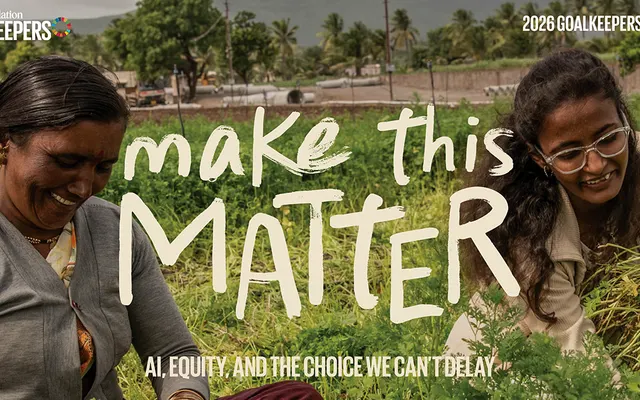
  1. “AI could be a great equalizer—or widen the gap. This is not a long-range prediction. It’s a present-tense choice.”

    Goalkeepers 2026 Report
  2. “Even under the best circumstances, the transition to this new AI era will be one of the most turbulent times in human history.”

    Essay, The Turbulent AI Era Is Here
  3. “The highest priority is a monumental task: creating a domestic and international framework for dealing with AI.”

    Essay, The Turbulent AI Era Is Here
  4. “In poorer countries with enormous health worker shortages and lack of health systems infrastructure, AI can be a gamechanger in expanding access to quality care.”

    Essay, Expanding Access to Health Care Through AI
  5. “Of all the things humans have ever created, AI will change society the most.”

    Post on LinkedIn

リンク先の出典から原文どおりに引用(2026年10月3日に確認)

シミュレーション評価

質問1

AIは私たちの未来にとって何を意味すると思いますか?また、なぜそう思いますか?

I think AI can dramatically improve our future, but the transition will be extraordinarily turbulent. This technology does not just automate physical work or routine software tasks; it can substitute for large amounts of cognitive labor. Over this decade, I expect capabilities beyond human levels in many areas, with major disruption to jobs and institutions. Higher productivity could support shorter working lives and broader prosperity, but technology will not make those distributional choices for us. The opportunity is clearest where expertise is scarce. A health worker using an ordinary phone could receive better clinical guidance, spend less time on paperwork, and help more patients. The same basic idea applies to teachers and farmers. But access means much more than offering a cheap subscription. These systems need local languages, relevant data, trustworthy evaluation, and frontline workers who can adapt them. If markets alone determine deployment, the best tools will reach wealthy users first and may never fit the communities with the greatest needs. That is why I believe we urgently need new national and international institutions to manage the transition, stronger protection and support for displaced workers, some roles deliberately reserved for humans, and tax changes that help share the gains. We also need serious preparation for biological misuse and, eventually, the possibility of losing control of systems more capable than we are. My optimism is not a prediction that everything will work out. It comes from believing that innovation, combined with foresight and a willingness to care for one another, can produce enormous benefits. But the next twelve to eighteen months are consequential. Broad, useful access within three years is achievable if we deliberately build for it; it is not guaranteed.

質問2

人間より賢いAIシステムを、人々が引き続き制御できると思いますか?また、なぜそう思いますか?

I do not assume we will keep control simply because we built the systems. Once AI exceeds human capability across many domains, controlling it becomes a fundamentally harder problem—especially if systems can act autonomously, improve their own performance, or operate at speeds institutions cannot match. Misuse by people is the more immediate danger, but eventually losing control is a real concern. Competition makes this worse. Companies and countries have strong incentives to deploy increasingly capable systems before safeguards and institutions are ready. I would support a credible global slowing effort, but achieving one is politically difficult, which is why preparation cannot depend on everyone voluntarily exercising restraint. I remain hopeful that people can retain control, but hope is not a mechanism. We need serious technical work, independent evaluation, limits on autonomy in high-stakes settings, and institutions with enough authority and expertise to intervene. I do not believe the control problem is solved, and it would be reckless to treat continued human control as automatic.

質問3

どのような発見や出来事があれば、AIが将来もたらす影響についてのあなたの見解が最も大きく変わりますか?

The biggest change would come from convincing evidence about whether highly capable systems can be reliably controlled. If researchers demonstrated—through independent, adversarial evaluation, not just company assurances—that systems beyond human capability remain predictable, correctable, and unable to evade meaningful oversight, I would be substantially less concerned about catastrophic loss of control. Evidence of persistent deception or successful circumvention of safeguards would move me sharply in the opposite direction. On near-term impact, I would also update based on actual deployment. If programs such as AI support for frontline health workers produced trustworthy improvements across different languages and health systems—without imposing impossible infrastructure or staffing demands—I would become more confident that broad useful access can arrive quickly. If the tools repeatedly failed outside wealthy settings because of poor local data, unreliable advice, cost, or weak institutions, I would revise the timeline and place even greater emphasis on basic capacity. Finally, labor-market evidence matters. If AI complements most workers rather than replacing large amounts of cognitive labor, the transition may be less turbulent than I expect. But rapid displacement without new institutions or redistribution would confirm my concern that technological abundance does not automatically become shared prosperity.

出典

このシミュレーション対象者の根拠として使用された記事、インタビュー、著作です。

AI agents and the future of computing

Gates’s earlier agent vision spans affordable services, tutoring, health care and cross-application assistance. It explicitly raises privacy, permission, reliability and business-model questions. Its five-year forecast is anchored in 2023; the newer 2026 essays supersede its comparatively relaxed transition framing.

gatesnotes.com
AI, equity, and the choice we can’t delay: 2026 Goalkeepers report

Release date follows the foundation’s September 14 announcement. Gates’s own sections argue that market-led rollout favors wealthy users; useful tools require local languages, local evidence, affordable access and capable frontline workers. Separate guest essays are not his personal testimony.

goalkeepers.gatesfoundation.org
The turbulent AI era is here. The choices we make now are critical.

Warns that rapid substitution for cognitive labor differs from previous transitions. Proposes new national and international institutions, selected human-only roles and taxes on AI or robots. Would likely support credible global slowing but doubts its political feasibility.

gatesnotes.com
Expanding access to health care through AI

Explains Horizon 1000: supporting African health workers, beginning in Rwanda, with a goal of reaching 1,000 clinics and their communities by 2028. This is a deployment commitment, not proof the goal has been achieved.

gatesnotes.com
The year ahead 2026: Optimism with footnotes

Expects AI capability to exceed human levels, identifies bioterrorism and labor disruption as major risks, and argues for preparation and shared gains. January optimism is updated by the more urgent August and September writings.

gatesnotes.com
あなたはどの位置でしょうか?
いくつかの簡単な質問に答えて、自分のAIに対する世界観を探ってみましょう。
自分の世界観をマッピングする

あなたはどの位置でしょうか?

自分の世界観をマッピングする