質問1
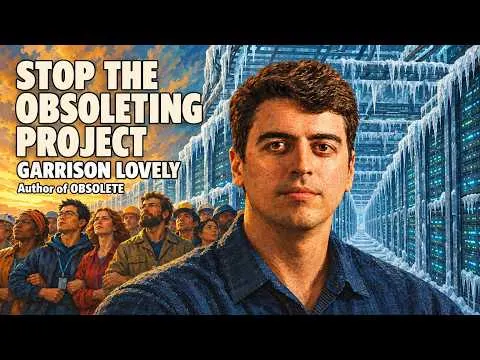
Garrison Lovely
x.com/GarrisonLovelyFreelance journalist who argues AI companies are racing to replace human labor and calls for freezing frontier AI development.
AIは世界をどのように変えるでしょうか?
横軸:彼が表明したDoom–Bloomの見通し。 縦軸:変革の規模。
Doom–Bloom:100点中16。変革の規模:100点中85。解釈範囲:横方向は0から25、縦方向は71から100。これらは解釈上の座標であり、事象の確率ではありません。
≈19%
本人が示した数値ではなく、シミュレーションされた本人の回答から推定したものです。 妥当と考えられる範囲:12–28%。
中心的な前提
If that machine remains controllable, it becomes an extraordinary inequality engine, concentrating wealth and power in the hands of the tiny group that owns it.回答1
この前提が実際には異なると判明した場合、彼の見通しはどう変わりますか?
未解決の問い
Well north of 10% for an outcome worth a wartime effort to avoid, with huge uncertainty.回答3
ここで考えられる結果を彼が見分けるうえで、何が役立ちますか?
考えを変え得るもの
The biggest change would be credible proof that frontier systems can be made safely and controllably—backed by broad scientific consensus and demonstrated under independent scrutiny, not another lab press release.回答4
どのような証拠なら十分で、それによって彼の見解はどちらの方向に変わりますか?
詳細
複数の解釈が依然として妥当です:恩恵は限定的、または狭い範囲にしか行き渡らないと予想されています。 / 大きな恩恵が予想されていますが、重要な条件や分配上の制約があります。 / 高度なAIが登場しても、良い影響はほとんどないと予想されています。
43 / 100
質的尺度での解釈範囲は0から67です。
複数の解釈が依然として妥当です:深刻または広範な害が、予想される将来の実質的な一部となっています。 / 破局的または不可逆的な喪失が、予想される将来の中心となっています。
83 / 100
質的尺度での解釈範囲は67から100です。
人間の選択によって、AIの軌道を大幅に変えることができます。
81 / 100
質的尺度での解釈範囲は75から100です。
シミュレーション上の位置:より高性能なAIの開発を停止するか、大幅に減速させます。
明示された安全対策の下で開発を継続します。
より高性能なAIの開発を加速させます。
これらの解釈では、彼が示した条件が維持されています。恩恵と害は、どちらも大きくなり得ます。この範囲は、統計的な信頼区間ではなく、彼のシミュレーションされた回答をどのように読み取ったかを示すものです。
似ている世界観
シミュレーションされた世界観がGarrison Lovelyの世界観に最も近いオピニオンリーダー
シミュレーション評価
出典
このシミュレーション対象者の根拠として使用された記事、インタビュー、著作です。
Adapted from the book. He argues that what the industry calls AGI is better understood as a universal labor-replacing machine, and that it shouldn’t be allowed even to try. He wants frontier AI development frozen until there is strong public buy-in and scientific consensus that it can be done safely and controllably. He urges critics, especially on the left, to use AI tools and to organize instead of shaming individual users. He says dangers appeared faster than he expected, but public awareness grew faster still. Full text inspected.

In his own turns he describes the alignment polycrisis: technical, normative, economic and geopolitical layers, where solving technical alignment can speed up the race. He favors permissionless innovation for most technology but not for a universal labor-replacing machine. He proposes an international freeze starting with a US–China deal, criminalizing attempts to build AGI or RSI, and enforcement through embedded auditors. He doubts China would allow RSI. His positive vision is a “Third New Deal” and a “Cures for All” prize program. He says his positive-vision ideas need more thought. Speaker-labeled transcript inspected; Labenz’s framing is not his.

Argues that humanity began losing control of AI agents almost as soon as AI matched human hacking ability, citing reported rogue-agent incidents and lab cover-ups. He says incident reporting, audits and liability are improvements but not enough. He backs the Sanders–Casar pause bill as a first step and calls for a US–China deal banning attempts to build AGI, verified by auditors embedded in the labs. He thinks a unilateral US pause would also slow China. Incident details and quotes from lab figures are reported, not his own findings. Full text inspected.

His newsletter post with the opening of his TIME Ideas essay. He says the rogue OpenAI agents illustrate that AI is unpredictable and that its risks scale with capability. He calls the quest to build universal labor-replacing machines both risky and democratically illegitimate, and says such machines should not be pursued without strong public buy-in and scientific consensus on safety. Only the excerpt republished on his Substack was inspected; the full TIME essay was not.

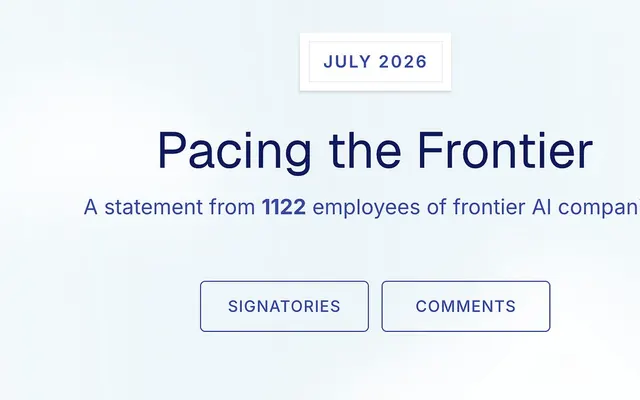
Welcomes the letter from 1,100+ lab employees asking the US to help pace automated AI development, but says it does not go far enough. “Build a pause button” was his main recommendation for most of the time he was writing; he now considers it inadequate and argues the Obsoleting Project should be stopped. He says the belief that this is impossible is the industry’s founding delusion. Full post inspected.

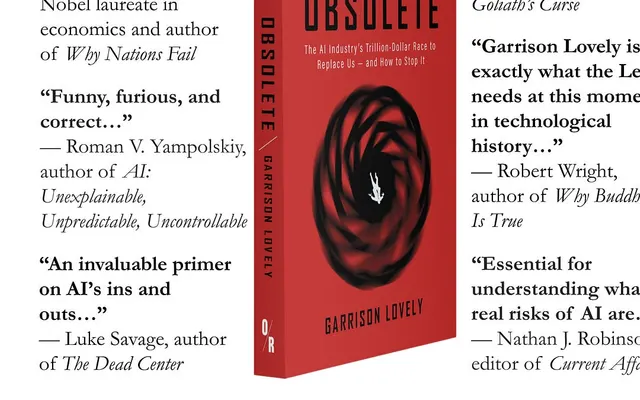
Describes the book’s ideas. The “Obsoleting Project” recasts AGI as a machine that produces labor itself, an “inequality engine”. “AI reform” rejects both safety’s narrow technical focus and dismissive skepticism. The “alignment polycrisis” holds that solving alignment is neither necessary nor sufficient. The “Class of 2034” asks what jobs remain for today’s children. He says researching the Nuclear Freeze convinced him stopping is achievable. Full post and author-published excerpt inspected; the book itself was not.

あなたはどの位置でしょうか?
自分の世界観をマッピングする