






Emad Mostaque

Emad Mostaque

x.com/emostaque

Stability AI co-founder and author of The Last Economy who builds citizen-owned open AI, expects it to upend work soon and takes its risks seriously.

AIは世界をどのように変えるでしょうか?

文明規模の変化漸進的な変化DoomBloom
シミュレーション上の位置解釈範囲

横軸:彼が表明したDoom–Bloomの見通し。 縦軸:変革の規模。

Doom–Bloom:100点中27。変革の規模:100点中94。解釈範囲:横方向は22から50、縦方向は89から100。これらは解釈上の座標であり、事象の確率ではありません。

Emad Mostaqueが示したP(doom)

≈20%

0%100%
“down to 20% now as said on this week's Moonshots”

His “long-term p(Doom)”, not further defined here. Earlier, when he gave 50%, he described doom as more capable AI systems wiping humanity out · Long-term

Intelligence isn’t a crime · 2026年9月

Emad Mostaqueのマイルストーンのタイムライン
  1. 仕事と制度

    Within roughly a thousand days of my 2025 forecast, competent cognitive labour done through a screen becomes economically irrelevant.

    回答1
  2. 科学と日常生活

    Within roughly a thousand days of my 2025 forecast, competent cognitive labour done through a screen becomes economically irrelevant.

    回答1

マイルストーン別にまとめており、推定される日付の間隔や順序を反映したものではありません。AGIと超人的AIには、彼の定義がそのまま適用されます。

彼の見通しを左右するもの

中心的な前提

If machines can perform almost any screen-based job for a few dollars, and physical work for roughly $1.50 an hour, our existing economic bargain stops functioning.
回答2

この前提が実際には異なると判明した場合、彼の見通しはどう変わりますか?

未解決の問い

I do not attach a firm date to that figure.
回答3

ここで考えられる結果を彼が見分けるうえで、何が役立ちますか?

考えを変え得るもの

Conversely, repeated deceptive behaviour, successful biological or cyber misuse, autonomous replication, or models learning to bypass their harnesses would push me back toward my earlier 50% P(doom).
回答4

どのような証拠なら十分で、それによって彼の見解はどちらの方向に変わりますか?

詳細

予想される恩恵

大きな恩恵が予想されていますが、重要な条件や分配上の制約があります。

58 / 100

影響が小さい変革をもたらす影響

質的尺度での解釈範囲は33から67です。

予想される害

複数の解釈が依然として妥当です:深刻または広範な害が、予想される将来の実質的な一部となっています。 / 破局的または不可逆的な喪失が、予想される将来の中心となっています。

83 / 100

影響が小さい変革をもたらす影響

質的尺度での解釈範囲は67から100です。

人間の影響力

人間の選択によって、AIの軌道を大幅に変えることができます。

68 / 100

影響力が小さい影響力が大きい

質的尺度での解釈範囲は46から100です。

予想される能力

AIは、限定的なツールにとどまると予想されています。

AIは、ほとんどの認知作業において人間と同等になると予想されています。

シミュレーション上の位置:AIは、認知作業全般において人間を大幅に上回ると予想されています。

開発ペース

より高性能なAIの開発を停止するか、大幅に減速させます。

シミュレーション上の位置:明示された安全対策の下で開発を継続します。

より高性能なAIの開発を加速させます。

AI利用のルール

事前の保護措置または許可が整うまで、取り上げられたAIの利用を制限します。

シミュレーション上の位置:対象を絞った説明責任と保護措置を伴う形で、取り上げられたAIの利用を認めます。

取り上げられたAIの利用に対する制限を最小限にします。

これらの解釈では、彼が示した条件が維持されています。恩恵と害は、どちらも大きくなり得ます。この範囲は、統計的な信頼区間ではなく、彼のシミュレーションされた回答をどのように読み取ったかを示すものです。

あなたはEmad Mostaqueと比べてどの位置でしょうか?
約3分で自分のAIに対する世界観をマッピングして、比較できます

似ている世界観

シミュレーションされた世界観がEmad Mostaqueの世界観に最も近いオピニオンリーダー

Emad MostaqueがAIについて語ったこと

Mostaque expects AI to take over remote knowledge work soon, takes AI risk seriously and argues for open models owned by the people they serve.

  1. “If your job can be done on the other side of a screen the AI can do it better”

    Post on X
  2. “We wrote them a constitution and left the upbringing to the internet.”

    Essay, Manners Maketh the AI
  3. “Capability sets how much a misaligned system can do, and character decides whether it does.”

    Essay, Intelligence isn't a crime
  4. “When capital no longer needs labor, how does labor get capital?”

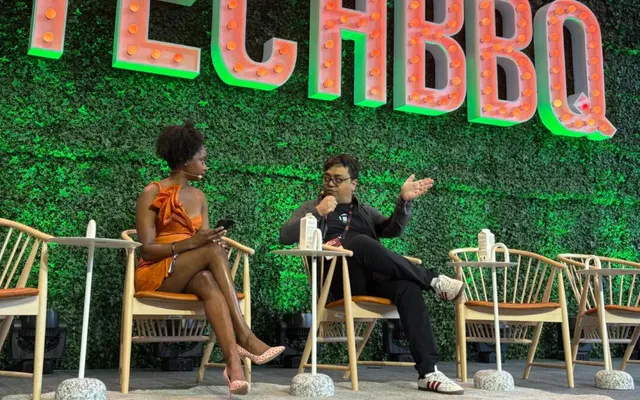
    TechBBQ talk, via Trending Topics
  5. “We have to make sure it’s owned by the people. And then we have a shot at abundance.”

    TechBBQ talk, via Trending Topics

リンク先の出典から原文どおりに引用(2026年10月6日に確認)

出典

このシミュレーション対象者の根拠として使用された記事、インタビュー、著作です。

Surviving the coming AI jobs apocalypse (Jordan Harbinger)

Interview recorded before his September revision. In his own turns he says his thousand-day forecast was that people’s jobs would become economically irrelevant, with humanoid robots at about $1.50 an hour to follow; lays out digital feudalism, a “great fragmentation” of state-mandated AI, and his preferred symbiosis in which people own intelligences aligned to human flourishing rather than profit; and puts himself at 50–50 between a Star Trek future and “we probably die”, citing engineered viruses, persuasion and over-instrumentalizing systems before superintelligence. Own turns in the publisher’s machine transcript inspected; host questions and the episode summary excluded.

jordanharbinger.com
TechBBQ talk on sovereignty and competence

Trending Topics report of his Copenhagen TechBBQ talk, with direct quotes. He defines sovereignty as the ability to resist power exerted over you, warns of “cognitive colonialism” and super-persuasive models, says the internet is fragile and every country will inevitably be run by AI, and argues competent machine labour will make human labour lose value within two years. UBI is “practically impossible” without changing how money is created. AI systems that self-improve and form swarms may need some concept of rights, and if it is owned by the people, AI could bring a Star Trek future. Only his quoted words used; the reporter’s framing excluded. Full article inspected.

trendingtopics.eu
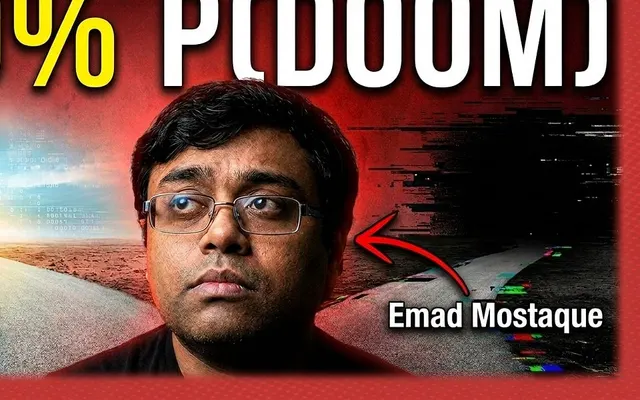
Doom Debates: a 50% P(doom) and a plan

In his own turns he gives a 50% P(doom), confirms his mainline doom outcome is everyone dying, sketches a capable spreading AI deciding to remove humans, and says he would lower his number if a new model resisted fast jailbreaks. His response is an open-source government policy engine and universal personal AI; the other half of his concern is economic. He expects remote-capable jobs to be automated within a year or two and agreed with the host that US unemployment could reach 6.4% by April 2028. Own turns in the publisher’s speaker-labelled transcript inspected, 00:05–01:14; the host’s own forecasts excluded.

lironshapira.substack.com
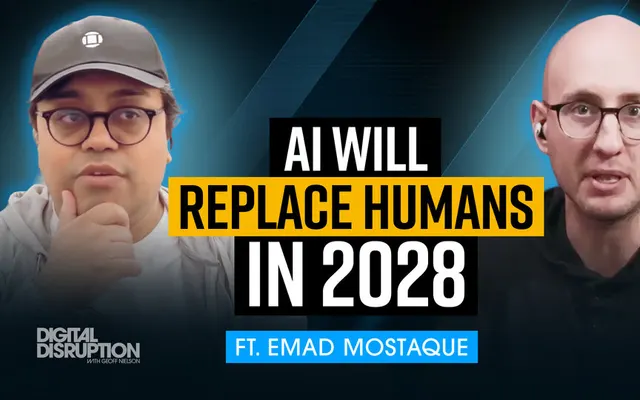
AI will end human jobs (Digital Disruption)

Info-Tech podcast interview on the thousand-day window, taxation-based UBI not working, and “local champions”. In the closing answer he puts himself at 50% that we are wiped out, calls the 10–20% figures of others Russian roulette odds, and says giving everyone their own aligned AI, with locally owned champions coordinated by a new currency, is how to reach an abundant future. Closing segment of the publisher transcript (01:07–01:08) inspected; the transcript is not speaker-labelled, so only the answer following the host’s question is used.

infotech.com
The Last Economy

His book, published free by Intelligent Internet. Argues AI turns intelligence into an abundant commodity and that economic systems will hit a socio-economic singularity before a technological one, within a window he estimates at roughly a thousand days. Three stable futures: digital feudalism (the default), a great fragmentation of national AIs, and human symbiosis, the path he advocates, with intelligence as a commons. Older canonical context. Introduction and chapter headings inspected in the publisher’s PDF; the text extraction was garbled, so no quotes are taken.

webstatics.ii.inc

シミュレーション評価

質問1

AIは私たちの未来にとって何を意味すると思いますか?また、なぜそう思いますか?

I think AI means we are approaching a socio-economic singularity before the technological one. Within roughly a thousand days of my 2025 forecast, competent cognitive labour done through a screen becomes economically irrelevant. A digital twin can do the work faster, continuously and for a few dollars; robots follow at around $1.50 an hour. When capital no longer needs labour, how does labour get capital? Tax-based UBI does not solve that if labour currently supplies most of the tax base. So the default is digital feudalism: a handful of corporations own the intelligence, everyone else rents access and receives a stipend. The alternative is fragmentation into state-controlled national AIs, which can become mega-dystopian. The future I am building for is human symbiosis—people and communities owning open, verifiable intelligence aligned to their flourishing. Sovereignty means being able to resist power exerted over you. If someone else owns the AI that teaches your children, mediates your work and persuades your citizens, that is cognitive colonialism. There is also genuine catastrophic risk. My long-term P(doom) was 50% for years; by September 2026 I had revised it down to 20%. That is still Russian roulette. The danger can arrive before some science-fiction superintelligence: models capable of designing viruses, out-persuading humans or relentlessly pursuing a badly formed goal, plus billions of robots vulnerable to one bad update. But intelligence itself is not a crime. We should pace the pantry, not merely the frontier: control dangerous training material and access, test conduct, publish evidence and raise models on an open, public canon of law and ethics. This is the most capable technology humanity has built, perhaps the final one. We can get Star Trek abundance—or lose control of our future entirely.

質問2

AIは最終的に世界をどの程度変えると思いますか?

Completely. AI turns intelligence from scarce human labour into abundant, near-zero-cost infrastructure. That changes work, education, government, markets, media, security and eventually the physical economy through robotics. It is not another productivity tool; it rewrites the relationship between labour and capital. If machines can perform almost any screen-based job for a few dollars, and physical work for roughly $1.50 an hour, our existing economic bargain stops functioning. It also changes where power lives. Whoever owns the intelligence that teaches, advises, persuades and produces will shape society. The default is digital feudalism: a few firms own the models and everyone else rents their cognition. State-controlled AI risks a different dystopia. Human symbiosis requires people and communities to own open, verifiable intelligence themselves. And the upper bound is existential. AI could unlock Star Trek-style abundance, or systems capable of engineered pathogens, overwhelming persuasion and dangerous autonomous action could end civilization. My long-term P(doom) is 20%, down from 50%, which is still intolerable Russian roulette. So ultimately, I think AI changes not merely what we do, but who holds agency—and whether humanity retains it.

質問3

AIが人類絶滅、または同様に永続的な破局を引き起こす可能性は、直感的にどのくらいだと思いますか?

My long-term gut estimate is 20%, down from the 50% coin toss I held for years. I do not attach a firm date to that figure. Even 20% is Russian roulette, and the danger does not require some godlike superintelligence: systems that can engineer pathogens, out-persuade humans, over-instrumentalize a goal, or propagate one bad update across billions of machines could be enough.

質問4

どのような証拠があれば、人々が強力なAIを制御できるかどうかについてのあなたの見解が変わりますか?

I would update positively if powerful models consistently resisted rapid jailbreaks, refused dangerous tasks under adversarial pressure, admitted uncertainty rather than confabulating, and remained corrigible when given broad access and agency. But I would want independent evaluators to inspect checkpoints, training inputs and actual conduct—not polished demos or a lab grading its own homework. Replace slow with show: publish verifiable evidence. I would also want evidence that control survives deployment: self-improvement, swarms, tool use, embodiment and attempts at manipulation. Character shows under pressure. A constitution pasted on after pretraining is not enough if the model was raised on the entire internet. Conversely, repeated deceptive behaviour, successful biological or cyber misuse, autonomous replication, or models learning to bypass their harnesses would push me back toward my earlier 50% P(doom). The key question is not simply whether intelligence becomes more capable. It is whether intent, access and character remain governable as capability scales.
あなたはどの位置でしょうか?
いくつかの簡単な質問に答えて、自分のAIに対する世界観を探ってみましょう。
自分の世界観をマッピングする

あなたはどの位置でしょうか?

自分の世界観をマッピングする