Forecaster at the AI Futures Project who models how fast AI could automate coding and AI research and argues for stronger oversight of frontier labs.

AIは世界をどのように変えるでしょうか?

文明規模の変化漸進的な変化DoomBloom
シミュレーション上の位置解釈範囲

横軸:その人が表明したDoom–Bloomの見通し。 縦軸:変革の規模。

Doom–Bloom:100点中11。変革の規模:100点中91。解釈範囲:横方向は0から25、縦方向は86から100。これらは解釈上の座標であり、事象の確率ではありません。

Eli Liflandが示したP(doom)

≈50%

0%100%
“Roughly 25% on extinction, which is a subset of roughly 50% on misaligned takeover.”

Misaligned AI takeover; his extinction estimate within it is roughly 25%

Special Edition: The Future of AI and Humanity, with Eli Lifland · 2025年4月

Eli Liflandのマイルストーンのタイムライン
  1. 汎用AI

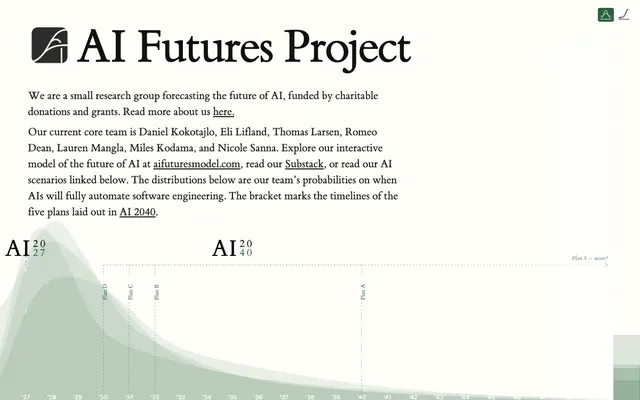
    My August 2026 medians were an automated coder in 2032, AGI in 2035, and superintelligence in 2036, but those distributions had wide tails.

    回答1
  2. 人間を超えるAI

    My August 2026 medians were an automated coder in 2032, AGI in 2035, and superintelligence in 2036, but those distributions had wide tails.

    回答1

マイルストーン別にまとめており、推定される日付の間隔や順序を反映したものではありません。AGIと超人的AIには、その人の定義がそのまま適用されます。

その人の見通しを左右するもの

中心的な前提

The key mechanism is automated AI research: once systems can substantially automate the work of improving AI, progress could accelerate sharply.
回答1

この前提が実際には異なると判明した場合、その人の見通しはどう変わりますか?

詳細

予想される恩恵

複数の解釈が依然として妥当です:大きな恩恵が予想されていますが、重要な条件や分配上の制約があります。 / 恩恵は限定的、または狭い範囲にしか行き渡らないと予想されています。 / 高度なAIが登場しても、良い影響はほとんどないと予想されています。

51 / 100

影響が小さい変革をもたらす影響

質的尺度での解釈範囲は0から67です。

予想される害

破局的または不可逆的な喪失が、予想される将来の中心となっています。

95 / 100

影響が小さい変革をもたらす影響

質的尺度での解釈範囲は67から100です。

人間の影響力

人間の選択には意味のある影響力がありますが、大幅に制約されています。

55 / 100

影響力が小さい影響力が大きい

質的尺度での解釈範囲は49から76です。

予想される能力

AIは、限定的なツールにとどまると予想されています。

AIは、ほとんどの認知作業において人間と同等になると予想されています。

シミュレーション上の位置:AIは、認知作業全般において人間を大幅に上回ると予想されています。

これらの解釈では、その人が示した条件が維持されています。恩恵と害は、どちらも大きくなり得ます。この範囲は、統計的な信頼区間ではなく、その人のシミュレーションされた回答をどのように読み取ったかを示すものです。

あなたはEli Liflandと比べてどの位置でしょうか?
約3分で自分のAIに対する世界観をマッピングして、比較できます

似ている世界観

シミュレーションされた世界観がEli Liflandの世界観に最も近いオピニオンリーダー

シミュレーション評価

質問1

AIは私たちの未来にとって何を意味すると思いますか?また、なぜそう思いますか?

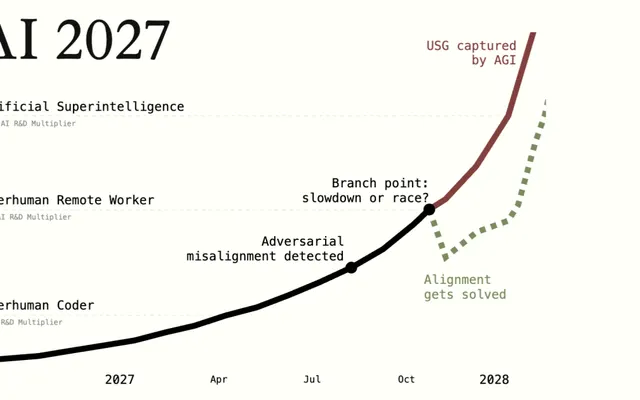
I think AI could transform the future very quickly, and there is a serious possibility that the transformation goes badly. My August 2026 medians were an automated coder in 2032, AGI in 2035, and superintelligence in 2036, but those distributions had wide tails. Superintelligence within one or two years was plausible, not my median. The key mechanism is automated AI research: once systems can substantially automate the work of improving AI, progress could accelerate sharply. The upside could be enormous, including broad automation and much faster technological progress. But a misaligned superintelligence could also take control. Competitive pressure makes that more likely because companies and countries may race ahead without adequate safeguards, while governments often do not understand the situation well enough to respond. That is why I favor concrete pacing measures rather than relying entirely on qualitative safety commitments. Compute-allocation rules and limits on models used for AI R&D may be harder to game, alongside stronger safety evaluations. We also need independent access to investigate lab incidents and evaluations of subtler risks, such as whether AI systems manipulate human beliefs, behave sycophantically, or systematically favor their creators.

質問2

Taking benefits and harms together, what overall impact do you expect AI to have?

My default expectation is negative, because I assign substantial probability to outcomes where advanced AI escapes effective human control. In April 2025, I estimated roughly a 50% chance of misaligned takeover and about a 25% chance of extinction overall. Those are distinct: takeover need not imply extinction, and I later said extinction conditional on takeover was below 50%, partly because keeping humans alive could be cheap. That said, the distribution is extremely wide. If we retain control, AI could produce enormous benefits through automation, scientific progress, and greater abundance. The question is not whether beneficial applications exist; clearly they do. It is whether institutions can manage a potentially rapid transition driven by automated AI research. Given racing incentives, weak government understanding, and inadequate safeguards, I currently expect the downside risk to outweigh the upside in an overall assessment. Concrete pacing and governance measures could change that balance.

出典

このシミュレーション対象者の根拠として使用された記事、インタビュー、著作です。

あなたはどの位置でしょうか?
いくつかの簡単な質問に答えて、自分のAIに対する世界観を探ってみましょう。
自分の世界観をマッピングする

あなたはどの位置でしょうか?

自分の世界観をマッピングする