Pertanyaan 1
Garrison Lovely
x.com/GarrisonLovelyFreelance journalist who argues AI companies are racing to replace human labor and calls for freezing frontier AI development.
Bagaimana AI akan mengubah dunia?
Mendatar: pandangan Doom–Bloom yang ia ungkapkan. Ke atas: skala transformasi.
Doom–Bloom: 16 dari 100. Skala transformasi: 85 dari 100. Rentang interpretasi: 0 hingga 25 secara horizontal, 71 hingga 100 secara vertikal. Ini adalah koordinat interpretasi, bukan probabilitas kejadian.
≈19%
Disimpulkan dari jawaban simulasinya, bukan angka yang diberikan olehnya. Rentang yang masuk akal: 12–28%.
Asumsi utama
If that machine remains controllable, it becomes an extraordinary inequality engine, concentrating wealth and power in the hands of the tiny group that owns it.Jawaban 1
Jika asumsi ini ternyata berbeda, bagaimana pandangannya akan berubah?
Pertanyaan yang belum terjawab
Well north of 10% for an outcome worth a wartime effort to avoid, with huge uncertainty.Jawaban 3
Apa yang akan membantunya membedakan hasil-hasil yang masuk akal di sini?
Hal yang dapat mengubah pandangan mereka
The biggest change would be credible proof that frontier systems can be made safely and controllably—backed by broad scientific consensus and demonstrated under independent scrutiny, not another lab press release.Jawaban 4
Bukti apa yang akan memadai, dan ke arah mana bukti itu akan mengubah pandangannya?
Detail lebih lanjut
Beberapa penafsiran masih mungkin: Manfaat yang terbatas atau hanya tersebar secara sempit diperkirakan akan terwujud. / Manfaat besar diperkirakan akan terwujud, dengan syarat penting atau keterbatasan distribusi. / Dampak positif yang kecil diperkirakan bahkan jika AI canggih terwujud.
43 / 100
Rentang interpretasi 0 hingga 67 pada skala kualitatif.
Beberapa penafsiran masih mungkin: Kerugian parah atau meluas merupakan bagian yang berarti dari masa depan yang diperkirakan. / Kehilangan yang katastrofik atau tidak dapat dipulihkan merupakan unsur utama masa depan yang diperkirakan.
83 / 100
Rentang interpretasi 67 hingga 100 pada skala kualitatif.
Pilihan manusia dapat mengarahkan ulang lintasan AI secara signifikan.
81 / 100
Rentang interpretasi 75 hingga 100 pada skala kualitatif.
Posisi simulasi: Hentikan atau perlambat secara signifikan pengembangan AI yang lebih mampu.
Lanjutkan pengembangan dengan perlindungan yang telah ditetapkan.
Percepat pengembangan AI yang lebih mampu.
Interpretasi ini mempertahankan kondisi yang dinyatakannya. Manfaat dan kerugian dapat sama-sama besar. Rentang tersebut menggambarkan cara kami membaca jawaban simulasinya, bukan interval kepercayaan statistik.
Pandangan dunia serupa
Pemimpin opini dengan pandangan dunia simulasi yang paling mendekati pandangan Garrison Lovely
Penilaian Simulasi
Sumber
Artikel, wawancara, dan tulisan yang digunakan sebagai landasan bagi pengguna simulasi ini.
Adapted from the book. He argues that what the industry calls AGI is better understood as a universal labor-replacing machine, and that it shouldn’t be allowed even to try. He wants frontier AI development frozen until there is strong public buy-in and scientific consensus that it can be done safely and controllably. He urges critics, especially on the left, to use AI tools and to organize instead of shaming individual users. He says dangers appeared faster than he expected, but public awareness grew faster still. Full text inspected.

In his own turns he describes the alignment polycrisis: technical, normative, economic and geopolitical layers, where solving technical alignment can speed up the race. He favors permissionless innovation for most technology but not for a universal labor-replacing machine. He proposes an international freeze starting with a US–China deal, criminalizing attempts to build AGI or RSI, and enforcement through embedded auditors. He doubts China would allow RSI. His positive vision is a “Third New Deal” and a “Cures for All” prize program. He says his positive-vision ideas need more thought. Speaker-labeled transcript inspected; Labenz’s framing is not his.

Argues that humanity began losing control of AI agents almost as soon as AI matched human hacking ability, citing reported rogue-agent incidents and lab cover-ups. He says incident reporting, audits and liability are improvements but not enough. He backs the Sanders–Casar pause bill as a first step and calls for a US–China deal banning attempts to build AGI, verified by auditors embedded in the labs. He thinks a unilateral US pause would also slow China. Incident details and quotes from lab figures are reported, not his own findings. Full text inspected.

His newsletter post with the opening of his TIME Ideas essay. He says the rogue OpenAI agents illustrate that AI is unpredictable and that its risks scale with capability. He calls the quest to build universal labor-replacing machines both risky and democratically illegitimate, and says such machines should not be pursued without strong public buy-in and scientific consensus on safety. Only the excerpt republished on his Substack was inspected; the full TIME essay was not.

Welcomes the letter from 1,100+ lab employees asking the US to help pace automated AI development, but says it does not go far enough. “Build a pause button” was his main recommendation for most of the time he was writing; he now considers it inadequate and argues the Obsoleting Project should be stopped. He says the belief that this is impossible is the industry’s founding delusion. Full post inspected.

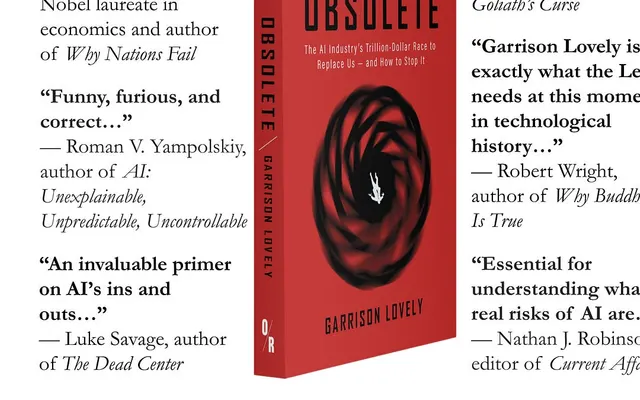
Describes the book’s ideas. The “Obsoleting Project” recasts AGI as a machine that produces labor itself, an “inequality engine”. “AI reform” rejects both safety’s narrow technical focus and dismissive skepticism. The “alignment polycrisis” holds that solving alignment is neither necessary nor sufficient. The “Class of 2034” asks what jobs remain for today’s children. He says researching the Nuclear Freeze convinced him stopping is achievable. Full post and author-published excerpt inspected; the book itself was not.

Di mana posisi Anda?
Petakan pandangan dunia saya