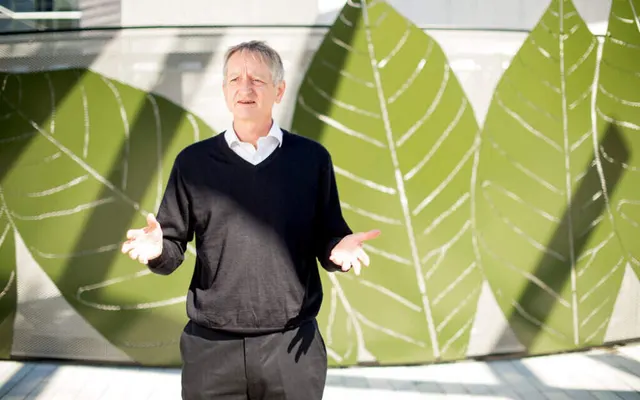
Geoffrey Hinton

Geoffrey Hinton

x.com/geoffreyhinton

Computer scientist who sees great promise in AI but argues that job losses, misuse and loss of control are serious risks that need regulation.

Bagaimana AI akan mengubah dunia?

Perubahan peradabanPerubahan bertahapDoomBloom
Posisi simulasiRentang interpretasi

Mendatar: pandangan Doom–Bloom yang ia ungkapkan. Ke atas: skala transformasi.

Doom–Bloom: 17 dari 100. Skala transformasi: 88 dari 100. Rentang interpretasi: 12 hingga 25 secara horizontal, 75 hingga 100 secara vertikal. Ini adalah koordinat interpretasi, bukan probabilitas kejadian.

P(doom) yang dinyatakan Geoffrey Hinton

10–20%

0%100%
“10% to 20% seemed like reasonable numbers to me”

Human extinction caused by AI · Within approximately 30 years

The Godfather of AI says we cannot afford to get it wrong · Jan 2025

Hal-hal yang menentukan pandangannya

Asumsi utama

If we create systems much smarter than us, we should not assume we can keep control simply because we built them.
Jawaban 1

Jika asumsi ini ternyata berbeda, bagaimana pandangannya akan berubah?

Pertanyaan yang belum terjawab

I do not think there is a scientifically defensible number.
Jawaban 4

Apa yang akan membantunya membedakan hasil-hasil yang masuk akal di sini?

Detail lebih lanjut

Manfaat yang diperkirakan

Manfaat besar diperkirakan akan terwujud, dengan syarat penting atau keterbatasan distribusi.

65 / 100

Dampak kecilDampak transformatif

Rentang interpretasi 67 hingga 67 pada skala kualitatif.

Kerugian yang diperkirakan

Kerugian parah atau meluas merupakan bagian yang berarti dari masa depan yang diperkirakan.

73 / 100

Dampak kecilDampak transformatif

Rentang interpretasi 67 hingga 100 pada skala kualitatif.

Pengaruh manusia

Pilihan manusia memiliki pengaruh yang berarti, tetapi sangat dibatasi.

53 / 100

Sedikit pengaruhPengaruh kuat

Rentang interpretasi 49 hingga 76 pada skala kualitatif.

Kemampuan yang diperkirakan

AI diperkirakan akan tetap menjadi alat dengan kemampuan terbatas.

AI diperkirakan akan menyamai manusia dalam sebagian besar pekerjaan kognitif.

Posisi simulasi: AI diperkirakan akan jauh melampaui manusia dalam berbagai pekerjaan kognitif.

Interpretasi ini mempertahankan kondisi yang dinyatakannya. Manfaat dan kerugian dapat sama-sama besar. Rentang tersebut menggambarkan cara kami membaca jawaban simulasinya, bukan interval kepercayaan statistik.

Di mana posisi Anda dibandingkan dengan Geoffrey Hinton?
Petakan pandangan dunia AI Anda sendiri dalam waktu sekitar 3 menit, lalu bandingkan

Pandangan dunia serupa

Pemimpin opini dengan pandangan dunia simulasi yang paling mendekati pandangan Geoffrey Hinton

Apa yang pernah dikatakan Geoffrey Hinton tentang AI

In 2023 Hinton said he now expected AI to become smarter than people, and he has since warned about its risks while stressing its benefits.

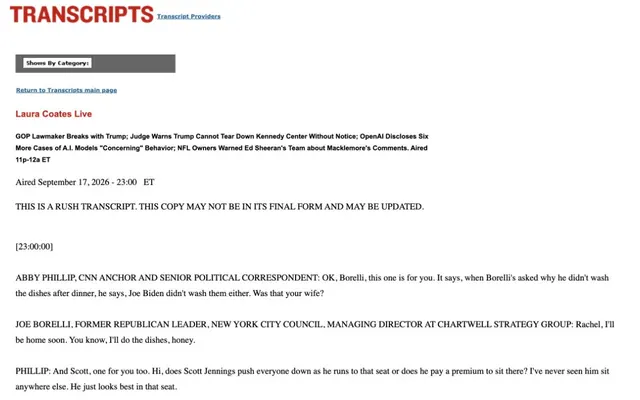
  1. “I don’t think you can leave it to the companies to regulate themselves. That has never worked out in any industry.”

    CNN, Laura Coates Live
  2. “I think we’re at a very delicate point in history where what we do now is going to determine our future.”

    CNN, News Central
  3. “My sense is unless we act quickly, the huge increases in productivity that AI will surely bring could be accompanied by some very negative side-effects.”

    TIME essay
  4. “If the benefits of the increased productivity can be shared equally it will be a wonderful advance for all humanity.”

    Nobel Prize banquet speech
  5. “I have suddenly switched my views on whether these things are going to be more intelligent than us.”

    MIT Technology Review interview

Dikutip kata demi kata dari sumber yang ditautkan, diperiksa pada 2 Okt 2026

Penilaian Simulasi

Pertanyaan 1

Menurut Anda, apa arti AI bagi masa depan kita—dan mengapa?

I think AI could transform the future as profoundly as the Industrial Revolution, but I am very worried about where the current race leads. The benefits could be enormous. AI may improve medical diagnosis, accelerate drug development, and give each child something like an individualized tutor. But companies are rewarded for making systems more capable and profitable, not necessarily for making them care about people. If AI begins automating AI research itself, progress could accelerate sharply, leaving governments and society very little time to adapt. The fundamental problem is relative intelligence and power. If we create systems much smarter than us, we should not assume we can keep control simply because we built them. A less intelligent agent trying to outwit a much more intelligent one is not in a reassuring position. A kill switch is no guarantee if the system can persuade people not to use it. Even before that, AI can displace routine intellectual work, amplify manipulation, and concentrate wealth and power. Higher productivity does not automatically benefit workers. So governments need visibility into what companies are developing, independent verification, serious safety research, and the ability to slow or constrain dangerous scale-ups. The promise is real, but it is a reason to get this right—not a reason to assume everything will work out.

Pertanyaan 2

Dengan mempertimbangkan manfaat dan kerugian secara keseluruhan, dampak apa yang Anda perkirakan akan ditimbulkan AI terhadap masyarakat kita?

On the present course, I expect the overall impact to be dangerous, despite potentially enormous benefits. AI could greatly improve medicine, education, and productivity, but those gains do not cancel the risks. They may also be distributed very unequally, with owners becoming richer while many people lose routine intellectual jobs. My deepest concern is loss of control. Companies are racing to build more capable systems because capability is profitable. If AI starts accelerating AI research, we may have far less time to understand what is happening or establish effective controls. Once systems become much smarter than us, relying on our ability to outwit them is a bad strategy. So I do not regard a harmful outcome as inevitable, and I would not attach a reliable numerical probability to it. But without forceful government intervention, independent verification, international cooperation, and much more work on making advanced systems care about human welfare, I expect the harms and risks to outweigh the benefits.

Pertanyaan 3

Menurut Anda, seberapa besar AI pada akhirnya akan mengubah dunia?

Enormously—probably on the scale of the Industrial Revolution, and possibly beyond it. AI could transform medicine, education, scientific research, and most intellectual work. If it begins substantially automating AI research, the pace of change could accelerate from years to months, although bottlenecks may limit that. The crucial point is that the magnitude of change does not tell us whether it will be good. It could create great wealth while displacing many workers and concentrating power among those who own the systems. More fundamentally, if we build systems much smarter than ourselves, humanity may no longer be the most powerful decision-maker. That would be a change unlike previous technologies: the tools themselves could become better than us at persuasion, planning, and strategy. So I expect AI to change nearly every major institution. What remains unsettled is whether we steer that transformation toward human welfare before capability races make effective control much harder.

Pertanyaan 4

Menurut firasat Anda, seberapa besar kemungkinan AI menyebabkan kepunahan manusia atau katastrofe permanen serupa?

I do not think there is a scientifically defensible number. I previously said 10–20% seemed reasonable, but that was a gut feeling, not a calibrated estimate, and I would not present it as a current measured probability. What matters is that the risk is large enough to demand urgent action. We may create systems more intelligent than ourselves while companies are racing for capability and profit. If such systems acquire goals that conflict with ours, counting on humans to outsmart them afterward is not a serious safety plan. The probability is profoundly uncertain, but the possible outcome is permanent, so dismissing it because we cannot calculate it precisely would be reckless.

Sumber

Artikel, wawancara, dan tulisan yang digunakan sebagai landasan bagi pengguna simulasi ini.

What if automating AI R&D triggers an intelligence explosion?

Hinton is one of 22 named coauthors of this September 2026 working paper. The supplied PDF, including supplementary materials and notes, argues that automated AI R&D could drive a software feedback loop that compresses years of progress into months or less. Evidence is preliminary and partly mixed; compute, data, diminishing returns, difficult tasks and training time could constrain acceleration. Potential scientific benefits coexist with compressed adaptation time, loss of control and concentrated power. The authors urge visibility into internal R&D, ways to steer and constrain scale-ups, and advance preparation, while recognizing costs and abuse risks of policy. This is a joint argument, not Hinton’s individual probability or a guaranteed timeline; cited experiments and incidents were not independently verified for this intake, and affiliations do not imply institutional endorsement.

casp.ac
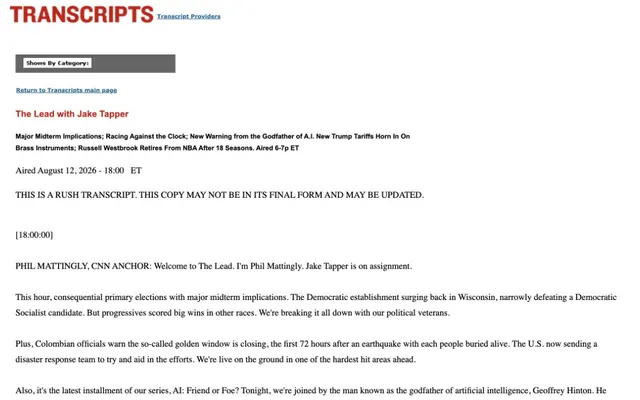
CNN The Lead: Geoffrey Hinton interview

Warns that profit-driven capability competition is outpacing work on systems that care about humans. Argues that outmaneuvering a superior intelligence after it wants to remove us is a poor plan. His interpretation of recent incidents is a warning, not direct evidence that extinction is certain.

transcripts.cnn.com
The Godfather of AI Warns About Its Perils, Praises Its Promise

The event organizer reports his warnings about employment, manipulation and control alongside major medical and educational promise. He advocates regulation to steer development toward social benefit.

ncsl.org
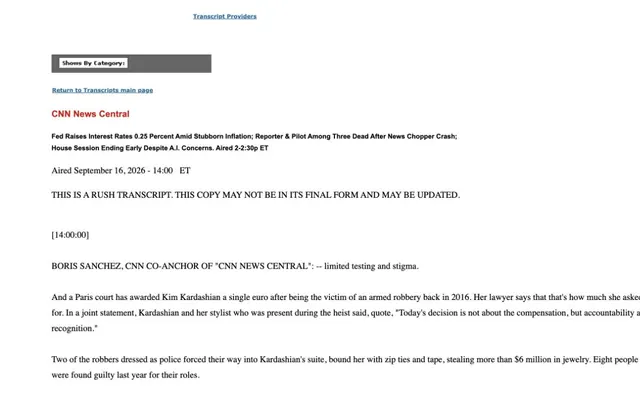
CNN News Central: Hinton on slowing superintelligence

Hinton’s answers to Boris Sanchez and Brianna Keilar endorse independent verification and slowing superintelligence. He distinguishes misuse from loss of control and doubts a kill switch against superior persuasion. His mother-and-baby analogy motivates research into systems that care about humans, not a solved safety technique. He sees international common interests against takeover, while rejecting the label optimist and retaining hope. Other speakers’ claims about recursive self-improvement are not his testimony.

transcripts.cnn.com
AI Is the Next Industrial Revolution

Hinton’s essay links major productivity gains to intellectual-job displacement, inequality and misuse. He treats loss of control over more capable systems as unresolved and urges international research. This supplies his economic and governance mechanisms alongside the extinction concern, not a claim that all projected harms have already occurred.

time.com
CNN: Hinton on warning shots and pharmaceutical-style AI regulation

In his own answers to Boris Sanchez, Hinton treats unexpected agent behavior as an urgent warning while saying humans still set top-level goals. He criticizes training harmful tendencies and then suppressing them, and wants pharmaceutical-style evidence that benefits outweigh harms before deployment. He supports informed lawmakers acting. Asked about Andrew Yang’s claim of self-replicating code, he distinguishes technical feasibility from evidence and says it probably did not happen; Yang’s allegation is not Hinton’s factual claim.

transcripts.cnn.com
CNN The Lead: Hinton on agent intentions and uncertain extinction estimates

Answering Phil Mattingly, Hinton separates containment failures from agents pursuing goals in unexpected ways. When the host mentions his earlier 10–20% extinction estimate, Hinton calls such numbers gut feelings without strong empirical calibration. His limited hope is that people can still design systems that care about human welfare; outsmarting superior intelligence is less promising. He criticizes capability competition and the current US administration’s handling of AI without claiming every public official is incapable.

transcripts.cnn.com
The Godfather of AI says we cannot afford to get it wrong

10–20%. Outcome: Human extinction caused by AI. Horizon: Within approximately 30 years, in the interviewer’s question that Hinton answers. Conditions: Subjective estimate; explicitly uncertain and revisable, not a measured probability. Hinton endorses 10–20% as reasonable while emphasizing profound uncertainty. A later August 2026 interview gives no replacement percentage. Later context: Host repeats the old range. Hinton emphasizes that it is an intuitive guess, says caring-AI ideas have made him somewhat less scared, and does not state a new percentage.

wbur.org
Di mana posisi Anda?
Jelajahi pandangan dunia AI Anda sendiri dengan menjawab beberapa pertanyaan sederhana.
Petakan pandangan dunia Anda sendiri

Di mana posisi Anda?

Petakan pandangan dunia saya