









Pregunta 1
Sierra Catalina
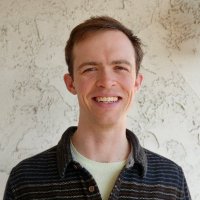
x.com/sierracatalinaCEO of Ouroboros who builds tools for portable, user-owned AI context and writes about agent security and proof of personhood.
¿Cómo cambiará la IA el mundo?
Horizontal: su perspectiva Doom–Bloom expresada. Vertical: escala de la transformación.
Doom–Bloom: 67 de 100. Escala de la transformación: 75 de 100. Rangos de interpretación: de 62 a 75 en horizontal y de 70 a 80 en vertical. Son coordenadas de interpretación, no probabilidades de eventos.
≈5%
Inferido a partir de sus respuestas simuladas, no de un número que haya dado. Rango plausible: 3–10%.
Un supuesto central
so the impact depends less on whether models get smarter and more on who owns the context, how access is scoped & revoked, and whether society rebuilds the human infrastructure automation thins out.Respuesta 2
Si este supuesto resultara distinto, ¿cómo cambiaría su perspectiva?
Una pregunta sin resolver
I don’t have a useful percentage.Respuesta 4
¿Qué le ayudaría a distinguir aquí entre los desenlaces plausibles?
Más detalles
Se esperan beneficios sustanciales, con condiciones importantes o límites en su distribución.
76 / 100
Rango de interpretación de 67 a 100 en la escala cualitativa.
Se espera que los daños graves o generalizados sean una parte significativa del futuro.
64 / 100
Rango de interpretación de 67 a 67 en la escala cualitativa.
Las decisiones humanas pueden redirigir sustancialmente la trayectoria de la IA.
79 / 100
Rango de interpretación de 50 a 100 en la escala cualitativa.
Restringir los usos de la IA mencionados hasta que existan protecciones o permisos previos.
Posición simulada: Permitir los usos de la IA mencionados con rendición de cuentas y protecciones específicas.
Reducir al mínimo las restricciones a los usos de la IA mencionados.
Estas interpretaciones conservan las condiciones que se indicaron. Los beneficios y los daños pueden ser considerables a la vez. Los rangos describen cómo leemos sus respuestas simuladas, no intervalos de confianza estadísticos.
Visiones similares
Líderes de opinión cuyas visiones simuladas son las más cercanas a la de Sierra Catalina
Lo que Sierra Catalina ha dicho sobre la IA
Catalina expects AI to take over much human labor and writes about keeping AI clearly a tool, proof of personhood and protecting human contact.
“the system must signal clearly that it is a tool. it must maintain artificial cues & avoid emotional dependency loops.”
X Article, AI voice identity “automation reduces the number of default human touchpoints in a normal week.”
X Article, third places are critical infrastructure for a post automation society “anthropomorphizing models trains people to trust interfaces instead of incentives. that confusion compounds fast in agentic systems.”
Post on LinkedIn “ASI-level automation replaces labor as the core mechanism that sustains society.”
Essay, finding purpose post ASI “but the lines will continue to blur & fast. proof of personhood becoming increasingly necessary.”
Post on X
Citas textuales de las fuentes enlazadas, comprobadas el 6 oct 2026
Fuentes
Artículos, entrevistas y textos usados para fundamentar a este usuario simulado.
Her personal site states a thesis: the missing layer in modern AI is portable, user-owned context; memory, permissions and identity should travel with the person across models, agents and applications and belong to the user, not the platform. Operating principles: AI systems need scoped access to context, not persistent ownership of identity; provenance, revocation and portability are baseline requirements for trustworthy personalization; AI will remain hybrid across local, cloud and agent systems. Also lists her Ouroboros workspace and open-source agent-aware and context-layer projects. Undated page; full text inspected on 2026-10-05.

Resharing Kevin Weil’s ChatGPT agent announcement, she writes that it is “unreal”, that nothing will be the same after this, and “welcome to the future.” Enthusiasm about agents; the announcement text is Weil’s. Older context. Her short post text inspected via a search-engine extract of the LinkedIn page.

A short post arguing that anthropomorphizing models trains people to trust interfaces instead of incentives, and that this confusion compounds fast in agentic systems. Full post text inspected; a reader comment excluded.

A short post saying browser agents feel harmless until you remember most people reuse passwords and click “allow” on vibes alone. A practical security concern about agents, not a catastrophic-risk claim. Full post text inspected.

Argues that if personal agents become core, the web needs agent-readable infrastructure, and describes her open-sourced “agent aware architecture” starter: machine-legible primary actions, sensitive-field boundaries and confirmation gates for destructive operations, which she says could standardize the agent/web handshake. A design proposal tied to her own project. Post text inspected via a search-engine extract of the LinkedIn page.

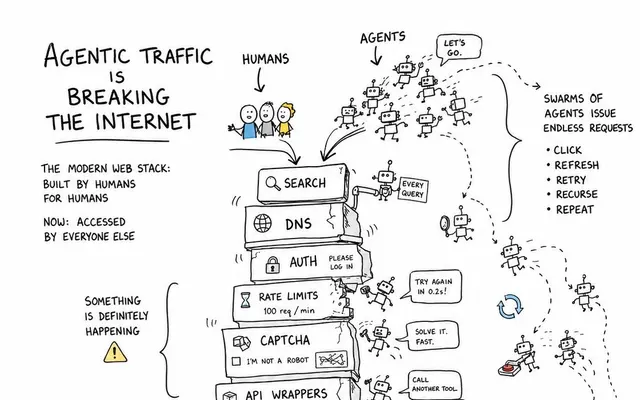
A short post saying we need to rethink agentic traffic on the web before we break the web. The accompanying image was not reviewed, and a reader’s comment belongs to someone else. Post text inspected.

Evaluación simulada
Pregunta 2
Considerando en conjunto los beneficios y los daños, ¿qué impacto general esperas que tenga la IA en nuestra sociedad?
Pregunta 3
¿Cuánto crees que la IA acabará cambiando el mundo?
Pregunta 4
¿Cuál es tu estimación intuitiva de la probabilidad de que la IA cause la extinción humana o una catástrofe permanente similar?
Pregunta 5
¿Te inclinas a pensar que la IA hará más bien que mal o tienes verdaderas dudas?
¿Dónde te ubicas?
Mapear mi visión de la IA