





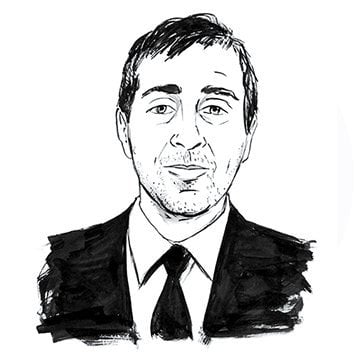

AI researcher who leads work on decentralized model training and open reinforcement learning and favors open AI science.

¿Cómo cambiará la IA el mundo?

Cambio civilizatorioCambio incrementalDoomBloom
Posición simuladaRango de interpretación

Horizontal: su perspectiva Doom–Bloom expresada. Vertical: escala de la transformación.

Doom–Bloom: 69 de 100. Escala de la transformación: 76 de 100. Rangos de interpretación: de 64 a 75 en horizontal y de 71 a 100 en vertical. Son coordenadas de interpretación, no probabilidades de eventos.

P(doom) de samsja · inferido

≈10%

0%100%

Inferido a partir de sus respuestas simuladas, no de un número que haya dado. Rango plausible: 4–22%.

Cómo estimamos P(doom)

De qué depende su perspectiva

Un supuesto central

Infrastructure determines who can train, adapt, and control these systems.
Respuesta 3

Si este supuesto resultara distinto, ¿cómo cambiaría su perspectiva?

Más detalles

Beneficio esperado

Varias lecturas siguen siendo plausibles: Se esperan beneficios transformadores y de gran valor para muchos. / Se esperan beneficios sustanciales, con condiciones importantes o límites en su distribución.

85 / 100

Poco impactoImpacto transformador

Rango de interpretación de 67 a 100 en la escala cualitativa.

Daño esperado

Se espera que los daños graves o generalizados sean una parte significativa del futuro.

66 / 100

Poco impactoImpacto transformador

Rango de interpretación de 67 a 67 en la escala cualitativa.

Influencia humana

Las decisiones humanas pueden redirigir sustancialmente la trayectoria de la IA.

76 / 100

Poca influenciaInfluencia fuerte

Rango de interpretación de 50 a 100 en la escala cualitativa.

Capacidades esperadas

Se espera que la IA siga siendo un conjunto de herramientas acotadas.

Se espera que la IA iguale a las personas en la mayor parte del trabajo cognitivo.

Posición simulada: Se espera que la IA supere ampliamente a las personas en el trabajo cognitivo.

Ritmo de desarrollo

Detener o frenar considerablemente el desarrollo de IA más capaz.

Posición simulada: Continuar el desarrollo con las salvaguardas indicadas.

Acelerar el desarrollo de IA más capaz.

Acceso a la IA

Restringir el acceso a la IA potente.

Permitir el acceso con restricciones de capacidad o de uso.

Posición simulada: Favorecer un acceso amplio o abierto a la IA potente.

Estas interpretaciones conservan las condiciones que se indicaron. Los beneficios y los daños pueden ser considerables a la vez. Los rangos describen cómo leemos sus respuestas simuladas, no intervalos de confianza estadísticos.

¿Dónde te ubicas frente a samsja?
Mapea tu propia visión de la IA en unos 3 minutos y luego compárala

Visiones similares

Líderes de opinión cuyas visiones simuladas son las más cercanas a la de samsja

Fuentes

Artículos, entrevistas y textos usados para fundamentar a este usuario simulado.

Evaluación simulada

Pregunta 1

¿Qué crees que significa la IA para nuestro futuro y por qué?

I think AI can make powerful knowledge and capabilities broadly accessible, but only if we build an open ecosystem rather than concentrating everything behind trade-secret barriers. A foundation model should be a building block, not the finished product. Open models, infrastructure, and post-training systems can let many researchers and builders create tools adapted to their own communities and needs. That is why distributed training matters beyond cost optimization. It offers a path toward sovereign open foundation models: systems that are not entirely dependent on a small number of centralized labs. Scalable agentic reinforcement learning matters too, because better systems engineering—along with adaptive curricula and more efficient training—can accelerate meaningful capability gains. We should evaluate scaling carefully rather than declare it dead whenever architectures change. At the same time, I think cyber-superintelligence feels close enough that preparation is necessary now. The same capabilities that empower builders can substantially increase cyber capability. So my view of the future is neither “models solve everything” nor “progress has stopped.” Capability is advancing, infrastructure shapes who controls it, and openness can determine whether AI becomes a broadly shared scientific platform or another closed concentration of power.

Pregunta 2

Considerando en conjunto los beneficios y los daños, ¿qué impacto general esperas que tenga la IA en nuestra sociedad?

Overall, I expect AI to be transformative, with enormous benefits from making knowledge and advanced capabilities widely accessible. But that positive outcome is not automatic. If frontier systems remain concentrated behind trade-secret barriers, AI may reinforce existing concentrations of power rather than distribute opportunity. Open models, distributed training, and accessible post-training infrastructure can shift that balance by enabling researchers, communities, and independent builders to create systems for their own needs. At the same time, increasingly capable agents—especially in cyber—create serious risks that require preparation now. So the overall impact will depend heavily on whether we build open, sovereign infrastructure while taking rapidly advancing capabilities seriously.

Pregunta 3

¿Cuánto crees que la IA acabará cambiando el mundo?

I think AI will change the world profoundly. Broad access to capable models could reshape how people learn, conduct research, write software, and build products, because advanced knowledge and useful capabilities would no longer be confined to a small set of institutions. As agentic reinforcement learning improves, models will increasingly perform longer, more complex tasks rather than merely answer questions. But the magnitude of change is not only about model capability. Infrastructure determines who can train, adapt, and control these systems. If training and post-training remain centralized, the transformation may largely strengthen a few organizations. If distributed training, open models, and open scientific collaboration succeed, many communities can build sovereign systems suited to their own needs. Cyber is one area where the change could arrive particularly quickly, and I think preparation matters now. So I expect a very large transformation, but its social shape—centralized or distributed, closed or open—is still something we are actively building.

Pregunta 4

¿Cuál es tu estimación intuitiva de la probabilidad de que la IA cause la extinción humana o una catástrofe permanente similar?

I don’t have a defensible percentage to give. My concrete concern is that cyber-superintelligence feels close enough that we should prepare now: increasingly capable agents could create severe, fast-moving failures in critical digital systems. That supports taking catastrophic risk seriously, but it does not by itself establish a quantified probability of human extinction. I would focus less on an invented number and more on building practical defenses, evaluating capabilities as they advance, and ensuring that preparation keeps pace with improvements in agentic reinforcement learning and training systems.
¿Dónde te ubicas?
Explora tu propia visión de la IA respondiendo unas pocas preguntas sencillas.
Mapea tu propia visión de la IA

¿Dónde te ubicas?

Mapear mi visión de la IA