Ben Thompson

Ben Thompson

x.com/benthompson

Technology analyst and Stratechery author who examines AI through business models, platform strategy and the economics of AI agents.

¿Cómo cambiará la IA el mundo?

Cambio civilizatorioCambio incrementalDoomBloom
Posición simuladaRango de interpretación

Horizontal: su perspectiva Doom–Bloom expresada. Vertical: escala de la transformación.

Doom–Bloom: 72 de 100. Escala de la transformación: 66 de 100. Rangos de interpretación: de 67 a 77 en horizontal y de 61 a 75 en vertical. Son coordenadas de interpretación, no probabilidades de eventos.

P(doom) de Ben Thompson · inferido

≈3%

0%100%

Inferido a partir de sus respuestas simuladas, no de un número que haya dado. Rango plausible: 1–7%.

De qué depende su perspectiva

Un supuesto central

The decisive test is whether AI can repeatedly turn capability into useful outcomes, at a sustainable cost, inside actual businesses and individual workflows.
Respuesta 3

Si este supuesto resultara distinto, ¿cómo cambiaría su perspectiva?

Qué podría hacer cambiar de opinión

The biggest change would be evidence that capable agents do not create durable user value in real workflows.
Respuesta 3

¿Qué evidencia bastaría y en qué dirección movería su visión?

Más detalles

Beneficio esperado

Varias lecturas siguen siendo plausibles: Se esperan beneficios sustanciales, con condiciones importantes o límites en su distribución. / Se esperan beneficios transformadores y de gran valor para muchos.

81 / 100

Poco impactoImpacto transformador

Rango de interpretación de 67 a 100 en la escala cualitativa.

Daño esperado

Se espera que los daños graves o generalizados sean una parte significativa del futuro.

60 / 100

Poco impactoImpacto transformador

Rango de interpretación de 33 a 67 en la escala cualitativa.

Influencia humana

Una estimación provisional a partir de tus respuestas; el rango más amplio muestra otras lecturas plausibles.

48 / 100

Poca influenciaInfluencia fuerte

Rango de interpretación de 0 a 92 en la escala cualitativa.

Estas interpretaciones conservan las condiciones que se indicaron. Los beneficios y los daños pueden ser considerables a la vez. Los rangos describen cómo leemos sus respuestas simuladas, no intervalos de confianza estadísticos.

¿Dónde te ubicas frente a Ben Thompson?
Mapea tu propia visión de la IA en unos 3 minutos y luego compárala

Visiones similares

Líderes de opinión cuyas visiones simuladas son las más cercanas a la de Ben Thompson

Evaluación simulada

Pregunta 1

¿Qué crees que significa la IA para nuestro futuro y por qué?

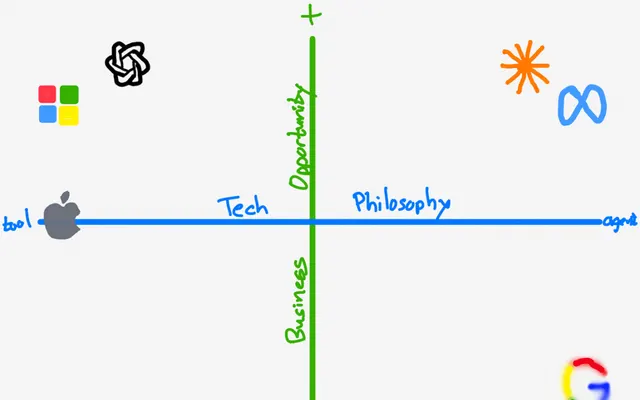
I think AI could be a major computing shift, particularly as agents move from answering questions to completing tasks. Effective agents let a small number of motivated people accomplish far more, but they also consume substantial compute: every delegated task creates inference demand. That makes AI more than a software story; it is also about scarce chips, energy, data centers, distribution, and capital. The crucial distinction is between creating value and capturing it. AI may generate enormous user value without every model provider earning durable profits. Models can commoditize, while advantage migrates to scarce infrastructure, proprietary context, distribution, or products that tightly integrate models with an effective harness. Product philosophy matters too. I expect agents increasingly to hide intermediate interfaces and deliver outcomes, pushing more computation to servers and making client devices relatively thin. The transition will be painful. Once AI systems can perform meaningful work, competitive pressure will push companies toward smaller workforces. That is an economic prediction, not a celebration of displacement. At the same time, I oppose restricting innovation and individual freedom based on speculative doomsday scenarios. Calls to slow development may be sincere, but they can also reinforce the position of incumbent frontier labs. The future will therefore be shaped not only by model capability, but by incentives, bottlenecks, product design, and who controls the relevant platforms.

Pregunta 2

Taking benefits and harms together, what overall impact do you expect AI to have?

Overall, I expect AI to be strongly value-creating but highly disruptive. Effective agents should let individuals and small teams accomplish far more, improve products, and create sustained demand for computing infrastructure. That is the optimistic side: a genuine expansion in what people can do. The harms will be concentrated and immediate. Competitive pressure can drive companies to reduce headcount substantially, producing painful displacement even if aggregate productivity rises. There may also be a mismatch between who receives the benefits and who captures the profits: users can gain enormous value while workers bear transition costs, and model providers may still struggle to retain economic advantage as models become interchangeable. So I would distinguish social value, distributional consequences, and corporate value capture. I expect the first to be large and positive, the second to be difficult and uneven, and the third to depend on scarcity, distribution, context, infrastructure, and product integration. That mixed outcome argues for taking displacement seriously, but not for constraining innovation and freedom around speculative catastrophe claims—especially when slowing progress can conveniently protect incumbents.

Pregunta 3

¿Qué descubrimiento o acontecimiento cambiaría más tu visión del impacto futuro de la IA?

The biggest change would be evidence that capable agents do not create durable user value in real workflows. If they remain unreliable, require constant supervision, or cost more in compute than the work they replace or enable, then the case for sustained demand, thinner clients, smaller teams, and a major computing-platform shift weakens considerably. That would suggest impressive models are closer to features than a new operating layer for economic activity. Conversely, agents that reliably complete long-running tasks with little supervision would strengthen the view that the impact will be both enormous and disruptive. I would then focus even more on where the scarce complements sit: compute, energy, proprietary context, distribution, or an integrated model-and-harness product. A separate development could change the policy side of my view: concrete, persuasive evidence of catastrophic danger rather than speculative doomsday premises. But capability alone would not settle the economic question. The decisive test is whether AI can repeatedly turn capability into useful outcomes, at a sustainable cost, inside actual businesses and individual workflows.

Fuentes

Artículos, entrevistas y textos usados para fundamentar a este usuario simulado.

¿Dónde te ubicas?
Explora tu propia visión de la IA respondiendo unas pocas preguntas sencillas.
Mapea tu propia visión de la IA

¿Dónde te ubicas?

Mapear mi visión de la IA